

Why People Choose Tiny Living: A 2026 Guide
Tiny living is defined as residing in a home typically between 100 and 430 square feet, prioritizing simplicity, financial freedom, and sustainability over square footage. Why people choose tiny living comes down to three core drivers: dramatically lower costs, a reduced ecological footprint, and a more intentional way of life. In 2026, this is no longer a fringe movement. It is a deliberate rejection of the “bigger is better” mindset, and the data backs it up. This guide covers the financial case, the environmental impact, the psychological rewards, and the real challenges you need to know before making the move.
What are the main financial benefits of tiny living?
The financial case for the tiny house lifestyle is straightforward. Tiny home costs typically range between $30,000 and $60,000, a fraction of what a conventional home costs in most American markets. That gap does not just affect your purchase price. It reshapes your entire financial life.
The savings compound across every category of household expense:
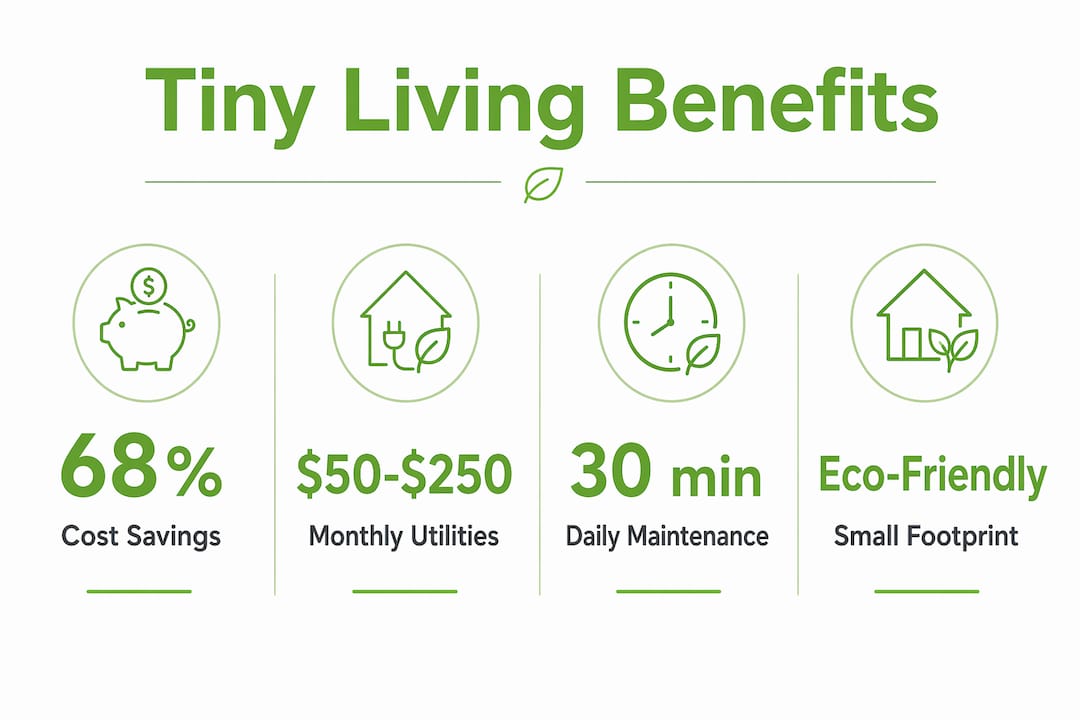
- Mortgage or rent: About 68% of tiny home owners carry no mortgage at all. That single fact frees up hundreds or thousands of dollars every month.
- Utilities: Monthly utility bills for tiny homes run between $50 and $250, compared to an average of $611 for a traditional home. That is a difference of up to $6,732 per year.
- Maintenance: Fewer square feet means fewer repairs, less cleaning, and lower property taxes in most jurisdictions.
- Time: Many tiny home residents report working as few as 3 days per week and saving over 50% of their income by eliminating large mortgage payments.
The result is not just money in the bank. It is time returned to you. Residents consistently report more freedom to travel, pursue hobbies, or simply work less. That is a quality-of-life shift that a larger home cannot buy back.
Pro Tip: Budget for hidden costs before you commit. Transport fees, utility hookups, and insulation upgrades can add several thousand dollars to your total outlay. These hidden expenses catch many first-time buyers off guard.

How does tiny living support environmental sustainability?
The environmental case for small homes is one of the strongest arguments in the entire conversation. Choosing a tiny home reduces a household’s ecological footprint by about 45% compared to living in a traditional house. That reduction comes from multiple directions at once.
Smaller spaces require less energy to heat and cool. They use fewer construction materials during the build. They generate less waste over time. And they naturally push residents toward a more mindful relationship with consumption.
| Environmental factor | Traditional home | Tiny home |
|---|---|---|
| Monthly utility cost | ~$611 average | $50–$250 |
| Ecological footprint reduction | Baseline | ~45% lower |
| Heating/cooling energy use | High | Significantly lower |
| Construction material use | High | Minimal |
Many tiny home designs go further by incorporating:
- Solar panels for off-grid or reduced-grid energy use
- Composting toilets that eliminate the need for sewer connections
- Water-saving fixtures that cut consumption without sacrificing function
- Passive design features like high ceilings and strategic window placement for natural light and airflow
The connection between a small footprint and a minimalist lifestyle is not coincidental. When your home is small, you buy less, store less, and discard less. The physical space enforces the values.
What lifestyle changes and psychological benefits does tiny living bring?
The psychological benefits of downsizing are the part most people underestimate before they make the move. Minimalism in a tiny home reduces decision fatigue and fosters mental clarity once physical clutter is removed. That is not a soft claim. It is a direct result of having fewer objects competing for your attention every day.
Maintenance time drops sharply in a small home. Cleaning and upkeep often takes under 30 minutes per day. That reclaims hours every week that most people currently spend managing a larger space they rarely fully use.
Tiny living is best understood as alignment with your values, not sacrifice. When you define what you actually need, the things you let go of stop feeling like losses. They feel like relief.
The shift in mindset is the real transformation. Residents consistently describe moving away from a life organized around possessions and toward one organized around experiences, relationships, and personal growth. The reasons for downsizing are rarely just financial. They are about reclaiming time and attention.
This lifestyle also tends to push people outdoors more. A smaller interior makes the surrounding environment feel like an extension of your living space. Many tiny home residents report stronger connections to nature and their local community as a direct result.
Pro Tip: Prepare emotionally before you downsize. Walk through your current home and identify the items you use daily versus the items you store “just in case.” Most people discover that downsizing belongings is far less painful than they expected once they start.
The intentionality that tiny living demands is also its greatest reward. You stop accumulating by default and start choosing deliberately. That shift in behavior tends to spread into other areas of life, from finances to relationships to how you spend your free time.
What practical challenges should potential tiny home residents know?
Tiny living rewards those who research before they commit. The first thing to investigate is zoning. Zoning laws and building codes vary significantly by region, and they can determine whether your tiny home qualifies as a permanent residence at all. Some counties welcome tiny homes. Others impose restrictions that make full-time occupancy legally complicated.
The choice between a tiny home on wheels and a foundation-based home is the second major decision:
- Tiny homes on wheels offer mobility and flexibility. You can relocate when your circumstances change. The trade-off is that they face more zoning restrictions and typically do not appreciate in value the way real property does.
- Foundation-based tiny homes comply more easily with local building codes. They are more likely to be treated as permanent residences and may appreciate over time.
- Prefab and modular builds are worth considering. Construction time is typically months, not years, and prefab options allow for custom features like multi-purpose furniture and high ceilings without the cost of a full custom build.
- Space management requires intentional design. Multi-functional furniture, vertical storage, and built-in solutions are not optional extras. They are necessities in a home under 430 square feet.
- Try before you buy. Renting a tiny home for a weekend or a month is the most practical way to test whether the lifestyle suits you before making a full financial commitment.
Hidden costs deserve a second mention here. Transport fees for a home on wheels, utility hookup charges, and insulation upgrades for extreme climates can add meaningful expense to your budget. Factor these in early. A budget-conscious build approach can help you anticipate and control these costs from the start.
Key Takeaways
The strongest reason to choose tiny living is the combination of financial freedom, reduced environmental impact, and a more deliberate, satisfying daily life.
| Point | Details |
|---|---|
| Lower costs across the board | Tiny homes cost $30,000–$60,000 to build, and 68% of owners carry no mortgage. |
| Significant ecological savings | Tiny homes reduce a household’s ecological footprint by about 45% versus traditional housing. |
| Time and mental clarity | Daily upkeep takes under 30 minutes, freeing hours each week for what matters most. |
| Zoning research is non-negotiable | Local laws vary widely and determine whether your tiny home can serve as a legal permanent residence. |
| Mindset shift drives the real reward | Tiny living works best when treated as value alignment, not sacrifice. |
Why tiny living is more than a housing trend
I have watched the tiny living conversation shift over the past several years, and the change is real. People are no longer choosing small homes because they cannot afford anything else. They are choosing them because they have done the math, both financial and personal, and the numbers favor simplicity.
What strikes me most is how quickly the “sacrifice” framing disappears once someone actually moves in. The residents who thrive in tiny homes are not people who gave something up. They are people who stopped paying for space they did not need and started investing in the life they actually wanted.
The challenges are real. Zoning is genuinely complicated in many parts of the country. Space requires creative thinking. And not everyone is suited to living in under 400 square feet. But the people who do the work upfront, who research their local regulations, design their space intentionally, and approach the transition as a values exercise rather than a cost-cutting measure, report outcomes that go well beyond saving money.
The tiny house lifestyle is not for everyone. But for the right person, it is one of the most direct paths to financial independence, environmental responsibility, and a life that feels genuinely chosen rather than inherited by default.
— Gridwise
Gridwiseliving’s tiny home and sustainable living options
Gridwiseliving offers a range of products built specifically for people who want to live with less reliance on traditional systems and more control over their daily environment.
The tiny homes collection includes expandable and fully equipped models designed for flexible, long-term living. For residents focused on energy independence, Gridwiseliving’s solar energy systems pair directly with tiny home setups to reduce or eliminate grid dependence. Whether you are at the research stage or ready to make a move, Gridwiseliving’s catalog gives you practical, durable options that match the values behind the tiny living choice. Every product is selected to support self-reliance, not complicate it.
FAQ
What is the average cost of a tiny home?
Tiny home construction and purchase costs typically range between $30,000 and $60,000, significantly less than a traditional home. About 68% of tiny home owners carry no mortgage as a result.
How much can I save on utilities in a tiny home?
Monthly utility bills for tiny homes range from $50 to $250, compared to a traditional home average of $611. That gap translates to thousands of dollars in annual savings.
Are tiny homes legal to live in permanently?
Legality depends on local zoning laws and building codes, which vary by region. Foundation-based tiny homes generally comply more easily with permanent residence requirements than homes on wheels.
What are the biggest psychological benefits of tiny living?
Tiny living reduces decision fatigue and mental clutter, with daily maintenance often taking under 30 minutes. Residents consistently report greater mental clarity and more time for personal priorities.
How do I know if tiny living is right for me?
Renting a tiny home for a short period is the most practical way to test the lifestyle before committing. Researching local zoning laws and planning your transition early will also help you make a fully informed decision.