

What Is Minimalist Home Design: A 2026 Guide
Minimalist home design is defined as the intentional practice of keeping only what serves a clear purpose or holds genuine personal meaning, creating living spaces that feel calm, functional, and free of visual clutter. The style draws from the “less is more” philosophy, where every object earns its place and empty space is treated as a design element, not a failure to decorate. The 60-30-10 color rule guides the balance: 60% dominant neutral tones, 30% natural textures, and 10% a single accent piece. That ratio keeps rooms grounded without feeling sterile. By 2026, minimalist interior design has evolved well beyond bare white walls into warm, livable spaces that reflect both discipline and personal comfort.
What is minimalist home design and its core principles?
Minimalist home design rests on a clear set of principles that work together to create visual calm. Understanding each one helps you make better decisions about what to keep, what to remove, and how to arrange what remains.
- Simplicity of form. Clean lines and uncluttered silhouettes define every surface. Furniture with straight edges and no ornate detailing keeps the eye moving smoothly through a room.
- Restrained color palettes. Neutral tones like warm white, sand, and greige dominate. Natural textures in linen, wood, and stone add depth without adding visual noise.
- Functional clarity. Every object serves a daily purpose or carries deep personal meaning. Items that create visual noise without serving either function should be removed.
- Negative space as a design tool. The Japanese concept of ma treats empty space as an active element. A bare wall or open floor area gives the eye a place to rest and lets featured objects breathe.
- Hidden storage. Minimalist interiors require far more concealed storage than conventional homes to keep daily items out of sight. Built-in cabinetry, under-bed drawers, and flush-panel doors are standard tools.
- Controlled sensory experience. Details like heavier, quieter door hardware and concealed storage reduce sensory noise and create a genuinely calm environment.
Pro Tip: Before buying any new piece of furniture or decor, ask two questions: Does it serve a daily function? Does it hold real personal meaning? If the answer to both is no, it does not belong in a minimalist home.
The less-is-more philosophy is not about deprivation. It is about choosing fewer, better-quality items and giving each one enough negative space to be appreciated rather than competing visually with everything around it.
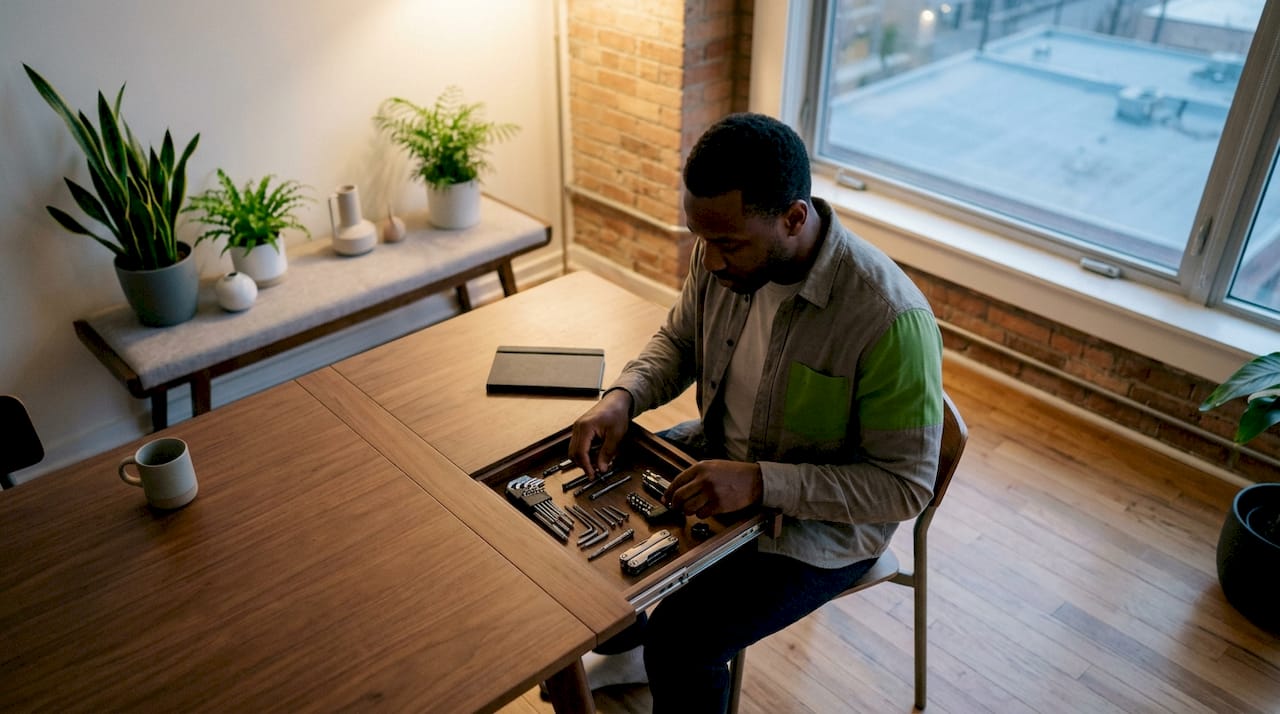
How has minimalist design evolved into warm minimalism?
Cold minimalism defined the 2010s. Stark white walls, polished concrete floors, and an almost clinical absence of warmth made many minimalist spaces feel more like showrooms than homes. By mid-2026, that approach has been replaced by what designers now call warm minimalism.
Warm minimalism shifted from cold, clinical white to soft neutrals and organic textures, creating spaces that feel personal and livable rather than austere. The change reflects a broader understanding that a home must be comfortable to actually function as a sanctuary.
The key differences between cold and warm minimalism show up in four areas:
- Color. Cold minimalism favored pure white and gray. Warm minimalism uses sand, terracotta, warm beige, and muted sage.
- Texture. Smooth, reflective surfaces give way to raw linen, rattan, hand-thrown ceramics, and rough-hewn wood. Imperfection is welcome.
- Furniture. Rigid, geometric pieces are replaced by softer forms with rounded edges and natural materials like oak and walnut.
- Lighting. Harsh overhead lighting is swapped for layered, warm-toned sources: table lamps, wall sconces, and pendant lights with amber bulbs.
The result is a modern minimalist style that still prioritizes simplicity but no longer sacrifices comfort. Warm minimalism proves that intentional living creates sanctuaries that are easier to clean, cheaper to maintain, and genuinely calming because everything in them earns its place.
What practical steps can you take to create a minimalist home?
The most common mistake people make is trying to decorate their way into minimalism. Minimalism cannot be achieved by shopping or rearranging. It requires rigorous editing of what you already own.
- Audit by category, not by room. Go through all books, then all kitchenware, then all clothing. Tackling categories prevents items from being shuffled between rooms without being evaluated.
- Apply a functional and emotional filter. Keep an item if it serves a daily purpose or carries genuine personal meaning. Remove everything else without guilt.
- Work room by room after the audit. Once possessions are reduced, arrange what remains with intention. Place furniture to create clear sightlines and preserve open floor space.
- Invest in quality over quantity. Owning fewer, better things is the core of minimalist home decor. A single well-made ceramic bowl outperforms a shelf of mismatched pieces in both function and visual impact.
- Avoid substituting shopping for decluttering. Buying minimalist-looking storage bins or new furniture before removing excess items just adds more clutter in a different form.
- Build maintenance habits. Minimalism is not a one-time project. A monthly review of each room keeps accumulation from creeping back in.
Pro Tip: When decluttering a kitchen, remove everything from the counters completely. Then only return items you use at least three times a week. The visual reset alone shows you how much counter space you actually have.
The benefits of minimalist living extend beyond aesthetics. Fewer possessions mean less time cleaning, less mental energy spent managing stuff, and lower costs maintaining a home over time.
What design strategies lead to a successful minimalist home?
Minimalism looks effortless but demands precision. Every surface, joint, and proportion must be exact because there is nowhere to hide poor craftsmanship when a room contains so little. That reality shapes every design decision.
Choosing the right furniture
Multi-functional furniture is the most practical tool in a minimalist home. A storage ottoman replaces both a coffee table and a linen chest. A bed with built-in drawers eliminates the need for a separate dresser. Each piece that serves two purposes removes the need for one more object in the room.
Investing in quality materials
Minimalist interiors reveal flaws immediately. A hairline gap in cabinetry, an uneven paint edge, or a cheap laminate surface stands out with nothing else to distract the eye. Higher-quality materials and tighter construction are not optional luxuries in this style. They are structural requirements. Minimalism costs more upfront because quality craftsmanship and precise execution are non-negotiable for the look to work.
Lighting and spatial hierarchy
Lighting defines how a minimalist space feels at different times of day. Layered lighting with separate circuits for ambient, task, and accent sources gives you control over mood without adding physical objects to the room. Spatial hierarchy means one element in each room draws the eye first. In a living room, that might be a single large artwork. In a bedroom, it is the bed itself. Everything else recedes.
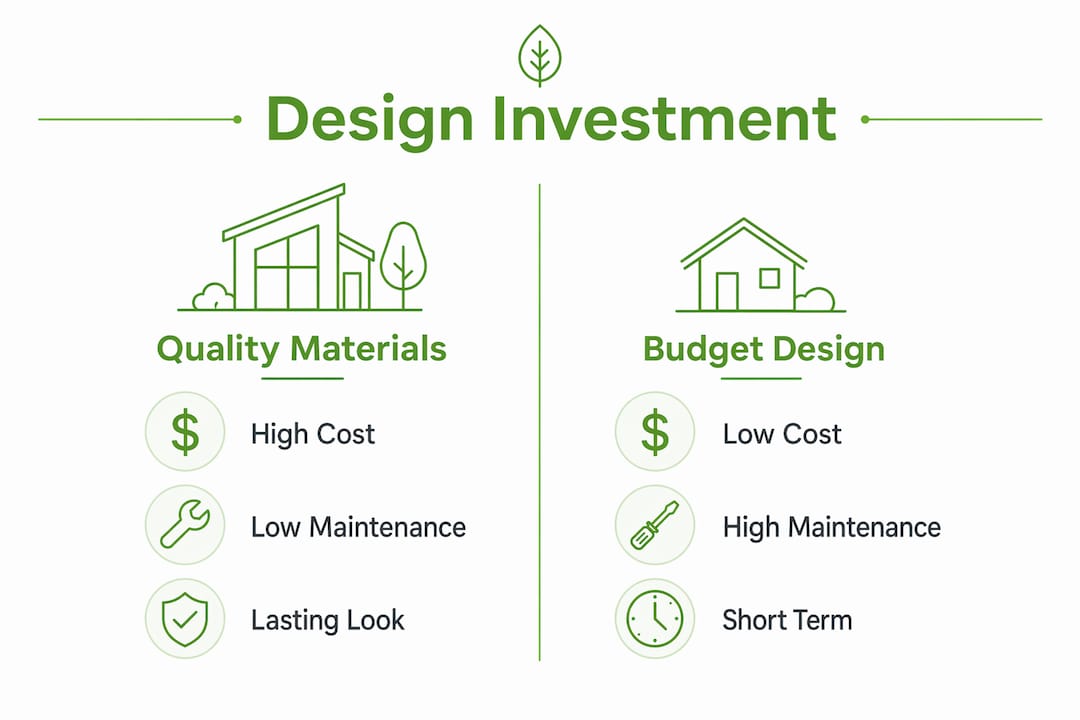
The table below compares two approaches to minimalist design investment so you can see where the real trade-offs land.
| Design approach | Upfront cost | Maintenance demand | Visual result |
|---|---|---|---|
| Quality materials, built-in storage | Higher | Low | Clean, precise, lasting |
| Budget finishes, freestanding storage | Lower | High | Cluttered over time |
The pattern is consistent. Spending more at the start on tiny homes or well-built spaces with integrated storage reduces the ongoing effort required to keep a home looking minimal. The math favors quality in the long run.
Key Takeaways
Minimalist home design succeeds when every object earns its place, quality replaces quantity, and negative space is treated as an active design element rather than an absence.
| Point | Details |
|---|---|
| Core rule: 60-30-10 | Use 60% neutral tones, 30% natural textures, and 10% a single accent piece for visual balance. |
| Warm minimalism leads in 2026 | Soft neutrals, organic textures, and rounded furniture replace cold, clinical white interiors. |
| Declutter before decorating | Audit possessions by category first; minimalism cannot be achieved by shopping or rearranging. |
| Quality costs more upfront | Higher-grade materials and built-in storage reduce long-term maintenance and visual clutter. |
| Negative space is intentional | Empty walls and open floors are active design choices, not gaps waiting to be filled. |
Why minimalism changed how I think about home design
Most people approach minimalism as an aesthetic goal. They want the clean look. What they discover, usually after the first serious declutter, is that the look is a side effect. The real outcome is mental clarity.
A well-edited room does something a busy room cannot. It stops demanding your attention. You walk in and your brain does not have to process dozens of competing objects. That quiet is not nothing. It is the entire point. Architects and designers have known this for decades, but homeowners often only feel it after living in a stripped-back space for a few weeks.
The challenge I see most often is people stopping halfway. They remove the obvious clutter but leave the “maybe” pile. Those items sit in a corner or a spare room and the cognitive load just moves location. Rigorous editing means making the hard calls, not postponing them.
The balance between personal expression and design discipline is real. A minimalist home should still feel like yours. One shelf of books you actually read, one piece of art that genuinely moves you, one plant that you tend. Those things belong. The discipline is in stopping there.
— Gridwise
Gridwiseliving’s approach to purposeful, organized living
Minimalism works best when your home is built for it from the start. Gridwiseliving designs products around the same principles that make minimalist spaces function well: fewer, better things, built to last, with no wasted space.
The tiny homes collection at Gridwiseliving is a direct expression of that philosophy. Each unit is engineered with integrated storage, clean lines, and multi-use layouts that eliminate the need for excess furniture. If you are building a minimalist lifestyle from the ground up, a fully equipped tiny home gives you a space that is already edited, already precise, and already designed to stay that way. Gridwiseliving also offers greenhouse solutions for homeowners who want to extend purposeful living outdoors without adding visual clutter to their property.
FAQ
What is the core definition of minimalist home design?
Minimalist home design is the practice of keeping only objects that serve a clear function or hold genuine personal meaning, using negative space, clean lines, and restrained color palettes to create calm, clutter-free living environments.
What is the 60-30-10 rule in minimalist interior design?
The 60-30-10 rule divides a room’s visual weight into 60% dominant neutral color, 30% natural textures, and 10% a single accent piece, creating balance without visual overload.
Is warm minimalism different from traditional minimalism?
Warm minimalism replaces cold white and gray palettes with soft neutrals, organic textures like linen and raw wood, and rounded furniture forms, making spaces feel livable and personal rather than clinical.
Does minimalist design cost more than conventional decorating?
Minimalism typically costs more upfront because quality materials and precise craftsmanship are required. However, lower maintenance demands and fewer replacement purchases reduce long-term costs.
Where do you start when creating a minimalist home?
Start by auditing possessions by category, not by room, and applying a functional and emotional filter to every item. Remove what does not pass before making any design or furniture decisions.