

Growing Organic Vegetables: What You Actually Gain
Growing organic vegetables at home cuts your family’s exposure to synthetic pesticide residues, builds healthier soil, and supports pollinators in your yard, while handing you fresher produce and lower grocery bills over time. Nutrient differences between organic and conventional vegetables remain genuinely mixed in the research, so the honest case for organic gardening rests less on a vitamin-count win and more on what you control: inputs, freshness, and how your soil behaves for years to come. Good technique amplifies every one of these benefits; sloppy technique erases most of them.
This article walks through:
- Health benefits backed by actual research (and where the evidence runs thin)
- Environmental gains for soil, water, and pollinators
- Practical upsides: cost, food security, and flavor
- The specific practices that produce these results
- Mental health and community payoffs
- Where organic gardening gets hard, and how to plan around it
Key Takeaways
Growing organic vegetables at home reliably reduces pesticide exposure and builds better soil, while cost savings, flavor, and mental health gains depend on consistent practice.
| Point | Details |
|---|---|
| Pesticide exposure drops | Organic growing consistently lowers synthetic pesticide residue compared to conventional produce. |
| Nutrient claims stay mixed | Vitamin and antioxidant differences vary by study; don’t oversell organic as automatically more nutritious. |
| Soil health compounds over time | Raising organic matter by 1% can lift potential yield by roughly 12% in some conditions. |
| Manure timing matters | Wait an extended period before harvesting crops after raw manure application, longer for ground-touching crops than for others. |
| Equipment reduces variability | A greenhouse and quality compost make organic results more consistent, especially in short growing seasons. |
Table of Contents
- Health Benefits of Growing Organic Vegetables
- Environmental Benefits: Soil, Water, and Biodiversity
- Practical Benefits: Cost, Food Security, and Flavor
- How Organic Gardening Practices Deliver These Results
- Mental Health and Community Payoffs of Organic Gardening
- Gridwise’s Take on Reliable Organic Growing at Home
- Supporting Local Economies Through Organic Vegetable Growing
- Challenges and Limitations of Growing Organic Vegetables
- What Home Gardeners Should Actually Prioritize
- Frequently Asked Questions
- Sources
Health Benefits of Growing Organic Vegetables
The clearest, best-supported health benefit of organic gardening is exposure reduction, not nutrient superiority. Mayo Clinic’s review of organic food research confirms that organic produce consistently carries lower synthetic pesticide residue than conventionally grown vegetables. That’s a measurable, repeatable finding across multiple studies, not a marketing claim.
Some cohort studies have found that people who eat more organic food show lower rates of certain cancers, with suggestions including non-Hodgkin lymphoma, though this is an association, not proof that organic food alone causes the difference. Diet quality, income, and lifestyle factors tend to travel together with high organic consumption, which muddies clean cause-and-effect claims.
Where the evidence gets genuinely murky is nutrition. A systematic review comparing organic and conventional produce found heterogeneous results across studies and concluded there isn’t enough solid evidence to say an organic-rich diet delivers clearly greater health benefits than a conventional one. Some studies show modestly higher polyphenols or vitamin C in organic crops; others show no meaningful difference at all. If someone tells you organic vegetables are definitively more nutritious, they’re overstating what the data shows.
The benefit nobody markets, though, is arguably the biggest one: growing your own vegetables increases the odds you’ll actually eat them. Fresh produce harvested minutes before dinner retains more of its flavor and texture than anything trucked in from a distribution center, and that immediacy tends to translate into eating more vegetables, more often.
- Lower pesticide residue exposure, confirmed across multiple reviews
- Possible (not proven) associations with lower cancer risk in high-consumption groups
- Mixed evidence on vitamins and antioxidants, no clear organic advantage
- Higher likelihood of increased vegetable intake simply from growing your own
Environmental Benefits: Soil, Water, and Biodiversity
Home organic gardening changes what happens beneath your feet and around your yard, not just what ends up on your plate. According to Missouri Extension’s organic gardening guidance, practices like composting, crop rotation, and cover cropping reduce runoff of synthetic pollutants into local waterways while building soil structure that holds water and nutrients more efficiently.
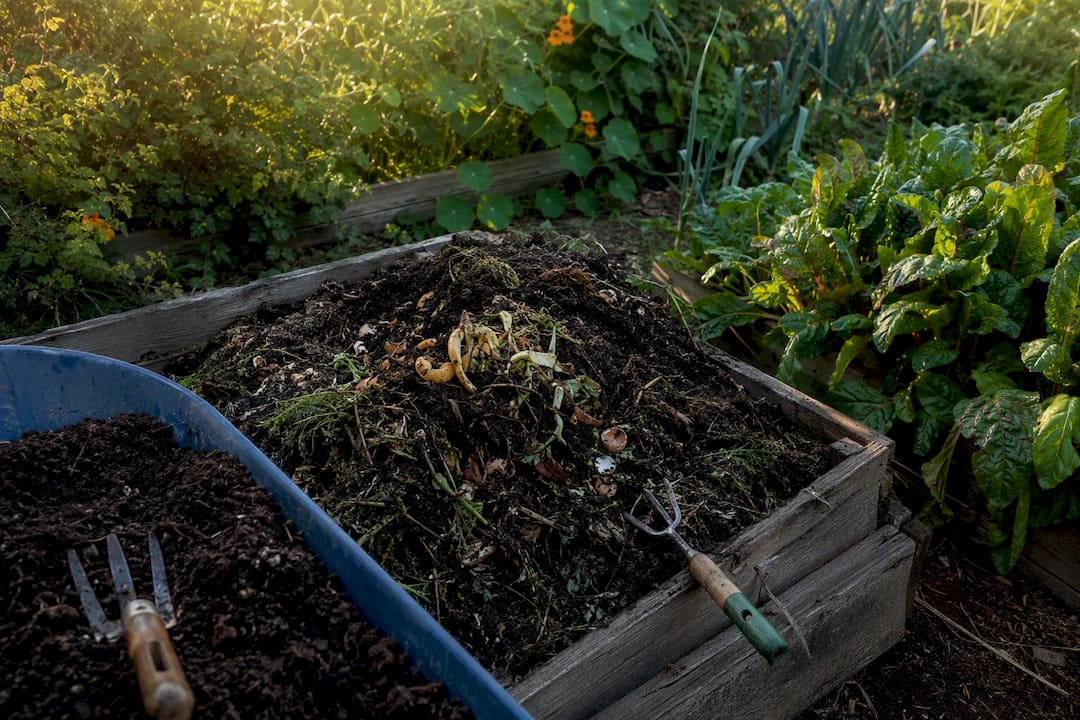
Reducing or eliminating synthetic pesticides also means your yard becomes a more livable place for pollinators and beneficial insects. Bees, ground beetles, and other predatory insects that keep pest populations in check thrive when you’re not spraying broad-spectrum chemicals every time you spot an aphid.
Soil organic matter is the number that ties all of this together. Missouri Extension notes that raising organic matter by even one percentage point can boost potential crop yield by a notable amount in some growing contexts, a compounding return that keeps paying off season after season.
| Soil metric | Typical organic garden target |
|---|---|
| Organic matter content | a moderate healthy range |
| Compost for soil building | a common recommended range per square foot |
| Compost for annual maintenance | a typical maintenance range per square foot |
- Composting and cover crops cut nutrient runoff into streams and groundwater
- Reduced pesticide use protects pollinators and predatory insects
- Higher soil organic matter improves both yield and drought resilience
Practical Benefits: Cost, Food Security, and Flavor
Seeds, compost, and basic tools cost real money upfront, but the payback shows up fast once beds are productive. A home garden built for cost savings routinely offsets its startup expenses within one or two growing seasons, especially with crops like tomatoes, peppers, and leafy greens that produce heavily from a small footprint.
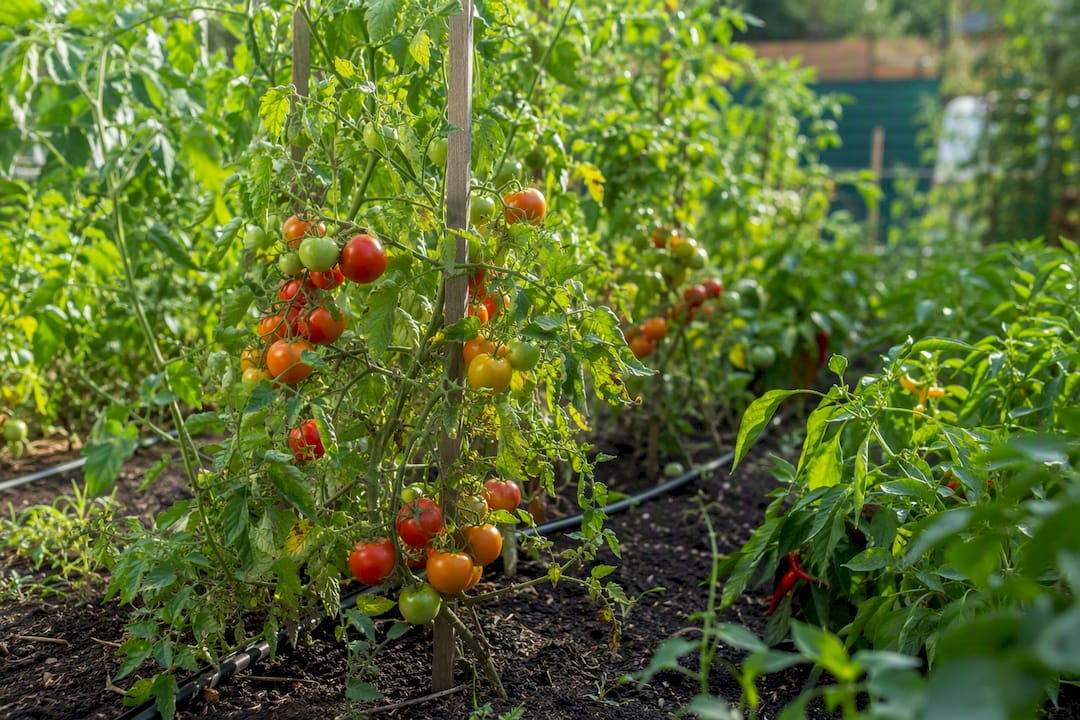
Flavor is the benefit skeptics underestimate most. A tomato picked ripe and eaten within hours tastes fundamentally different from one picked green and ripened in transit, because sugars and volatile compounds that create flavor start declining the moment a vegetable leaves the plant.
There’s also a resilience angle. Growing even a portion of your own food buffers you against grocery price swings and supply chain hiccups, and it puts you in full control of what touches your vegetables, from soil amendments to pest treatments.
- Startup costs typically pay back within one to two seasons of consistent harvests
- Home-harvested produce holds flavor and nutrients better than store-bought equivalents
- Growing your own food reduces dependence on grocery supply chains
- You decide exactly what inputs touch your soil and plants
How Organic Gardening Practices Deliver These Results
None of the benefits above happen automatically. They come from specific, repeatable practices that feed soil biology instead of fighting it.
- Build organic matter deliberately. Apply compost at 1 to 2 pounds per square foot when establishing a new bed, then 0.5 to 1 pound per square foot annually for maintenance, working toward that 3% to 5% organic matter target.
- Rotate crops and plant cover crops. Moving plant families around each season interrupts pest and disease cycles, while cover crops like clover or rye protect soil structure during off-seasons.
- Respect manure timing. Missouri Extension’s guidance recommends waiting 120 days after applying raw manure before harvesting crops that touch the soil, and 90 days for crops that don’t, to avoid pathogen contamination.
- Choose pest control that isn’t synthetic. Row covers, hand-picking, companion planting, and beneficial insects like ladybugs handle most pest pressure without a spray bottle full of chemicals. Nonchemical pest control methods work especially well in enclosed growing spaces.
- Adapt for small spaces. Containers, raised beds, mulch, and drip irrigation let apartment dwellers and small-yard owners run a genuinely organic system without an acre of land.
Pro Tip: Before buying any fertilizer or pest product labeled “natural” or “safe,” check whether it’s actually OMRI-listed. Plenty of products carry green packaging and vague claims without meeting the organic standard, and some contain inert ingredients that disqualify them entirely.
Mental Health and Community Payoffs of Organic Gardening
Gardening does something for your head that no amount of produce-counting captures. Research on horticultural therapy, covered in Psychology Today, links regular gardening activity to measurably reduced stress and improved mood.
- Time in the garden is consistently associated with lower stress and better overall mood
- Sharing surplus harvests with neighbors builds real community connections
- Growing vegetables yourself makes you significantly more likely to eat them regularly
Gridwise’s Take on Reliable Organic Growing at Home
Every practice above works better with the right growing conditions, and that’s where equipment stops being optional and starts being strategic. A greenhouse extends your season on both ends, protects seedlings from unpredictable spring frosts, and gives you enough climate control to keep organic pest management manageable instead of chaotic.
Gridwiseliving builds greenhouses specifically for home growers who want that reliability without commercial-scale complexity, alongside guidance on where to place a backyard greenhouse for best sun exposure and drainage. Pair that structure with quality compost and a rotation plan, and you’ve closed most of the gap between “trying organic” and “consistently getting organic results.”
- A greenhouse buys you season-extension and frost protection year-round
- Site selection determines how much of that potential you actually capture
- Quality soil inputs still matter more than any structure around them
Pro Tip: If you’re short on yard space, pair a small greenhouse with container gardening techniques rather than waiting for a bigger property. Containers inside a protected structure often outperform open-ground beds in cold climates.
Supporting Local Economies Through Organic Vegetable Growing
Home organic gardens don’t operate in isolation from the local economy, even though the vegetables never touch a store shelf. Every dollar spent on compost, seedlings, or tools from a local nursery or garden center stays circulating in your community instead of flowing to a distant supplier. That’s a small but real economic ripple most gardeners never think about.
Seed swaps and plant sales, common in gardening clubs and community gardens, keep money and knowledge moving locally rather than through national seed conglomerates. Surplus harvests shared with neighbors or donated to food pantries reduce household grocery demand for those recipients, which has a quiet but genuine effect on local food security.
Home organic growing also props up small regional businesses that specialize in compost, soil amendments, and OMRI-listed products, businesses that larger conventional agriculture rarely buys from. When enough households in a neighborhood grow organically, local nurseries and garden suppliers see steady demand for organic-specific products, which in turn justifies carrying a wider selection.
There’s a skills dimension too. Community gardens and local extension offices that teach organic techniques create informal economies of knowledge exchange, where experienced growers mentor newcomers. That network strengthens local food resilience in ways that show up during supply disruptions, when neighborhoods with active home-gardening cultures adapt faster than those without one.
Challenges and Limitations of Growing Organic Vegetables
Organic gardening isn’t friction-free, and pretending otherwise sets beginners up for frustration. Pest and disease management takes more hands-on attention without synthetic pesticides as a backstop, which means more scouting, more row covers, and occasionally more crop loss than a conventional approach might tolerate.
Yields can also lag conventional methods in the first few seasons while soil biology rebuilds, especially on land that previously received heavy synthetic fertilizer. Organic inputs like quality compost, OMRI-listed pest controls, and cover crop seed cost more upfront than synthetic alternatives, and they take longer to show results.
Urban gardeners face a specific risk conventional guides rarely mention: contaminated soil. Beyond Pesticides recommends testing urban soil for lead and arsenic before growing food in it, since decades of industrial activity, old paint, or leaded gasoline residue can linger in soil long after the original source is gone. Municipal compost and bagged mulch sold at big box stores aren’t automatically safe either. Sourcing from known suppliers, or making your own compost, avoids that uncertainty entirely.
Time is the least glamorous limitation. Organic gardening rewards patience and weekly attention, and gardeners who expect a “plant it and forget it” experience usually end up disappointed by midsummer.
What Home Gardeners Should Actually Prioritize
The research doesn’t support treating organic vegetables as a nutritional upgrade over conventional ones. That’s the uncomfortable part conventional gardening advice tends to skip past in favor of a cleaner sales pitch. What the evidence does support strongly is exposure reduction and soil-building, and those two things alone justify the effort for most home growers.
Where I think most beginners go wrong is starting with pest control instead of soil. Chasing aphids with organic sprays before your soil biology is established is fighting symptoms, not causes. Feed the soil first, with real compost at the rates Missouri Extension outlines, and pest pressure tends to drop on its own as plants grow healthier and more resistant.
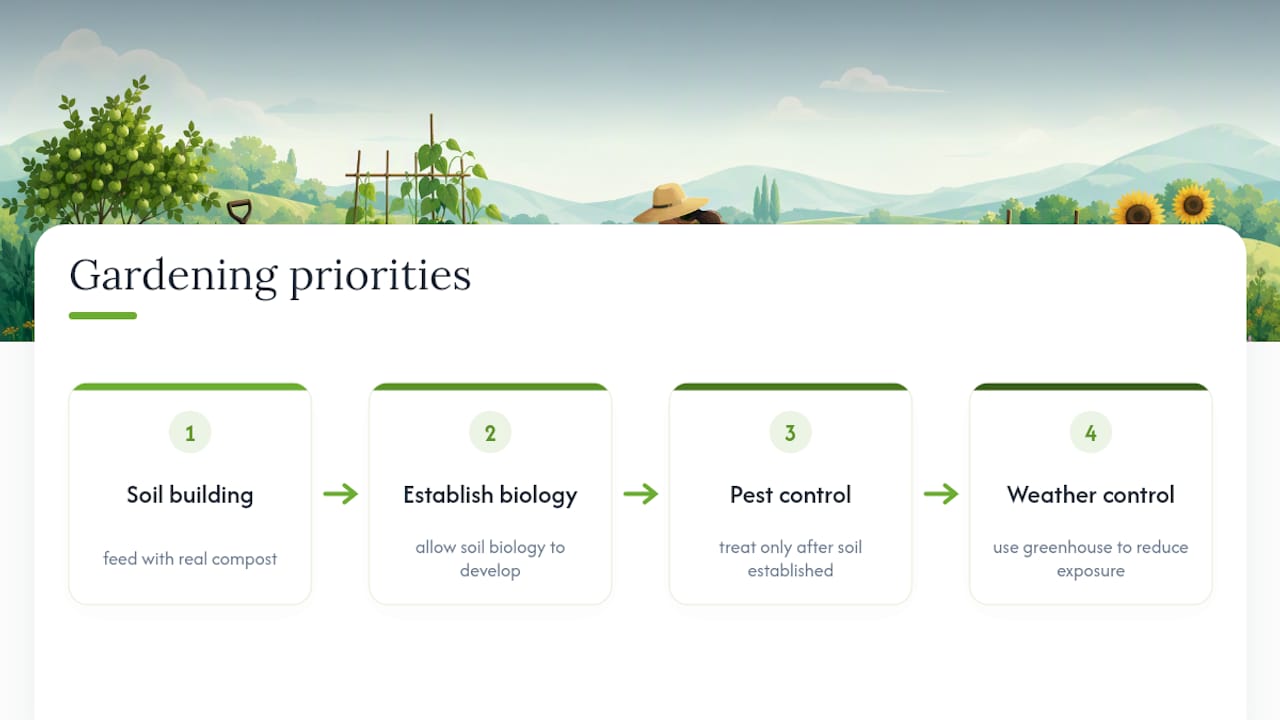
If you’re gardening in a small yard or a short season, don’t treat a greenhouse as a luxury. It’s the single fastest way to close the gap between “I tried organic gardening once” and “I grow reliable organic harvests every year,” because it removes the weather variability that derails so many first attempts.
Frequently Asked Questions
What are the main benefits of growing organic vegetables? The best-supported benefits are lower pesticide residue exposure, improved soil health, and increased biodiversity in your yard, along with practical gains like fresher produce, lower long-term grocery costs, and better flavor.
Are organic vegetables actually more nutritious than conventional ones? Not clearly. Systematic reviews show mixed, inconsistent results on nutrient content, so the nutritional case for organic produce is weaker than the pesticide-exposure case.
How long before organic gardening pays for itself? Most home gardeners see startup costs offset within one to two growing seasons, particularly with high-yield crops like tomatoes, peppers, and leafy greens.
What’s the biggest mistake new organic gardeners make? Skipping soil building in favor of jumping straight to pest control. Healthy, organic-matter-rich soil prevents many pest and disease problems before they start.
Do I need a lot of land to grow organic vegetables? No. Container gardening, raised beds, and small greenhouses let gardeners with limited space run a fully organic system, especially when paired with mulching and drip irrigation.
Sources
- Organic foods: Are they safer? More nutritious? - Mayo Clinic
- Organic Vegetable Gardening Techniques | MU Extension
- Potential Health Benefits of a Diet Rich in Organic Fruit and Vegetables versus a Diet Based on Conventional Produce: A Systematic Review
- Grow Your Own Organic Food — Beyond Pesticides
- The therapeutic garden - Psychology Today