

Benefits of Buying Durable Home Products for Homeowners
Buying durable home products is one of the highest-return decisions a homeowner can make: the right choices cut lifetime costs, raise resale appeal, reduce daily maintenance stress, and shrink your household’s environmental footprint all at once.
- Money saved over time: Quality items cost less per year when you factor in fewer replacements, lower repair bills, and better energy efficiency.
- Health, comfort, and resilience: Durable materials and systems reduce allergens, hazardous off-gassing, and the chaos of emergency repairs.
- Sustainability and less waste: Longer-lasting products mean fewer items in landfills and less manufacturing demand on the planet.
Table of Contents
- What are the main benefits of buying durable home products?
- Money matters: does buying quality actually save you more?
- How durable home products improve your daily comfort and safety
- Why durable products are also the greener choice
- Which materials and product categories actually last?
- How to choose durable home products before you buy
- How Gridwiseliving approaches durable home products
- Key Takeaways
- Why durability is the most underrated homeowner strategy
- Durable solutions from Gridwiseliving worth exploring
What are the main benefits of buying durable home products?
The advantages of durable home goods fall into six clear categories, each with a direct impact on how you live and what you spend:
- Financial savings: Lower total cost of ownership through fewer replacements and reduced repair frequency.
- Health and comfort: Safer materials, better indoor air quality, and fewer hazard-related disruptions.
- Environmental impact: Less landfill waste, lower manufacturing demand, and a smaller carbon footprint over time.
- Performance and reliability: Products that work consistently for years without degrading in function.
- Maintenance and time savings: Fewer breakdowns mean less time spent researching replacements or coordinating repairs.
- Quality of life: The mental load of managing a home drops when you stop cycling through cheap products that fail on schedule.
Consumers who prioritize eco-friendly and durable purchases consistently cite reducing pollution, conserving resources, and supporting sustainable practices as their top motivations. The financial case and the values case point in the same direction.
Money matters: does buying quality actually save you more?
The short answer is yes, and the math is straightforward once you run it. Durable items almost always lower your total cost of ownership when they reduce how often you replace or repair something.
The concept is sometimes called the “Boots Theory,” and it reframes quality purchases as wealth-building rather than splurging. If you can afford the better version upfront, you free future income that would otherwise go toward repeated replacements of the cheaper one. Research summarized by amoneygeek found that shoppers who bought low-cost versions spent about 37% more over five years compared to buyers of quality alternatives.
The formula to run before any major purchase is simple:
Annual cost = purchase price ÷ expected lifespan (years) + estimated annual repair costs
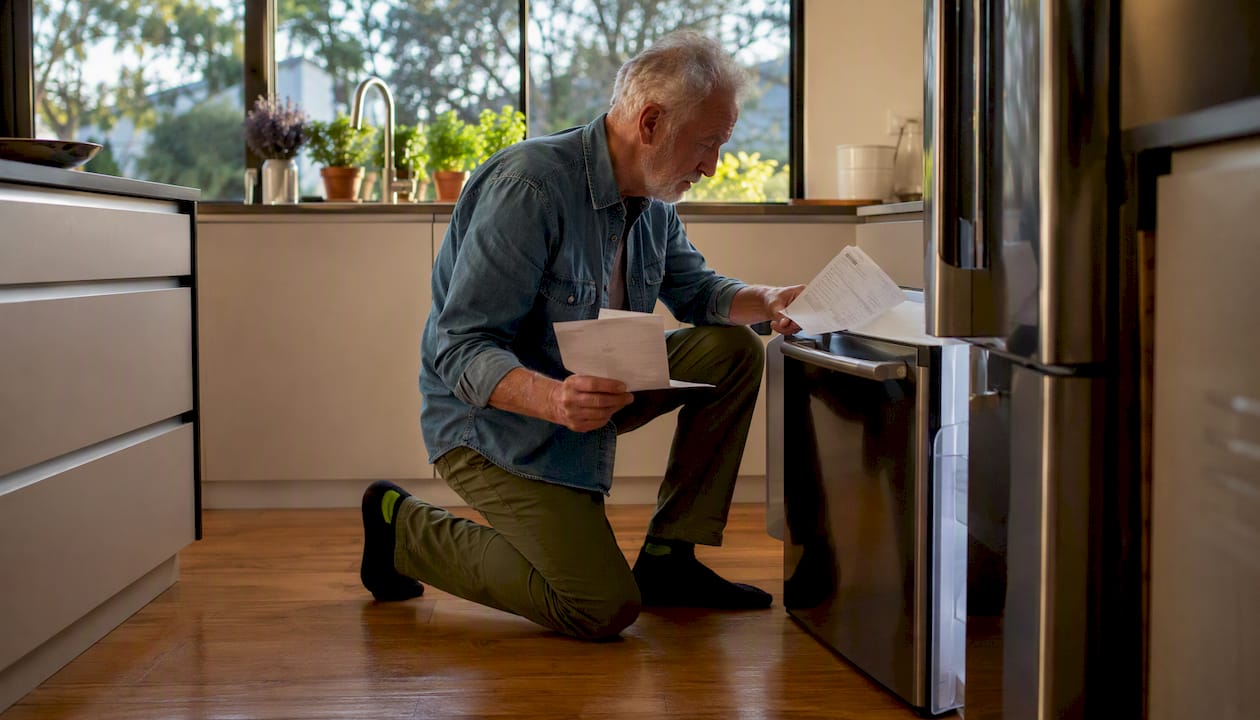
A practical appliance example makes this concrete. A $1,800 durable refrigerator lasting 18 years has a lower annual cost than a $600 model lasting 6 years, especially when you factor in additional repair calls, energy inefficiency, and the time cost of shopping for a replacement. Add those in, and the cheaper fridge is rarely cheaper.
Energy-efficient upgrades follow the same logic at a larger scale. Quality insulation, high-performance HVAC, and solar systems reduce ongoing utility costs while simultaneously increasing property value and buyer appeal at resale. Durable interior upgrades, like solid-core doors, can also improve home value and energy efficiency in ways that show up on an appraisal.
Pro Tip: Before assuming a product will last, check whether the manufacturer sold replacement parts for models released 5–10 years ago. That track record is a better longevity signal than any warranty marketing claim.
How durable home products improve your daily comfort and safety
The financial case gets most of the attention, but the daily-life benefits of long-lasting home items are just as real. Choosing durable materials and systems improves indoor comfort and safety while cutting the health-related costs that cheap products quietly generate.
Three examples show how this plays out:
- Sleep quality: A quality mattress built with durable foam or coil systems maintains its support profile for years. Budget versions compress and lose support within 18–24 months, disrupting sleep without the owner realizing the mattress is the cause.
- Fewer repair hazards: Emergency repairs, rushed fixes, and improvised workarounds create real safety risks. Durable systems fail less often, which means fewer exposed wires, leaking pipes, or unstable structures in your home.
- Reduced VOCs and off-gassing: Cheap furniture and finishes often use adhesives and coatings that off-gas volatile organic compounds (VOCs) for months. Solid hardwood, natural finishes, and commercial-grade materials skip most of that chemistry entirely.
There is also a less-discussed benefit: durable goods reduce household mental load. The time and stress spent researching replacements, scheduling repairs, and managing product failures adds up. Homes stocked with reliable products simply require less of your attention.
Proper storage and handling of household products also matters. Public health guidance on safe storage of household hazardous products shows that correct storage prevents poisonings, spills, and accidental contamination, reducing both health risks and waste from premature disposal.
Why durable products are also the greener choice
Durability and sustainability are the same argument from two angles. Every product you replace is a product that gets manufactured, shipped, and eventually discarded. Extending a product’s lifespan directly reduces all three of those impacts.

NIST analysis found that a 50% increase in life expectancy for discrete goods could lower replacement-related environmental impacts by roughly 33% and translate to large consumer savings at scale. That is not a marginal improvement. It means that buying one well-made piece of furniture instead of two cheap ones over the same period cuts the associated manufacturing and landfill impact by a third.
Practical examples of this in action:
- Furniture: Cheap, short-lived furniture contributes heavily to household waste streams. A solid hardwood table that lasts 30 years displaces three or four particleboard replacements.
- Kitchenware: A cast iron skillet used for decades never ends up in a landfill the way a coated nonstick pan does after its surface degrades.
- Appliances: A refrigerator lasting 18 years instead of 6 avoids two full manufacturing cycles and two disposal events.
The circular economy principle at work here is straightforward: products designed for repairability and longevity reduce manufacturing demand at the source, which is where the largest environmental savings occur.
Which materials and product categories actually last?
A handful of material choices reliably predict longevity. The mechanism is usually simple: natural or single-material builds resist degradation better than composite or coated alternatives, and they can be repaired rather than discarded.
| Material / Design | Typical Lifespan | Repairability | Environmental Impact |
|---|---|---|---|
| Solid hardwood furniture | 30–50+ years | High (refinishable, repairable) | Low per year of use |
| Particleboard furniture | 3–6 years | Low (swells, delaminates) | High per year of use |
| Cast iron cookware | 50–100+ years | Very high (re-seasoning restores) | Very low per year of use |
| Nonstick-coated cookware | 2–5 years | None (coating degrades) | High per year of use |
| Stainless steel appliance interior | 15–20+ years | Moderate | Low per year of use |
| Painted/plastic appliance interior | 6–10 years | Low | Moderate per year of use |
Category-by-category, here is what to look for:
- Insulation and HVAC: High-performance insulation and properly sized HVAC systems pay back their premium through decades of lower utility bills. See why insulation choices directly affect energy costs over a system’s lifespan.
- Solar systems: — Photovoltaic panels typically carry 25-year performance warranties. The upfront cost is real, but the per-year energy cost drops sharply over the system’s life.
Pro Tip: The single fastest way to identify a truly durable product is to look for standard fasteners and screws instead of glued housings. If you can open it, you can fix it.
How to choose durable home products before you buy
The buying decision is where most homeowners lose the durability game. A quick checklist applied before any major purchase prevents the expensive mistake of choosing the cheaper item that costs more over time.
Pre-purchase checklist:
- Material: Is it solid, single-material, or composite and coated?
- Repairability: Can it be disassembled with standard tools?
- Parts availability: Does the manufacturer sell parts for models 5–10 years old?
- Warranty: Is it a meaningful term (5+ years) or a 90-day limited?
- Energy efficiency: Does it carry an ENERGY STAR rating or equivalent?
- Manufacturer reputation: Do owners report the same unit running 10+ years?
Questions to ask a retailer or manufacturer:
- Are replacement filters, bearings, or gaskets available for this model?
- What is the expected service interval, and what does servicing cost?
- Is the housing assembled with screws or adhesive?
Red flags that predict early failure:
- Glued or snap-fit housings with no visible fasteners
- Proprietary fasteners that require special tools
- No published parts catalog or service manual
- Warranty that excludes labor or limits coverage to 12 months
Maintenance tips that extend lifespan
Buying well is only half the equation. Routine care preserves the investment:
- Cast iron: Dry immediately after washing, apply a thin oil coat, and store in a dry cabinet. A well-maintained skillet outlasts its owner.
- HVAC systems: Replace filters on schedule (every 60–90 days for standard filters) and have the system serviced annually. Neglected systems fail years early.
- Appliances: Clean condenser coils on refrigerators annually; check door seals for gaps. Both extend compressor life significantly.
- Furniture: Keep solid wood away from direct heat sources and humidity extremes. Refinish surfaces before damage reaches the structural wood.
- Solar panels: Clear debris and check mounting hardware annually. Most performance loss comes from shading and dirt, not panel degradation.
Step-by-step evaluation process for any major purchase:
- Define use frequency (daily, weekly, seasonal).
- Run the annualized cost formula: price ÷ lifespan + annual repair estimate.
- Check parts and warranty terms against the checklist above.
- Assess energy efficiency and its impact on utility costs.
- Decide: if the durable option costs less per year and meets the checklist, buy it once.
How Gridwiseliving approaches durable home products
Gridwiseliving curates products selected specifically for durability, repairability, and long-term value. The product range maps directly onto the categories where durability matters most for homeowners pursuing self-reliance.
- Greenhouses: Aluminum-framed, polycarbonate-glazed structures built to resist corrosion, UV exposure, and seasonal weather. A quality greenhouse is a long-term investment in home food production that pays back through reduced grocery costs year after year.
- Tiny homes: Lower-maintenance living with a smaller footprint. Tiny homes cost less to maintain than conventional houses, and their compact, efficient design reduces both energy use and repair complexity.
- Solar energy systems and generators: Photovoltaic systems with 25-year performance warranties and whole-home backup generators that reduce dependence on grid power. These are durable investments in energy independence that lower utility costs over decades.
- Water filtration systems: Whole-home and point-of-use filtration built for long service intervals, reducing both plastic waste and the ongoing cost of bottled water.
- Seeds for home food production: Non-perishable, reusable seed stock that supports a long-term food-growing strategy rather than a one-season purchase.
Gridwiseliving evaluates products for material quality, warranty terms, and parts availability before adding them to the catalog. The goal is a selection where every item passes the buy-it-once standard.
Key Takeaways
Durable home products lower your total cost of ownership, reduce environmental impact, and improve daily comfort when you choose materials and systems built to last.
| Point | Details |
|---|---|
| Annualized cost math wins | Divide price by expected lifespan and add repair costs to compare products honestly before buying. |
| Parts availability predicts longevity | Check whether a manufacturer sold parts for models 5–10 years old before trusting any warranty claim. |
| 50% longer lifespan = ~33% less environmental impact | NIST analysis shows extending product life expectancy by half cuts replacement-related impacts by roughly one-third. |
| Material choice is the fastest signal | Solid hardwood, cast iron, and stainless steel interiors reliably outlast particleboard, coated pans, and plastic interiors. |
| Gridwiseliving for durable home systems | Gridwiseliving’s greenhouses, solar systems, tiny homes, and filtration products are selected for long-term value and repairability. |
Why durability is the most underrated homeowner strategy
Most homeowners think about durability only after something breaks. That is the wrong moment. The real leverage is at the point of purchase, when the annualized cost math is still in front of you and the temptation to save $200 upfront feels rational.
What that framing misses is the compounding effect. Every durable choice you make reduces not just the replacement cost but the mental overhead of managing a home. Fewer breakdowns, fewer repair calls, fewer Saturday mornings spent at a big-box store picking a replacement. That time and attention has real value, even if it never shows up on a spreadsheet.
The sustainability argument reinforces the financial one rather than competing with it. Buying fewer, better things is both the cheaper long-term strategy and the lower-impact one. The two goals are not in tension. A cast iron skillet, a solid hardwood table, a well-insulated home, a solar system with a 25-year warranty: these are not luxury choices. They are the rational ones when you run the numbers honestly.
Gridwiseliving’s product focus reflects exactly this logic. Greenhouses, solar systems, and tiny homes are not impulse purchases. They are infrastructure, and infrastructure built to last is infrastructure that pays you back.
Durable solutions from Gridwiseliving worth exploring
If the financial and sustainability case for durability resonates, the logical next step is putting it into practice with products built to the standard the article describes.
Gridwiseliving’s catalog is built around exactly that standard: structures, energy systems, and home solutions selected for long service life, repairability, and real-world value. A heavy-duty aluminum polycarbonate greenhouse gives you a food-growing structure designed to handle years of weather without rotting, warping, or requiring replacement glazing. The tiny homes collection offers low-maintenance housing built for efficiency and longevity. And the solar energy systems range covers everything from portable entry-level kits to whole-home backup power, all with the long warranty terms that signal genuine manufacturer confidence.
Browse Gridwiseliving’s full range of durable home solutions and find the products that match your self-reliance goals at gridwiseliving.com.