

The Role of Multi-Use Furniture Explained for Homeowners
Multi-use furniture is defined as any piece that fulfills two or more distinct functions within a single unit, such as a sofa that converts to a bed or an ottoman with built-in storage. The role of multi-use furniture explained simply is this: it lets you do more with less floor space. 68% of homeowners prioritize versatile, multi-functional furniture to maximize space in smaller living environments. That number reflects a real shift in how people think about their homes. Whether you live in a 600-square-foot apartment or a three-bedroom house, multi-functional furniture benefits every room by reducing clutter, cutting costs, and giving each space more than one job.
What are the primary benefits of multi-use furniture?
Multi-use furniture delivers four core advantages: space savings, cost efficiency, reduced clutter, and design flexibility. Each one compounds the others, making versatile furniture one of the highest-return investments you can make in your home.
Space savings are the most immediate benefit. A Murphy bed, for example, converts a guest room into a workout studio in under a minute. Room-transforming furniture ensures no floor space sits wasted regardless of the time of day. That matters most in apartments and smaller homes where every square foot carries real cost.
Cost efficiency follows directly from consolidation. Multi-functional furniture reduces total household furniture count by combining multiple purposes into one unit. Buying one piece that serves as a dining table, desk, and storage unit costs less than buying three separate pieces. The savings on delivery, assembly, and eventual replacement add up quickly.
The benefits of multi-use furniture also include:
- Clutter reduction. Fewer pieces mean fewer surfaces to accumulate objects. A storage bench at the entryway replaces a coat rack, a shoe cabinet, and a side table.
- Aesthetic consistency. One well-designed piece reads cleaner than three mismatched ones. Versatile furniture tends to favor neutral, adaptable styling that works across room transitions.
- Adaptability across life stages. A nightstand that doubles as a side table works in a bedroom today and a living room five years from now. Multi-functional furniture adapts to changing life stages and can function in multiple rooms, extending its useful life considerably.
- Lower environmental impact. Fewer pieces purchased means less material consumed and less furniture sent to landfill.
Common examples include storage ottomans, convertible sofas, extendable dining tables, loft beds with desks underneath, and wall-mounted fold-down desks. Each one replaces at least two single-purpose items.
How to choose the right multi-use furniture for your space
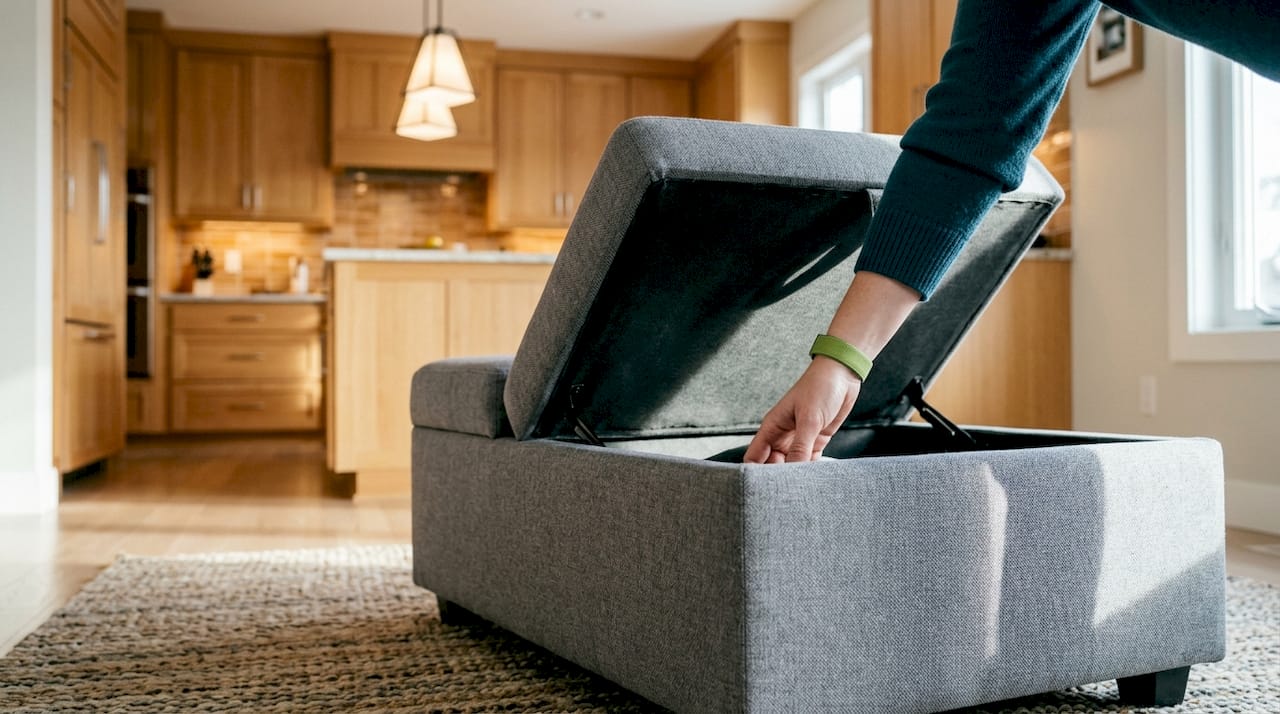
Choosing the right piece starts with understanding how you actually use each room, not how you think you use it.
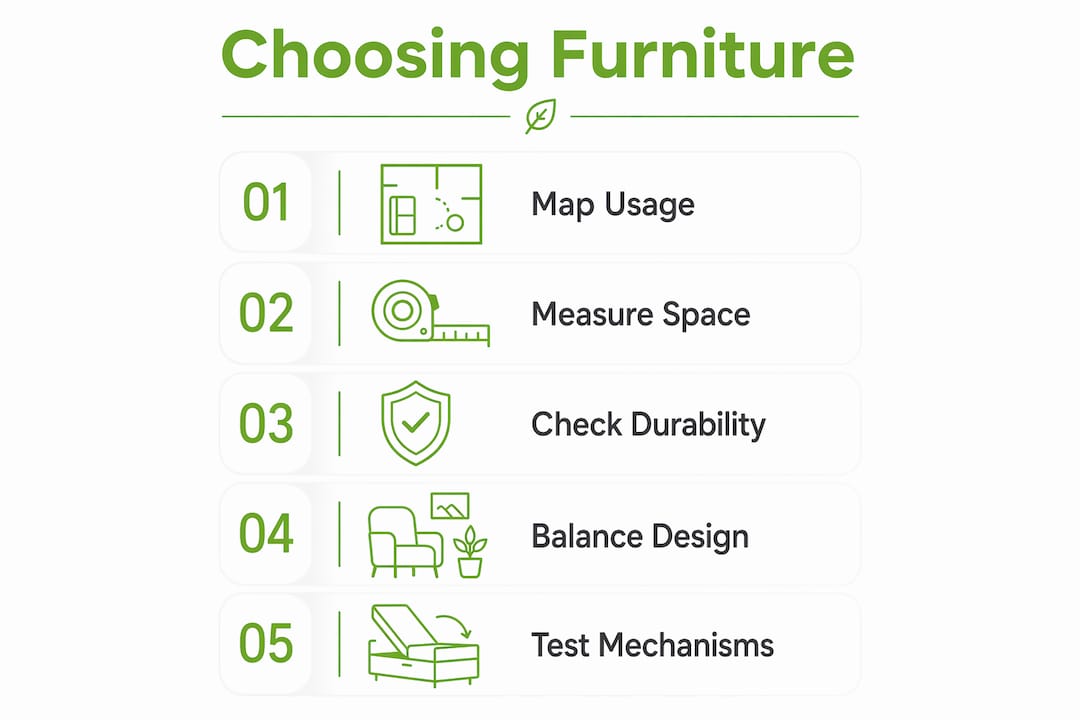
Map your usage patterns first
Pattern-of-use mapping helps you select furniture that addresses real lifestyle needs. Spend one week noting what activities happen in each room and at what times. A home office that doubles as a guest room needs a different solution than a living room that needs to seat eight people on weekends. Observing real behavior prevents you from buying a piece optimized for a use case that rarely happens.
Measure everything, including clearance
- Measure the room in its current state, including doorways and hallways the furniture must pass through.
- Measure clearance in both open and closed positions to confirm the piece fits when fully deployed.
- Account for traffic flow. A fold-out desk that blocks the path to the kitchen defeats its own purpose.
- Verify the piece fits through your building’s elevator or stairwell before purchasing.
Renters especially underestimate maneuverability constraints. A sofa bed that cannot fit through a narrow apartment hallway is useless regardless of its features.
Prioritize mechanical durability
Durability is critical for mechanical parts in multi-functional furniture because frequent transformations stress joints and mechanisms far more than standard use. Ask about hinge quality, drawer slide ratings, and frame materials before buying. Solid hardwood and steel frames outlast particleboard and plastic hardware by years. A piece that breaks after 18 months of daily use costs more in the long run than a pricier, better-built option.
Balance function with visual fit
The best multi-use furniture disappears into the room. It should look intentional, not improvised. Choose finishes and proportions that match your existing pieces. A storage coffee table in walnut veneer reads as a design choice. The same table in mismatched white laminate reads as a compromise.
Pro Tip: Test every mechanism in the store or showroom before buying. Open the sofa bed fully, extend the dining table, pull out every drawer. A mechanism that feels stiff in a showroom will feel worse after a year of daily use.
What design trends are shaping multi-use furniture today?
The biggest shift in multi-use furniture design is the move away from purely fold-away solutions toward pieces that look and feel permanent. Modern design favors integrated built-in systems that blend storage, display, and workspace, making functionality a permanent architectural feature rather than a visible workaround.
This philosophy shows up in several specific trends:
- Wall-integrated systems. Floor-to-ceiling units that combine open shelving, closed storage, a fold-down desk, and a Murphy bed now read as architecture, not furniture. They are designed to match wall colors and trim profiles so the room looks complete whether the bed is up or down.
- Proportional versatility. Designers now prioritize pieces that maintain correct visual weight in both configurations. A sofa that converts to a bed should look like a sofa first, not a bed frame with cushions.
- Multi-generational design. Flexible, multi-use designs foster furniture longevity and cross-generational utility. A piece bought for a nursery that later works in a teenager’s room, and then in a home office, delivers value across decades.
- Material upgrades. High-use mechanisms now appear in solid brass, aircraft-grade aluminum, and powder-coated steel. These materials signal permanence and resist the wear that cheaper hardware cannot.
- Double-duty surfaces. Dining tables with built-in wireless charging pads, kitchen islands with integrated cutting boards and compost bins, and coffee tables with lift-top desks are all examples of function embedded directly into the surface.
Design philosophy now integrates multi-use furniture as architectural elements rather than utilitarian additions. That distinction matters because it changes how you budget, plan, and shop.
How can homeowners and renters maximize space with multi-use furniture?
The advantages of versatile furniture only materialize when the pieces match the actual constraints of your living situation. Strategy matters as much as product selection.
Small apartments and studio spaces
In studios and one-bedroom apartments, every piece must earn its place twice. A loft bed with a desk and wardrobe underneath replaces three separate items and frees the floor for living. A dining table that folds against the wall and seats two daily but extends to seat six for guests handles both everyday use and entertaining without a dedicated dining room.
Adapting existing furniture
Adapting heirloom furniture with features like pull-out trays can add multi-functionality without full replacement. A solid wood dresser gains new life with a custom pull-out surface that creates a vanity or workspace. This approach supports sustainability and preserves pieces with sentimental value. It also costs far less than buying new.
Pro Tip: Before replacing a piece you love, ask a local furniture maker whether a pull-out shelf, hidden drawer, or fold-down surface can be added. The modification often costs less than $200 and doubles the piece’s utility.
Flexible layouts for renters
Renters benefit most from freestanding, modular pieces that move easily and leave no permanent marks. Modular shelving systems that reconfigure into room dividers, desks, or media consoles work in any apartment layout. When you move, the pieces adapt to the new space rather than becoming obsolete.
| Furniture category | Primary function | Secondary function | Best use case |
|---|---|---|---|
| Storage ottoman | Seating | Storage, coffee table | Living rooms, bedrooms |
| Murphy bed | Sleeping | Wall unit, workspace | Studios, guest rooms |
| Extendable dining table | Dining | Workspace, crafting | Small dining areas |
| Loft bed with desk | Sleeping | Home office | Bedrooms, studios |
| Modular shelving | Storage | Room divider, display | Any room |
Designing with multi-use furniture for a tiny home or compact living space follows the same logic at a smaller scale. Every surface, every vertical inch, and every transition between functions must be planned deliberately.
Key Takeaways
Multi-use furniture is the most direct way to increase functional space without increasing square footage, and selecting pieces based on real usage patterns determines whether that investment pays off.
| Point | Details |
|---|---|
| Define functions before buying | Map how each room is actually used across a week before selecting any piece. |
| Measure all clearances | Check furniture dimensions in every open position and confirm it fits through entryways. |
| Prioritize mechanical quality | Solid hardwood and steel hardware outlast cheaper materials under daily transformation stress. |
| Adapt before replacing | Pull-out trays and fold-down surfaces can add multi-functionality to existing heirloom pieces. |
| Match design to architecture | Integrated wall systems read as permanent features, not workarounds, and hold their value longer. |
My honest take on multi-use furniture’s future
I have watched the conversation around multi-use furniture shift from “clever compromise” to “deliberate design choice,” and that shift is not cosmetic. Homeowners used to apologize for a Murphy bed. Now they center the room around it.
The sustainability angle is the part most people still underestimate. Adapting existing furniture extends its useful life and supports real sustainability goals, not just marketing language. Buying fewer, better pieces and keeping them longer is a more meaningful environmental act than buying “eco-friendly” single-purpose furniture every few years.
My view is that multi-use furniture will become a standard specification in new construction within the next decade, the same way built-in closets and kitchen islands became standard. Architects and developers already treat it as a selling point in compact urban units. The homeowners who adopt this thinking now will spend less on furniture over their lifetimes and live in spaces that feel larger and more intentional than their square footage suggests.
The one caution I hold onto: do not buy multi-use furniture that does neither job well. A sofa bed that is uncomfortable as both a sofa and a bed is not a space solution. It is two problems in one frame. Quality and mechanical reliability are non-negotiable, and that is worth paying for.
— Gridwise
Gridwiseliving’s approach to space-efficient living
Gridwiseliving builds products around the same principle that drives multi-use furniture: do more with less, and do it well. The tiny homes collection at Gridwiseliving applies this thinking at the architectural level, with expandable, fully equipped designs where every square foot serves multiple purposes by default.
If you are rethinking how your living space works, Gridwiseliving’s expandable tiny home designs show what intentional, space-efficient living looks like when it is built in from the start. The same discipline that makes a Murphy bed work in a studio makes a well-designed tiny home work for a family. Gridwiseliving’s catalog is worth exploring if you want living solutions where flexibility is the foundation, not an afterthought.
FAQ
What is multi-use furniture?
Multi-use furniture is any piece that serves two or more distinct functions, such as a storage ottoman, a convertible sofa bed, or a loft bed with a built-in desk. The goal is to consolidate furniture roles and reduce the total number of pieces in a space.
What are the main benefits of multi-use furniture?
The primary benefits include space savings, lower furniture costs, reduced clutter, and adaptability across different life stages and room configurations. Multi-functional furniture reduces total household furniture count by combining multiple purposes into one unit.
How do I choose the right multi-functional piece for my home?
Start by mapping how you actually use each room across a typical week, then measure all clearances in both open and closed positions. Pattern-of-use mapping identifies which functions matter most before you spend money on a piece.
Is multi-use furniture a good option for renters?
Yes, especially freestanding and modular pieces that require no installation and move easily between spaces. Renters should confirm that furniture fits through building entryways and hallways before purchasing, since maneuverability constraints are a common and costly oversight.
Can existing furniture be converted to multi-use?
Adding pull-out trays, fold-down surfaces, or hidden drawers to existing pieces is a practical way to gain multi-functionality without buying new furniture. This approach extends the life of heirloom pieces and costs significantly less than full replacement.