

Benefits of Self-Sufficient Home Living in 2026
Self-sufficient home living is defined as managing your own energy, water, and food production at home with minimal reliance on external utilities or supply chains. The benefits of self-sufficient home living are immediate and measurable: lower utility bills, a smaller carbon footprint, and stronger mental well-being starting from the first system you put in place. Homes equipped with comprehensive self-sufficiency systems sell for 10–15% more than traditional homes. Gridwiseliving helps homeowners reach that standard with products built for real-world durability and practical independence.
1. How self-sufficient home living cuts energy and utility costs
Energy independence is the fastest financial win in self-sufficient living. Efficiency measures like draught-proofing, strategic heating upgrades, and better insulation reduce gas and electricity bills by 20–40%. That range is not theoretical. Homeowners who combine insulation with renewable generation consistently land in the upper half of that band.
Solar panels, wind turbines, and battery storage systems go further by generating power you own outright. A solar and wind generator paired with a hybrid inverter lets you store surplus energy and draw from it at night or during outages. The U.S. Department of Energy classifies these as distributed energy systems, and they add a genuine layer of protection against grid price spikes.

Water systems deliver a second wave of savings. Rainwater harvesting and greywater recycling cut municipal water consumption significantly. When you add a home water filtration setup, you also eliminate recurring bottled water costs.
Self-sufficient infrastructure, when maintained properly, lasts 30–50 years. That longevity means the upfront cost spreads across decades, making the per-year expense far lower than most homeowners expect.
- Solar panels and battery storage eliminate most daytime grid draw
- Insulation and draught-proofing reduce heating and cooling loads year-round
- Rainwater harvesting lowers municipal water bills without major infrastructure
- Home food production cuts grocery spending and transportation costs
Pro Tip: Before buying any new system, audit your current bills by month for a full year. Seasonal patterns reveal where you lose the most money and which upgrade pays back fastest.
2. Environmental advantages of living self-sufficiently at home
Renewable energy use at home directly cuts household CO₂ emissions. Every kilowatt-hour generated by solar or wind replaces a kilowatt-hour that would have come from a fossil-fuel grid. The distributed energy systems the U.S. DOE promotes do exactly this: they reduce demand on centralized generation without requiring you to disconnect from the grid entirely.
Water conservation compounds the environmental benefit. Greywater recycling reuses water from sinks and showers for irrigation. Rainwater collection reduces pressure on municipal treatment plants, which are themselves energy-intensive operations. Both practices shrink your household’s resource footprint without requiring major lifestyle changes.
Home food production removes one of the most carbon-heavy parts of modern life: the supply chain. Food grown in a backyard or home greenhouse travels zero miles to your table. Commercial food transport, cold storage, and packaging all generate emissions that simply disappear when you grow your own.
- Renewable energy generation replaces fossil-fuel grid draw kilowatt-hour for kilowatt-hour
- Greywater recycling reduces municipal water treatment demand
- Home gardening eliminates food transport and packaging emissions
- Reduced grid reliance lowers demand on peak-load power plants
The advantages of sustainable living stack on top of each other. Each system you add multiplies the environmental benefit of the ones already in place.
3. Mental and lifestyle benefits of self-sufficiency in home living
Self-sufficiency improves mental health through a psychological mechanism called environmental mastery. Environmental mastery is the sense that you control your surroundings rather than being controlled by them. Psychological research shows this state directly buffers against anxiety and depression. When your home generates its own power and water, utility price announcements stop being a source of dread.
The confidence that comes from managing your own resources extends beyond the home. Homeowners who live self-sufficiently report stronger problem-solving skills, greater personal confidence, and a clearer sense of their own values. These are not soft benefits. They show up in daily decisions, relationships, and long-term life satisfaction.
“Self-sufficiency supports authenticity and the prioritization of personal values, enhancing life satisfaction and balanced relationships.” — Verywell Mind
Resilience is the third mental health benefit. When a grid failure hits your neighborhood, a self-sufficient home keeps running. That practical security removes a background layer of stress that most people do not notice until it is gone.
4. Practical ways to start living more self-sufficiently at home
Starting self-sufficiency works best as a phased process. Gradual scaling prevents burnout and keeps each system reliable before you add the next one. Jumping straight to a full off-grid setup without testing individual components is the most common reason people abandon the process.
- Audit your current consumption. Pull 12 months of utility bills and identify your highest-cost months. That data tells you which system, energy or water, will pay back fastest.
- Start with insulation and efficiency. Sealing drafts and upgrading to efficient appliances costs less than any renewable system and delivers immediate bill reductions.
- Test before you commit. Renting an off-grid property for a weekend or setting up a small solar energy system in one area of your home confirms the lifestyle fits before you invest at scale.
- Add renewable generation. Once efficiency is maximized, solar panels or a wind generator replace grid draw with power you own.
- Layer in water and food systems. Rainwater collection and a backyard garden or greenhouse add food security and further reduce ongoing costs.
- Adopt a maintenance mindset. Prioritizing maintenance over replacement extends system life and saves money over the long run.
Pro Tip: Treat your first year as a learning year. Track what each system saves monthly. Real numbers from your own home are far more motivating than any estimate.
5. How self-sufficient homes increase property value
Self-sufficient homes command a measurable price premium in the current market. Homes with comprehensive self-sufficiency systems sell for 10–15% more than comparable traditional homes. That premium reflects buyer demand for lower operating costs and energy security, not just environmental preference.
The premium is strongest in two market segments: high-energy-cost urban areas and remote or rural locations where grid reliability is lower. In both cases, buyers pay more because the home solves a real problem they would otherwise face every month.
The combination of renewable energy, water management, and efficient design drives the highest valuations. No single system delivers the full premium. A solar array alone adds value, but a home with solar, water harvesting, and a productive greenhouse signals a complete, durable system to buyers.
| Feature | Impact on resale value |
|---|---|
| Solar panels and battery storage | Strongest single driver of price premium |
| Water harvesting and filtration | Adds appeal in water-scarce or rural markets |
| Home greenhouse or food garden | Signals food security and reduces operating costs |
| High-efficiency insulation and appliances | Lowers buyer’s projected utility costs |
| Combined full system | Achieves the full 10–15% premium |
The eco-friendly home advantages that buyers pay for today are the same ones that reduce your costs while you live there. The financial benefit runs in both directions.
Key takeaways
Self-sufficient home living delivers financial savings, environmental benefits, and stronger mental well-being starting from the first system installed, with fully equipped homes commanding a 10–15% resale premium.
| Point | Details |
|---|---|
| Utility cost reduction | Efficiency measures and renewable energy cut bills by 20–40% annually. |
| Environmental impact | Home energy and food production eliminate the largest sources of household emissions. |
| Mental health benefit | Environmental mastery from self-sufficiency directly reduces anxiety and builds confidence. |
| Property value premium | Homes with full self-sufficiency systems sell for 10–15% more than traditional homes. |
| Start incrementally | Audit first, upgrade in phases, and test systems before large investments. |
What I have learned from watching homeowners go self-sufficient
The homeowners who succeed at self-sufficiency share one trait: they treat it as a practice, not a project. They do not aim for perfection on day one. They pick one system, learn it well, and build from there. The ones who try to convert everything at once almost always stall out within six months.
The mental health shift surprises people most. They expect to feel good about the environment. They do not expect to feel genuinely less anxious about money, less rattled by news about energy prices, and more confident in their own judgment. That shift is real, and it compounds over time.
My honest observation is that the financial case alone justifies the move for most homeowners. The environmental and psychological benefits are substantial, but the bill reductions and property value gains are what make the numbers work on paper. Start there. The rest follows naturally.
The biggest mistake I see is waiting for the perfect moment or the perfect budget. A small solar setup or a basic rainwater collection barrel costs far less than most people assume. Those first steps build the habits and the confidence that make larger investments feel obvious rather than risky.
— Gridwise
Gridwiseliving’s products for a self-sufficient home
Gridwiseliving builds products specifically for homeowners who want real independence, not just a lower bill.
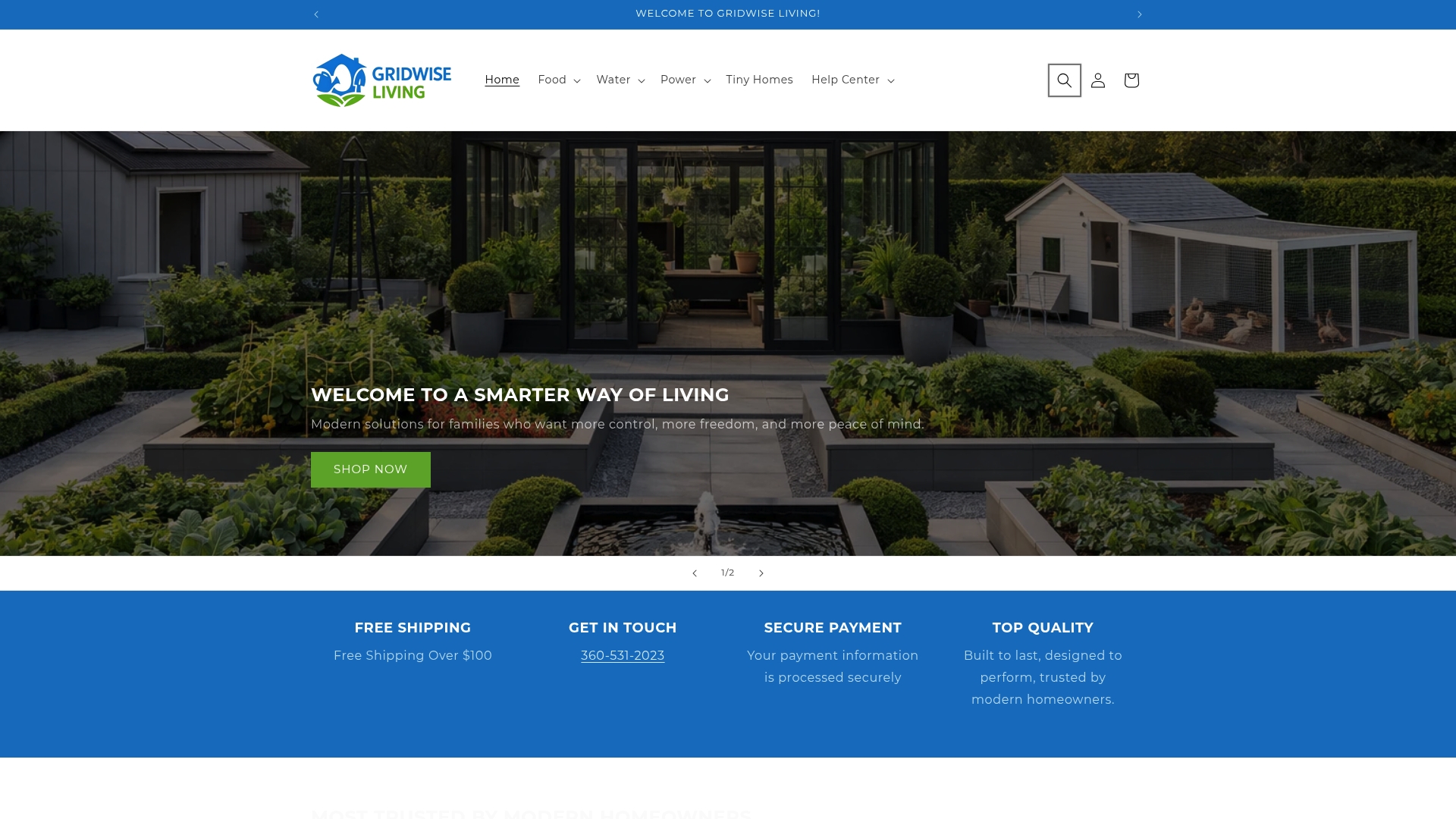
The product range covers the three pillars of self-sufficient living: energy, food, and water. The solar energy systems catalog includes panels, hybrid inverters, and whole-home generators sized for actual household loads. The greenhouse collection, including the 10x32ft polycarbonate greenhouse, supports year-round food production regardless of climate. Water filtration systems complete the setup by giving you clean, independent water without relying on municipal supply. Every product is selected for durability and practical use, not just specifications.
FAQ
What are the main benefits of self-sufficient home living?
Self-sufficient home living reduces utility bills by 20–40%, lowers your household carbon footprint, and improves mental well-being through greater control over your resources. Homes with full self-sufficiency systems also sell for 10–15% more than traditional homes.
How do I start living self-sufficiently at home?
Start with a 12-month utility audit to find your highest costs, then address insulation and efficiency before adding renewable energy or water systems. Gradual, phased upgrades prevent burnout and keep each system reliable.
Does a self-sufficient home increase property value?
Yes. Homes equipped with renewable energy, water management, and efficient design command a 10–15% resale premium compared to traditional homes in current markets.
What are the pros of off-grid living versus staying grid-connected?
Off-grid living eliminates utility bills entirely and provides full energy independence, while staying grid-connected with distributed energy systems adds resilience without the complexity of full disconnection. Most homeowners benefit most from a hybrid approach.
Is self-sufficient home living good for mental health?
Psychological research confirms that environmental mastery, the sense of controlling your own resources, directly buffers against anxiety and depression. Homeowners who generate their own energy and food consistently report lower stress and stronger personal confidence.