

Renting vs. Tiny Homes: Which Actually Saves You Money?
For most people with a short time horizon or no access to land, renting is cheaper upfront. For buyers who plan to stay put for three or more years and invest in durable infrastructure, owning a tiny home often wins on total cost. The gap between those two outcomes is wider than most people expect, and it hinges almost entirely on lot rent, financing terms, and whether you own the ground under your home.
A quick snapshot of where the numbers typically land:
- Renting (apartment or traditional rental): costs common in most U.S. metro areas
- Tiny home ownership (financed, community lot): varies widely in monthly cost
- Tiny home ownership (paid-in-full, owned land): is typically lower monthly cost
- Primary cost drivers: upfront capital commonly starts around tens of thousands for the structure, lot rent varies widely, utilities, and financing rate
Pro Tip: Lot rent is the single number that most often flips the math. A $700/month lot in a desirable community can push your total monthly cost above a local apartment rent, erasing the ownership advantage entirely. Always run the numbers with local lot rent before assuming tiny living is cheaper.
Table of Contents
- What does it actually cost to buy or build a tiny home upfront?
- How do monthly costs compare once you’re living there?
- How financing, taxes, and insurance work differently for tiny homes
- How local zoning rules and location change what you’ll actually pay
- Hidden costs that catch buyers off guard
- Break-even math: how long before ownership actually pays off
- How off-grid systems change the cost equation
- Can you rent a tiny home, or rent yours out for income?
- What does cost per square foot actually look like?
- How long does the buying or building process actually take?
- HOA fees, property taxes, and the recurring costs renters never pay
- How geography changes the renting versus owning calculation
- Three living arrangements that produce very different financial outcomes
- Key Takeaways
- The part of this decision most people get wrong
- Gridwiseliving’s tiny homes and off-grid systems for serious buyers
- Useful sources and further reading
What does it actually cost to buy or build a tiny home upfront?
The sticker price of a tiny home is rarely the real number. Tiny homes commonly cost $30,000–$60,000 for the structure alone, but first-year totals that include land, permits, hookups, and setup regularly exceed that figure by a wide margin.
Here are the typical purchase or build ranges by type:
- DIY tiny home on wheels (THOW): can vary broadly in materials cost; labor is your own time
- Professional THOW (custom or semi-custom): can range widely in price
- Foundation tiny home (code-compliant, ADU-style): pricing varies greatly by region and finish
- Prefab/modular tiny home: costs vary depending on finish level
Land and lot placement add a separate layer of cost:
- Buying raw rural land: prices vary significantly depending on state and acreage
- Lot rent in a tiny-home community or RV park: can vary substantially by location
- Backyard ADU placement on a family member’s property: often $0 in lot cost, but permits and hookups still apply
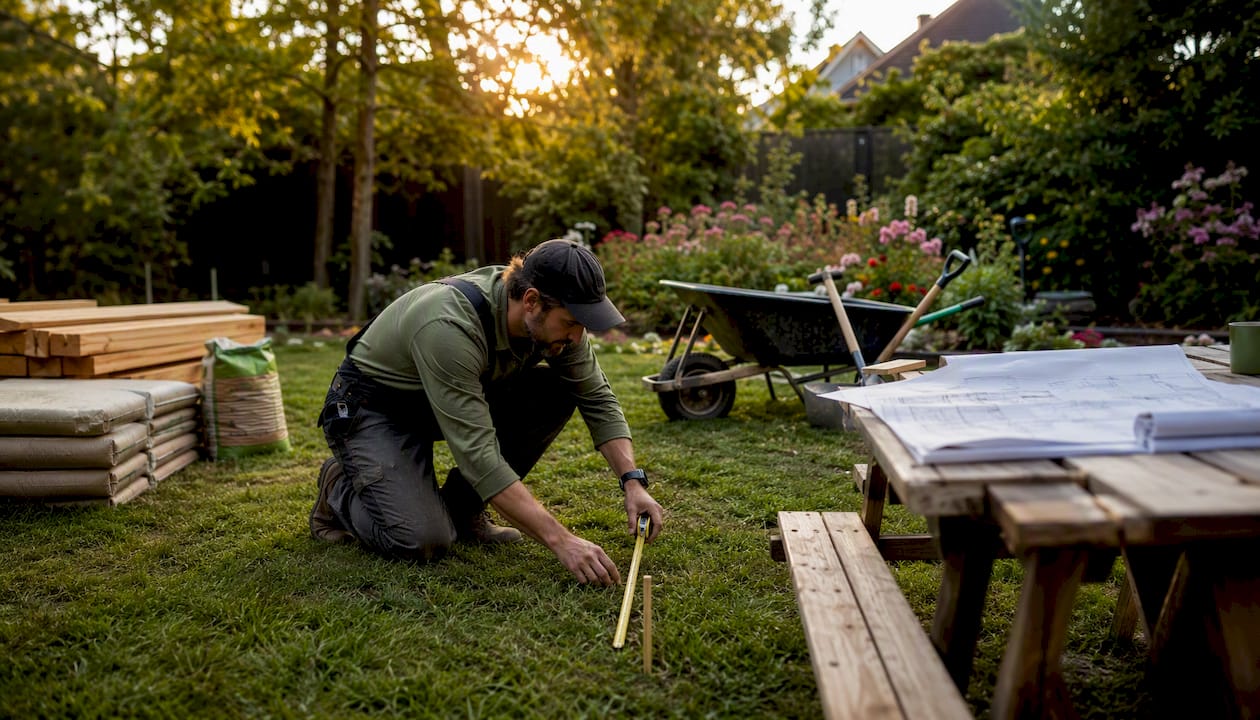
Site prep, delivery, and permits are where budgets frequently increase unexpectedly. Utility hookups can cost significantly depending on distance from municipal services and whether you need a septic system. Permits and inspections vary widely by jurisdiction and can add substantial costs to the first-year expenses.
Renting upfront costs, by comparison: first month’s rent plus a security deposit (usually one to two months’ rent), and possibly a broker fee or pet deposit. On a $1,500/month apartment, you’re looking at $3,000–$4,500 to move in.
| Scenario | Structure Cost | Land/Lot (Year 1) | Site Prep & Permits | Approx. First-Year Total |
|---|---|---|---|---|
| Budget THOW (DIY) | $30,000–$60,000 | — | $3,000 | exceeds $30,000–$60,000 in real first-year costs |
| Mid-range THOW on leased lot | $30,000–$60,000 | — | $5,000 | exceeds $30,000–$60,000 in real first-year costs |
| Foundation ADU (owned land) | $30,000–$60,000 | Land already owned | $15,000 | exceeds $30,000–$60,000 in real first-year costs |

Pro Tip: If you’re building on a budget, prioritize utility infrastructure over cosmetic finishes. A well-connected home with basic finishes costs far less to live in than a beautifully finished home with expensive monthly hookup workarounds.
How do monthly costs compare once you’re living there?
This is where the cost comparison of renting versus tiny homes gets real. Monthly costs for tiny-home ownership vary from roughly $500 on the low end to $1,500 on the high end, with a common mid-range around $1,130/month. The spread is that wide because lot rent and financing terms do most of the work.
Three scenarios that show how different the math can look:
- Paid-in-full tiny home on owned land: Lot cost $0. Monthly expenses: property taxes ($30–$100), insurance ($50–$150), utilities ($100–$250), maintenance reserve ($50–$100). Total: roughly $500–$1,500/month depending on land, utilities, and taxes.
- Financed THOW in a community (10-year personal loan at 10% APR on $70,000): Loan payment ~$925/month, lot rent $700/month, utilities $150/month, insurance $100/month. Total: typically $1,500 or more per month, and can exceed comparable apartment rent.
- Rented tiny home (long-term lease): Long-term tiny-home rentals can be found for around $500/month in some markets, though availability is limited. No maintenance responsibility, no upfront capital.
The recurring costs that most often make ownership more expensive than renting:
- High lot rent in desirable or urban communities
- Short-term, high-rate financing (personal loans at 10–15% APR)
- Utility hookup costs amortized over the first few years
- Maintenance and repair reserves (tiny homes still need roofs, plumbing, and HVAC)
Where renting wins on monthly cost: any scenario where lot rent plus loan payment exceeds local apartment rent, which happens more often in high-demand areas than people expect. Regional rental prices above $1,500/month are where tiny ownership starts to show its clearest monthly advantage, assuming you’ve secured affordable land.
How financing, taxes, and insurance work differently for tiny homes
Most tiny homes don’t qualify for a conventional 30-year mortgage. That single fact changes the monthly payment math more than almost anything else. Common financing paths include personal loans at 7–15% APR, RV loans at 6–10% APR (available when the home carries RVIA certification), chattel mortgages, and builder financing. Terms typically run 5–20 years, producing higher monthly payments than a 30-year mortgage on a comparable balance.
Foundation tiny homes that meet local residential building codes can sometimes qualify for a conventional mortgage or FHA loan, which dramatically lowers the monthly payment and opens up the mortgage interest deduction.
Tax implications by home type:
- THOW (titled as a vehicle): Taxed as personal property, not real estate. No property tax in most states, but no mortgage interest deduction either.
- Foundation tiny home on owned land: Taxed as real property. Property taxes apply, but so does the mortgage interest deduction if financed.
- Tiny home in a community on leased land: The structure may be taxed as personal property; the lot rent is not deductible.
Insurance differences:
- THOW insurance resembles RV insurance: $500–$1,500/year is a typical range, covering the structure and contents during transit and at a fixed location.
- Foundation tiny homes can be insured as standard homeowners policies, often $800–$2,000/year depending on location and coverage level.
Practical steps to improve your financing terms or reduce premiums:
- Get RVIA certification for a THOW to access RV loan rates
- Build to local ADU code standards to qualify for conventional mortgage financing
- Secure a long-term community lease (5+ years) before applying for a loan; lenders want placement security
- Bundle home and auto insurance with the same carrier for a discount on THOW coverage
How local zoning rules and location change what you’ll actually pay
Owning a tiny home doesn’t automatically give you the right to place it anywhere. Zoning and land use are the most common long-term barriers, and they directly affect your costs.
Placement options and their legal realities:
- Backyard ADU on a single-family lot: Requires ADU-permissive zoning (now available in California, Oregon, and a growing number of states). Permit costs: $1,000–$10,000+. Timeline: 3–12 months.
- Tiny-home community lot: Lot rent is the ongoing cost. Check community rules on home age, size, and exterior standards before signing a lease.
- Privately owned rural land with residential zoning: Lower lot cost, but you may need to install a well, septic, and electrical service from scratch.
- RV park (for THOW): Most flexible for mobility, but some parks limit stay duration and charge premium rates in popular areas.
A permit and timeline checklist for new buyers:
- Contact your county planning and zoning office before purchasing a home or land
- Ask specifically whether tiny homes on wheels are permitted as permanent residences
- Request a list of required inspections (electrical, plumbing, structural) and their fees
- Budget 3–18 months from permit application to legal occupancy for a foundation home
- For a THOW in a community, confirm the lease terms and whether the community is zoned for year-round habitation
Urban lot rent can run $800–$1,500/month in high-demand markets, which narrows or eliminates the ownership savings versus renting a comparable apartment. Rural land purchase, by contrast, can bring monthly land costs down to $50–$150/month once a mortgage on the land is paid off. Tiny-home communities vary widely in what they offer for that lot rent, from basic hookups to full amenities.
Hidden costs that catch buyers off guard
The costs that don’t show up in the headline price are often the ones that break a budget.
- Utility hookups: $1,000–$25,000+ depending on distance from municipal water, sewer, and electrical service
- Towing truck: A road-legal THOW requires a heavy-duty truck. A capable used truck can add $40,000–$80,000 to the real cost of “mobile” living
- Storage: Downsizing from a larger home often means renting a storage unit ($80–$200/month) during the transition
- Resale and depreciation: THOWs depreciate like vehicles, not real estate. A $75,000 THOW may be worth $40,000–$50,000 in five years. Foundation tiny homes on owned land have better appreciation potential but are still highly location-dependent
- Community rules and fines: Some communities charge fees for exterior modifications, guest parking, or lease violations
- Eating out more: Tiny kitchens lead many owners to spend more on food away from home, a soft cost that rarely appears in budget projections
The risk split between renting and owning is worth naming directly. Renters face rent increases and no equity accumulation. Owners face depreciation, zoning changes, and the possibility that lot rent rises indefinitely, turning a temporary cost into a permanent one that never builds equity.
Pro Tip: Spend on infrastructure before aesthetics. A proper electrical hookup, a reliable water system, and a well-insulated shell will cost less to maintain over ten years than a beautifully finished home with chronic utility problems. Maintenance decisions made in year one tend to compound in either direction.
Break-even math: how long before ownership actually pays off
The formula is straightforward: divide the upfront cost delta by the monthly savings to find the break-even point in months.
Break-even formula: (Upfront ownership cost − Renting move-in cost) ÷ Monthly savings = Months to break even
Three worked examples:
| Scenario | Upfront Delta | Monthly Savings | Break-Even |
|---|---|---|---|
| City renter → financed THOW in community | $80,000 | $200/month | — |
| Paid-in-full tiny on owned land vs. $1,800/month rent | — | $1,200/month | — |
| Financed THOW on leased lot vs. $1,500/month rent | $75,000 | $300/month | — |
The city-renter-to-financed-THOW scenario is the one that surprises people most. When lot rent is high and financing rates are steep, the monthly savings shrink to the point where break-even stretches beyond a realistic ownership horizon. The paid-in-full scenario on owned land is where the financial benefits of tiny homes are most concrete, but it requires the most upfront capital.
A decision checklist before you commit:
- Do you plan to stay in the same area for at least 5–10 years?
- Do you have access to land, or can you afford lot rent that keeps total monthly costs below local rent?
- Can you secure financing at under 8% APR, or pay cash?
- Are you prepared to handle maintenance yourself or budget for it?
- Have you confirmed that your target location permits tiny-home placement year-round?
If you answer “no” to two or more of those questions, renting is likely the lower-risk choice for your current situation. You can also use a rent-vs-buy calculator to run localized break-even math with your actual numbers.
How off-grid systems change the cost equation
This is where the long-term math shifts most dramatically for committed tiny-home owners. Monthly utility costs on a grid-connected tiny home run $100–$300/month depending on climate and usage. An off-grid solar system with battery storage costs $8,000–$30,000 upfront but can reduce or eliminate that grid bill over time.
Sample payback estimates for common off-grid investments:
| System | Upfront Cost | Monthly Savings | Payback Window |
|---|---|---|---|
| Solar + battery (mid-size) | — | $100–$200/month | 5–10 years |
| Water filtration system | $500–$3,000 | $30–$80/month | 1–4 years |
| Efficient mini-split HVAC | — | $40–$100/month | 2–5 years |
Priority list for cost-effective off-grid upgrades:
- Solar + battery storage first: The largest recurring utility cost and the one with the most predictable payback
- Water filtration second: Eliminates bottled water costs and reduces dependence on municipal supply
- Efficient HVAC third: Heating and cooling are the biggest energy loads in a tiny home; a properly sized mini-split outperforms window units significantly
Pro Tip: Size your solar system for your actual tiny-home load, not a standard residential estimate. A 400–800 watt system often covers a tiny home’s daily needs. Oversizing adds cost without adding benefit. Gridwiseliving’s off-grid power solutions include options sized specifically for small-footprint living.
Can you rent a tiny home, or rent yours out for income?
Renting a tiny home rather than buying is a legitimate and underused option. Long-term tiny-home rentals are rare but do exist, with prices starting around $500/month in some markets. Short-term rentals through platforms like Airbnb are more common and can run $80–$200/night in desirable locations.
The income side of the equation is worth taking seriously. Owners who place their tiny home in a tourist-friendly area and rent it short-term can generate $1,000–$3,000/month in gross rental income, which changes the break-even math entirely. A $75,000 THOW generating $1,500/month in net rental income pays for itself in roughly four years.
A few practical realities to keep in mind:
- Short-term rental income is taxable and subject to local lodging taxes
- Many tiny-home communities prohibit short-term rentals in their lease agreements
- Managing a rental remotely adds property management costs (typically 20–30% of gross revenue)
- Wear and tear on a small structure from frequent guest turnover is proportionally higher than on a larger home
For buyers who want to test tiny living before committing, renting a tiny home short-term is the lowest-risk path. It avoids upfront capital, maintenance responsibility, and zoning risk while giving you a realistic sense of whether the lifestyle fits. That’s a genuine advantage that the transition from apartment life articles rarely emphasize enough.
What does cost per square foot actually look like?
Tiny homes cost more per square foot to build than standard homes, but less in total. A 200-square-foot THOW at $60,000 works out to $300/sq ft, while a 1,500-square-foot conventional home at $300,000 is $200/sq ft. The smaller footprint means you pay a premium per square foot but a fraction of the total.
Sample budgets by scenario:
- Bare-bones DIY THOW (160 sq ft): $20,000–$35,000 total, or $125–$220/sq ft
- Professional THOW (200–300 sq ft): $60,000–$100,000, or $250–$400/sq ft
- Foundation tiny home (400 sq ft, ADU-grade): $100,000–$180,000, or $250–$450/sq ft
Monthly cost per square foot is where tiny living looks most favorable. At $600/month for a 200-square-foot owned home, you’re paying $3/sq ft/month. A $1,800/month apartment at 900 square feet is $2/sq ft/month. The gap narrows when you factor in the amenities and flexibility that come with a larger rental, but for people who genuinely need less space, the owned tiny home wins on total monthly spend.
How long does the buying or building process actually take?
The timeline from decision to move-in is one of the most underestimated parts of tiny-home ownership. Buying a pre-built THOW from a builder and placing it in an established community is the fastest path: 2–6 months from deposit to occupancy. Building custom or pursuing a foundation home takes considerably longer.
Realistic timelines by path:
- Pre-built THOW, existing community lot: 2–6 months (builder lead time plus community application)
- Custom THOW build: 6–18 months depending on builder backlog and complexity
- Foundation tiny home, permitted ADU: 12–36 months including design, permitting, and construction
- Buying land and placing a THOW: 3–12 months for land purchase, zoning confirmation, and site prep
Permitting is the most variable factor. Some counties process ADU permits in 30 days; others take 12–18 months. Calling your local building department before you commit to a builder or a land purchase is the single most time-saving step you can take.
HOA fees, property taxes, and the recurring costs renters never pay
Traditional renters don’t pay property taxes, HOA fees, or structural maintenance. Those costs are baked into the rent. Tiny-home owners face a version of all three, though the amounts differ significantly from conventional homeownership.
Property taxes: Foundation tiny homes on owned land are assessed as real property. Annual taxes vary by state and assessed value, but a $100,000 foundation tiny home might carry $500–$2,000/year in property taxes. THOWs are typically taxed as vehicles or personal property, with annual registration fees of $50–$300 in most states.
HOA and community fees: Tiny-home communities often charge monthly fees beyond lot rent for shared amenities, maintenance of common areas, and community management. These fees range from $50–$300/month and are easy to overlook when comparing total costs.
Maintenance reserves: Renters pay nothing for structural repairs. Tiny-home owners should budget 1–2% of the home’s value annually for maintenance, which on a $70,000 THOW is $700–$1,400/year, or roughly $60–$120/month.
The combined effect of property taxes, community fees, and maintenance reserves adds $150–$500/month to ownership costs that renters simply don’t carry. That’s a real number to include in any honest cost comparison.
How geography changes the renting versus owning calculation
Location is the variable that makes national averages nearly useless for individual decisions. In San Francisco or New York, where average one-bedroom rents exceed $2,500/month, even a financed tiny home with $800/month lot rent looks attractive. In rural Mississippi or Kansas, where apartments rent for $700–$900/month, the ownership math is much harder to justify.
A few geographic patterns worth knowing:
- High-cost coastal metros: Tiny ownership offers the largest monthly savings but faces the highest lot rents and the most restrictive zoning
- Sun Belt cities (Austin, Phoenix, Nashville): Rapid rent growth has made tiny ownership more competitive, but land costs have risen sharply too
- Rural Midwest and South: Lowest land costs and most permissive zoning, but local rental prices are also low, shrinking the savings gap
- Pacific Northwest: Strong ADU-permissive zoning in Oregon and Washington makes foundation tiny homes more viable than in most states
The most favorable geography for tiny-home ownership combines moderate-to-high local rents, affordable land or lot rent, and ADU-friendly zoning. That combination exists in parts of the Mountain West, Pacific Northwest, and select Sun Belt markets, but it requires local research rather than national generalizations.
Three living arrangements that produce very different financial outcomes
The same $70,000 tiny home produces wildly different monthly costs depending on where and how it’s placed.
Scenario A: Private land, rural setting. You purchase 2 acres in rural Tennessee for $25,000, install a well ($5,000–$15,000) and septic ($8,000–$15,000), and place a paid-in-full THOW. Monthly costs: property taxes ($40), insurance ($80), utilities ($100), maintenance reserve ($80). Total: roughly $300/month. Break-even against a $1,200/month rural apartment: under 10 years including land and infrastructure costs.
Scenario B: Tiny-home community, suburban setting. You finance a $70,000 THOW over 10 years at 9% APR (payment: ~$886/month) and pay $750/month lot rent in a well-managed community near a mid-size city. Monthly total: $1,736. A comparable apartment in the same area rents for $1,400. Ownership costs more every month until the loan is paid off.
Scenario C: Backyard ADU on a family member’s lot. No lot rent. You build a code-compliant foundation tiny home for $130,000, financed at 6% over 20 years ($931/month). Monthly costs: loan payment $931, insurance $120, utilities $150, taxes $100. Total: $1,301. A nearby one-bedroom apartment rents for $1,600. You save $299/month and build equity. Break-even on the upfront delta versus renting move-in costs: roughly 8 years.
Scenario A is the clearest financial win for ownership. Scenario C is a solid long-term play. Scenario B is the one that most often disappoints buyers who assumed tiny living would automatically be cheaper.
Key Takeaways
Tiny-home ownership beats renting on total lifetime cost only when lot rent is low, financing is affordable, and the owner commits to at least 5–10 years in the same location.
| Point | Details |
|---|---|
| Upfront cost gap is large | Tiny home ownership requires $30,000–—+ upfront versus $3,000–$4,500 to rent. |
| Lot rent is the swing factor | At $700–$1,500/month, lot rent can push ownership costs above local apartment rent. |
| Break-even takes years | Paid-in-full on owned land breaks even in roughly 10 years; financed in a community can take 20+ years. |
| Off-grid systems improve the math | Solar and water systems costing $8,000–$30,000 can cut monthly utility costs and shorten break-even. |
| Gridwiseliving offers a direct path | Gridwiseliving’s tiny homes and solar systems are built for durable, self-reliant ownership that lowers long-term operating costs. |
The part of this decision most people get wrong
The conventional framing of this choice treats it as a simple rent-versus-mortgage comparison, and that framing misses the point almost entirely. The real question isn’t whether a tiny home payment is lower than your rent. It’s whether your total cost of placement, including land, lot rent, infrastructure, and financing, is lower than what you’d pay to rent, and whether you’re willing to stay long enough for the math to work in your favor.
What Gridwiseliving sees consistently is that the buyers who come out ahead financially are the ones who invest in quality infrastructure early. A durable, well-insulated home with a reliable solar setup and clean water system costs more in year one and significantly less in years two through ten. The buyers who struggle are the ones who minimize upfront spend on infrastructure to hit a lower sticker price, then spend years paying for that decision in utility bills, repairs, and workarounds.
The lifestyle shift matters too. People who choose tiny living for genuine reasons, not just financial ones, tend to make the behavior changes that actually produce savings. People who go tiny purely to cut costs often find that the soft costs (storage, eating out, lifestyle friction) eat the savings they expected.
Gridwiseliving’s tiny homes and off-grid systems for serious buyers
If the break-even math works for your situation and you’re ready to move from analysis to action, the quality of what you buy matters as much as the price.
Gridwiseliving offers fully equipped tiny homes built for durability and self-reliant living, alongside solar energy systems sized for small-footprint loads. The combination of a well-built structure and a reliable off-grid power setup is what separates owners who hit their break-even targets from those who don’t.
Explore Gridwiseliving’s offerings:
- Tiny homes: Expandable, fully equipped models built for long-term ownership
- Solar energy systems: Off-grid kits sized for tiny-home loads
- Off-grid power solutions: Whole-home backup and portable power for energy independence
Browse the full collection and get the details on what’s available for your setup.
Useful sources and further reading
- True Cost of Tiny Home Ownership (TinyHomeList): The most thorough breakdown of monthly cost ranges, lot rent variability, and depreciation realities for THOW and foundation homes.
- Tiny Home Cost Guide (HomeCostLab): Detailed financing options, APR ranges, and loan term comparisons for buyers who don’t qualify for conventional mortgages.
- Real Cost of Living in 225 Square Feet (Investopedia): Honest accounting of first-year costs beyond the sticker price, including hookups and permits.
- Cost of Renting vs. Buying a Tiny Home (GOBankingRates): Rental price ranges for long-term tiny-home leases and a comparison with buying scenarios.
- Tiny House Living Costs & Financial Realities (TinyLair): Regional variation analysis and the behavioral factors that determine whether monthly savings materialize.
- Gridwiseliving Tiny Homes: Product and specification details for buyers evaluating durable, self-reliant tiny-home options.
- HUD Rental Assistance Programs (USAGov): Government rental assistance options for buyers who need to bridge the gap while saving for ownership.
For exact permit fees, zoning rules, and lender terms, contact your county planning department and at least three lenders before committing to a purchase. National averages are a starting point; your local numbers are the ones that actually matter.