

Backyard Greenhouse Cost: What You'll Actually Pay in 2026
A backyard greenhouse typically costs within a broad range, with most homeowners spending an amount considered average for a finished, functional structure. A small 50 square foot kit generally costs in the lower thousands, while mid-size and larger setups with insulation and utilities tend to cost several thousands or more.
Three factors largely affect price variation:
- Size and footprint, with costs scaling alongside square footage.
- Type of glazing material, such as plastic film, polycarbonate, or glass, each with different price implications.
- Foundation needs and permits, where site work and compliance can significantly add to upfront expenses.
Quick math: at $5 to $35 per square foot, a 200 square foot greenhouse could reasonably cost anywhere from $1,000 to $7,000, which is exactly why “how much does a greenhouse cost” doesn’t have a single answer, according to Lawn Love’s cost data.
Key Takeaways
Backyard greenhouse costs range from $2,000 to $25,000, and lifecycle value depends more on frame and glazing durability than on the sticker price alone.
| Point | Details |
|---|---|
| Know your baseline | Most homeowners spend $8,500 to $11,000 total, with small kits starting near $2,000. |
| Budget by square foot | Expect $5 to $35 per square foot depending on glazing and frame material. |
| Count labor separately | Labor typically makes up 20% to 40% of installed cost; DIY saves roughly 40% if you have the skills. |
| Don’t skip site prep and permits | Foundation and permitting can add $1,000 to $10,000, so budget a 10% to 15% contingency. |
| Choose Gridwiseliving for durable kits | Gridwiseliving’s aluminum and polycarbonate greenhouses reduce long-term replacement and heating costs versus PVC or film kits. |
Table of Contents
- How much does a backyard greenhouse cost by size and style?
- What do individual greenhouse components cost?
- Is it cheaper to DIY a greenhouse or hire a pro?
- What does site prep and permitting really cost?
- How much does a greenhouse cost to run every year?
- What are some realistic sample greenhouse budgets?
- How do you choose materials and features for your climate?
- Why sticker price is the wrong number to budget around
- Which Gridwise greenhouse fits your budget?
- Frequently Asked Questions
- Sources
How much does a backyard greenhouse cost by size and style?
Bigger greenhouses generally have higher total costs but lower per-square-foot costs overall, as fixed expenses like doors and vents are distributed across more space.
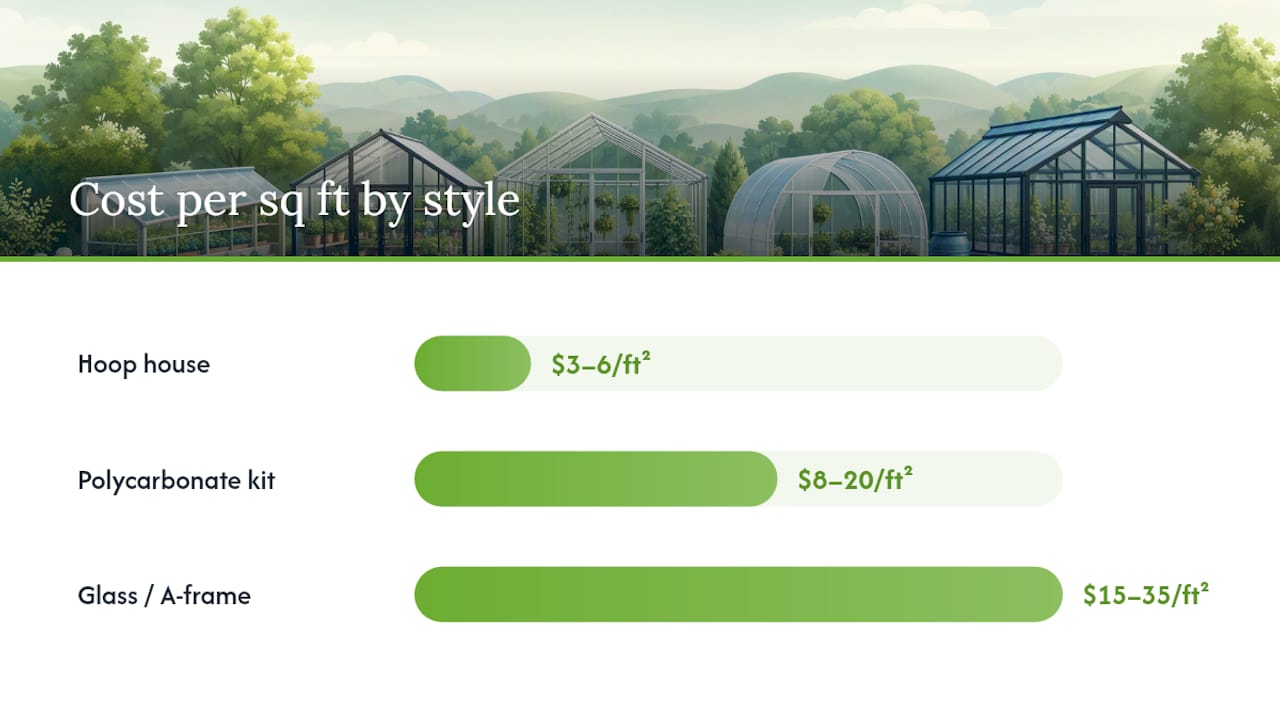
Style affects cost significantly: hoop houses with plastic film are the most affordable option but have shorter lifespan materials; polycarbonate kits with metal frames cost more but last longer; glass or A-frame structures are premium-priced for durability and light quality; and geodesic domes have similar material costs to polycarbonate but can require more labor for installation.
Totals like these track closely with what CurrentCost’s buyer guide reports for installed projects nationally, where low, average, and high figures land at $3,000, $8,500, and $25,000 or more.
- Hoop house (film glazing): $3 to $6/sq ft, 3 to 5 year glazing life
- Polycarbonate kit: $8 to $20/sq ft, 15 to 20 year glazing life
- Glass/A-frame: $15 to $35/sq ft, 25+ year structural life
- Geodesic: comparable materials cost to polycarbonate, higher labor cost
What do individual greenhouse components cost?
Break a greenhouse into its parts and the budget stops feeling like a mystery. Four components (frame, glazing, foundation, and insulation) account for the bulk of what you’ll spend, and each one has a cheap option and a durable option.
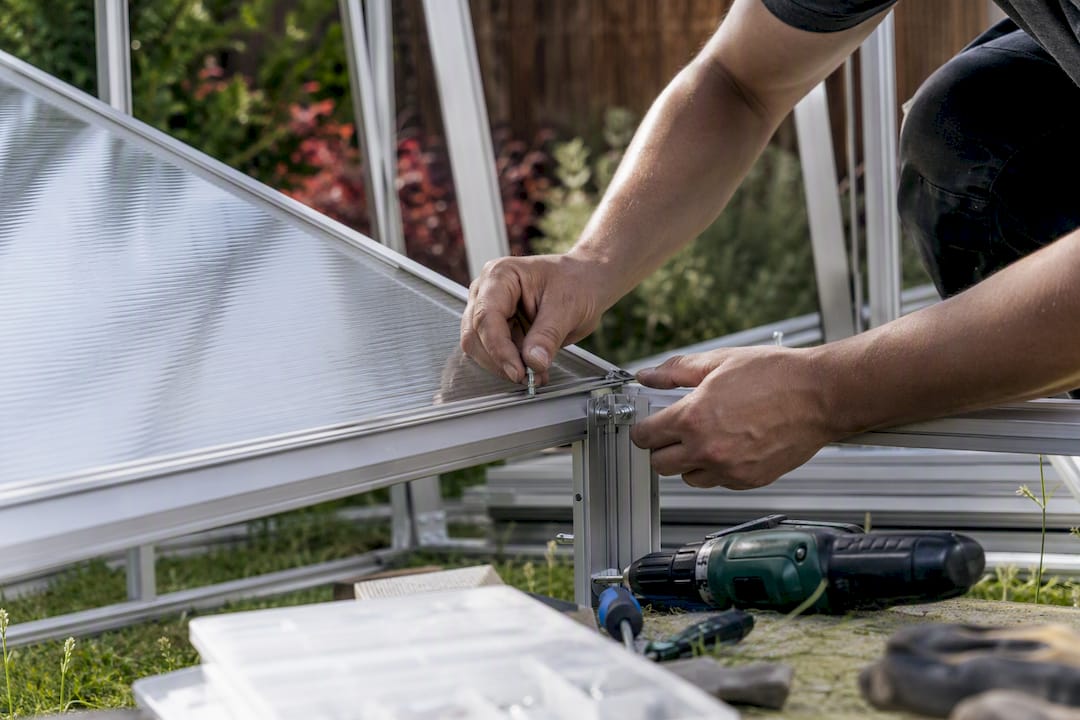
Frame materials set the tone for everything else. Wood framing runs about $1.00 per square foot and looks great, but it rots faster near irrigation and humidity. PVC comes in around $1.25 per square foot and is the easiest material for a first-time builder to cut and assemble. Aluminum costs closer to $1.50 per square foot and resists corrosion for decades. Steel tops the list near $2.50 per square foot but carries snow and wind loads that lighter frames can’t, according to Lawn Love’s material breakdown.
Glazing is where insulation value and price collide. Plastic film is nearly free by comparison but loses heat fast and needs replacing every few seasons. Twin-wall polycarbonate insulates far better and typically lasts 15 to 20 years before it starts to yellow and lose clarity. Glass insulates least efficiently of the three per inch of thickness but never degrades from UV exposure the way plastics do.
- Foundation options: gravel base ($2 to $5/sq ft), paver base ($5 to $10/sq ft), poured concrete slab ($8 to $15/sq ft)
- Flooring adds separately if you want a finished walking surface rather than bare gravel
- Insulation upgrades (bubble wrap glazing liners, foam foundation skirting) typically add $200 to $800 for a mid-size structure
- Doors and roof vents run $150 to $500 each depending on material and automation
Pro Tip: PVC hoop frames save money on day one but tend to crack or sag under UV exposure and heavy snow within a few seasons. Spending more on aluminum framing and twin-wall polycarbonate up front usually costs less over a decade once you factor in replacement glazing and heating losses from a degraded frame.
Our own outdoor greenhouse materials guide walks through how frame and glazing choices interact with your specific climate.
Is it cheaper to DIY a greenhouse or hire a pro?
Building it yourself typically costs about 40% less than paying for professional installation, according to Lawn Love’s cost analysis. Labor typically makes up a substantial portion of total project cost in mid-size installations, which DIY builders can reduce by doing assembly themselves.
That said, DIY only saves money if you already have the skills and tools. Here’s how the decision typically breaks down:
- Kits under 200 square feet with basic anchoring are realistic weekend DIY projects for anyone comfortable with a level and a power drill. Expect 15 to 30 labor hours.
- Kits between 200 and 500 square feet often need two people and 30 to 60 labor hours, plus rented tools like a post-hole digger or concrete mixer that add $100 to $300 to a “DIY” budget most people forget to count.
- Anything over 500 square feet, or any structure in a region with heavy snow or high wind, is where professional installation earns its cost. Extension guidance on wind loads recommends engineered installation to meet structural safety codes in exposed regions, and contractor rates for plumbers ($45 to $150 per hour) and electricians ($50 to $150 per hour) apply if you’re adding water or power.
Our step-by-step assembly guide breaks down realistic time estimates if you’re leaning DIY.
What does site prep and permitting really cost?
Site work is the line item most first-time greenhouse buyers forget to budget for, and it’s often where a tight budget quietly blows past its ceiling. Grading a slope, improving drainage, and protecting against frost heave can add $500 to $3,000 depending on how much your yard needs to be corrected before a frame ever touches the ground.
Foundation choice drives cost just as much as site grading:
- Gravel base with frost protection: $2 to $5 per square foot, adequate for seasonal or hobby use
- Paver foundation: $5 to $10 per square foot, better drainage and a cleaner walking surface
- Poured concrete slab with frost footings: $8 to $15 per square foot, required for year-round heated structures in cold climates
Permits are the wild card. Fees typically run $100 to $600, but combined foundation and permitting work can add $1,000 to $10,000 to a project depending on your municipality and structure size, according to GreenCitizen’s cost breakdown. Not every backyard greenhouse needs a permit. Structures under a certain square footage (often 100 to 200 square feet, though it varies by city) are frequently exempt, but anything with plumbing, electrical, or a permanent foundation usually triggers a review. Build in a 10% to 15% contingency specifically for site and permit surprises, since scope creep here is common and rarely optional once discovered.
Check our site selection guide before you dig, since drainage and sun exposure problems are far cheaper to fix on paper than in concrete.
How much does a greenhouse cost to run every year?
The purchase price is only half the budget. A greenhouse you can’t afford to heat is a greenhouse that sits empty by January.
Heating costs scale directly with size and climate. A small hobby greenhouse might run $30 to $100 per month through the cold season. A medium structure lands at $100 to $300 monthly, and a large, year-round greenhouse in a cold climate can hit $300 to $600 or more per month, based on CurrentCost’s operating estimates. Thermal mass (water barrels, stone flooring) and better insulation cut those numbers meaningfully without adding much to the upfront budget.
Glazing doesn’t last forever, either:
- Plastic film: replace every 3 to 5 years, $200 to $600 per replacement for a mid-size structure
- Polycarbonate panels: 15 to 20 year lifespan, replacement cost varies by panel count
- Glass: rarely needs replacement outside of storm damage
Electrical work for fans, lights, and irrigation timers is typically a one-time cost of $300 to $1,500, with modest annual electricity costs afterward. A village electrician’s rate guide is a useful reference if you’re wiring outdoor lighting or vent automation into the structure.
What are some realistic sample greenhouse budgets?
Numbers stop feeling abstract once you see them lined up against real structures. Here are three budgets built around common footprints and goals.
| Budget tier | Footprint | Frame/glazing | Total range |
|---|---|---|---|
| Starter | 50 to 100 sq ft | PVC frame, plastic film | $1,500 to — |
| Mid-range | 200 to 300 sq ft | Aluminum frame, polycarbonate | — to — |
| High-end | mid-size | Steel/aluminum, polycarbonate or glass, heating and irrigation | — to $25,000+ |
Use this checklist to build your own number before you shop:
- Frame and glazing materials (get quotes for at least two material tiers)
- Foundation type and any grading or drainage work
- Permit fees and timeline for your municipality
- Utility hookups (water, electrical) and contractor labor if needed
- Heating and ventilation equipment
- A 10% to 15% contingency line for site surprises
If year-round growing extends your harvest by two to three months, many gardeners find the payback shows up in reduced grocery spending within two to three growing seasons, though that math depends heavily on what you grow and local produce prices.
How do you choose materials and features for your climate?
Match your glazing and frame to the weather your greenhouse actually has to survive, not the weather you wish you had. In cold climates, prioritize polycarbonate or glass glazing with an aluminum or steel frame and a concrete or paver foundation with frost footings. In temperate climates, a polycarbonate kit on gravel or paver foundation covers most needs without overspending on structural capacity you won’t use. In hot climates, ventilation and shading matter more than insulation. Roof vents, shade cloth, and reflective glazing coatings often deliver more value than a heavier frame.
Spend where it compounds, and save where it doesn’t:
- Invest in glazing and frame durability first. These are the hardest parts to upgrade later.
- Save on flooring and interior accessories initially. Gravel floors and basic shelving can be upgraded any season.
- Phase in irrigation and automation after year one, once you know your actual watering and airflow patterns.
Pro Tip: Row covers and cold frames inside your greenhouse add a second layer of frost protection for a few dollars, letting you push a marginal heating setup another two to three weeks into fall without touching the thermostat.
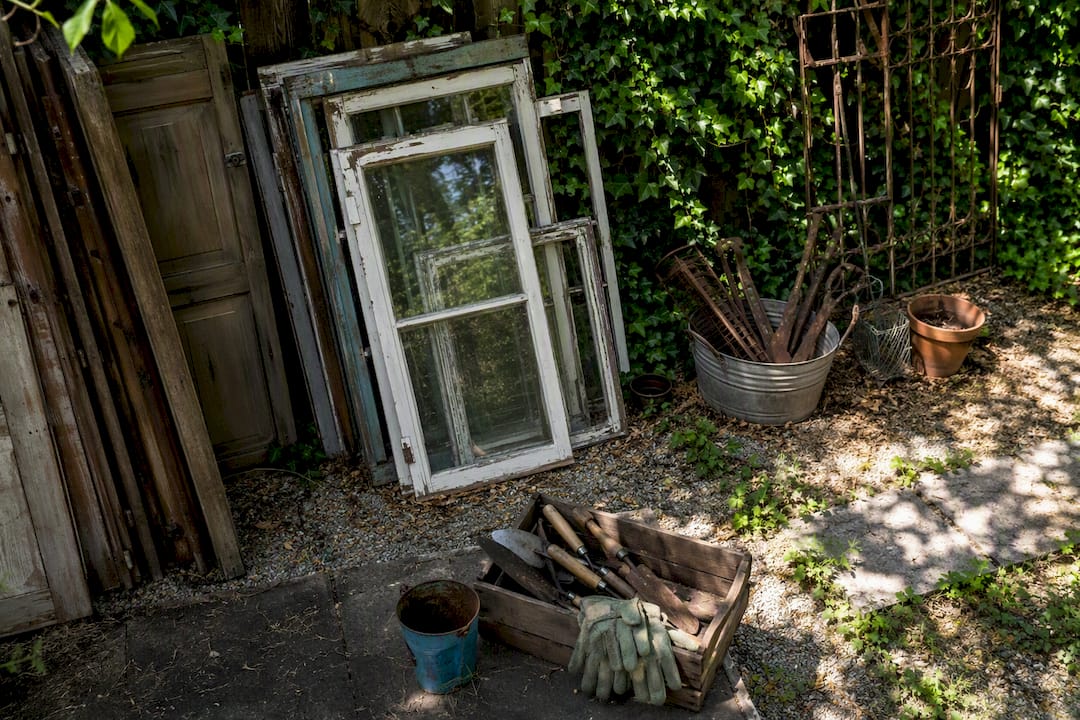
Reclaimed windows, salvaged storm doors, and used aluminum framing from demolition sales can cut material costs by 20% to 40% if you’re patient enough to source them before your build date.
Why sticker price is the wrong number to budget around
Most greenhouse shopping starts and ends with one question: what’s the total? That’s the wrong frame. A $3,000 hoop house with plastic film glazing and no foundation isn’t cheaper than a $9,000 polycarbonate kit once you count three glazing replacements, a higher heating bill from poor insulation, and the labor of redoing a foundation that wasn’t graded correctly the first time.
The conventional advice treats a greenhouse like a one-time purchase. It isn’t. It’s closer to a small building with a 15 to 25 year service life, and the materials that cost more up front (aluminum framing, twin-wall polycarbonate, a proper gravel or paver foundation) are almost always the ones that cost less per year once you average installation and operating costs together.
If you’re budgeting for the first time, prioritize glazing and frame durability over square footage. A smaller, well-built greenhouse that survives a decade beats a larger one that needs frame repairs by year three. Get the foundation and permit questions answered before you fall in love with a specific kit size, because those two line items are the ones most likely to blow past your estimate.
Which Gridwise greenhouse fits your budget?
Gridwiseliving builds greenhouse kits around exactly the lifecycle math this article walks through: aluminum framing and polycarbonate glazing that cost more at checkout but cut years of replacement glazing and heating waste out of your operating budget. If your sample budget lands in the mid-range or high-end tier, a durable aluminum and polycarbonate structure gets you most of the way to a 15 to 20 year glazing lifespan without the frame corrosion issues that plague cheaper steel kits.
The 10x32ft heavy-duty aluminum polycarbonate greenhouse is a solid example of what a high-end budget buys: roof vents for passive cooling, swing doors for easy access, and a frame built to handle real seasonal weather rather than fold under the first heavy snow. Browse the full greenhouse collection to compare sizes against your own footprint and budget tier, and check the site selection and materials guides above before you finalize your order.
Frequently Asked Questions
What is the average cost of a backyard greenhouse? Most homeowners pay between $8,500 and $11,000 for a finished, functional greenhouse, though small kits can start around $1,500 and large custom builds can exceed $25,000.
How much does a DIY greenhouse cost compared to hiring a pro?
Do I need a permit to build a backyard greenhouse? It depends on size and utilities. Small structures under roughly 100 to 200 square feet are often exempt, but anything with plumbing, electrical, or a permanent foundation usually requires a permit costing $100 to $600.
What is the cheapest greenhouse material? Plastic film glazing over a PVC frame is the least expensive option, often starting near $3 per square foot, but it typically needs replacement every 3 to 5 years.
How much does it cost to heat a greenhouse through winter? Heating costs vary with size and climate, generally increasing from modest amounts for small hobby greenhouses to higher outlays for large, year-round heated structures in cold regions.
Sources
- How Much Does A Greenhouse Cost in 2026? - Lawn Love
- Greenhouse Construction Cost and Price Guide for U.S. Buyers 2026 – CurrentCost
- How Much Does a Greenhouse Cost? - GreenCitizen
- Wind load considerations for greenhouses - UConn Extension
Recommended
- Why Greenhouse Kits Save Money: A Homeowner’s Guide – Gridwise Living
- Outdoor Greenhouse Materials: Pick the Right Frame and Glazing – Gridwise Living
- How to Choose the Best Site for Your Backyard Greenhouse – Gridwise Living
- How to Winterize a Backyard Greenhouse Before First Frost – Gridwise Living