

Why Greenhouse Kits Save Money: A Homeowner's Guide
Yes, greenhouse kits save money for most homeowners who use them consistently. A mid-range kit paired with smart crop selection can pay for itself within a realistic window, and experienced growers typically see their best returns by the third season as yields improve and losses drop.
The short version:
- Season extension and seed-starting are the two biggest savings channels, cutting transplant costs and stretching your harvest calendar by weeks on both ends.
- Realistic payback for a mid-range setup typically occurs within several years on grocery savings alone, shorter if you grow high-value crops like tomatoes, peppers, and herbs year-round.
- First-year costs are typically 30–50% higher than the kit price alone, when accounting for site prep, foundation, shelving, and ventilation.
- Gridwiseliving offers proven kit options, including the Bella and Harmony lines, built for durability and straightforward assembly.
Table of Contents
- How greenhouse kits reduce your grocery and gardening costs
- What greenhouse kits actually cost and when they pay off
- Kit vs. DIY: where the real financial trade-offs hide
- How to make a greenhouse kit pay for itself faster
- When a greenhouse kit probably won’t save you money
- Gridwiseliving greenhouse kits built for homeowners who want real returns
- Key Takeaways
- A practical note from Gridwise on what actually matters in year one
- Authoritative sources and further reading
How greenhouse kits reduce your grocery and gardening costs
The savings from a greenhouse kit come through several distinct channels, and understanding each one helps you decide which matters most for your situation.
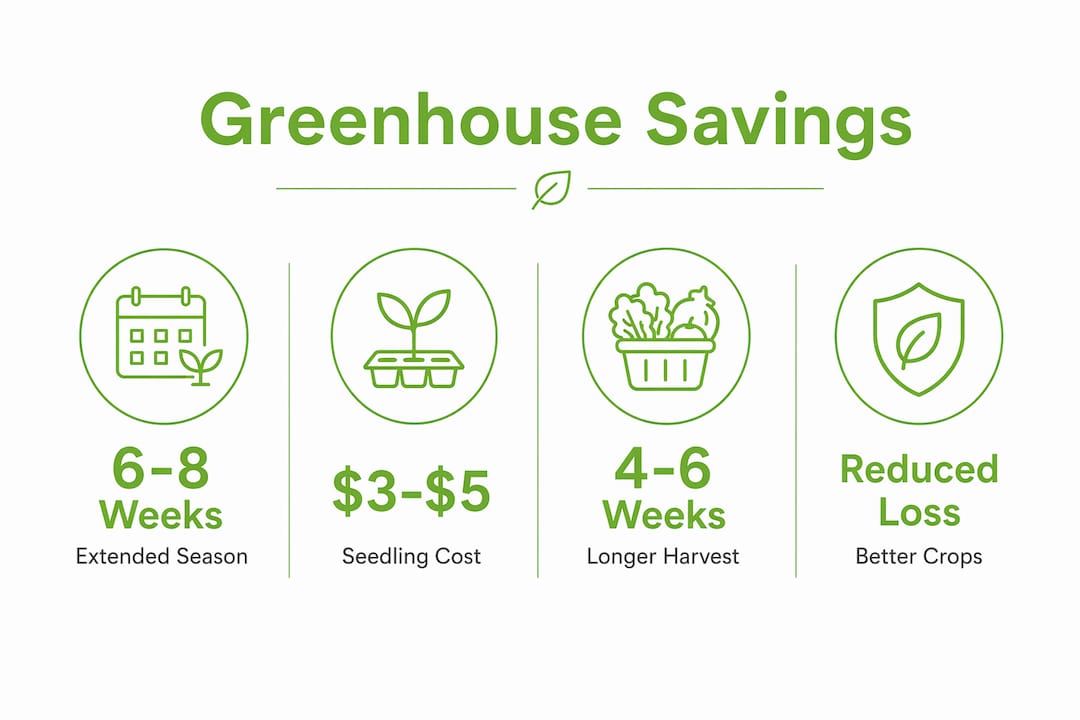
Extended growing season. A greenhouse lets you start seeds 6–8 weeks earlier in spring and keep harvesting 4–6 weeks later in fall. That’s a meaningful stretch of productive time that would otherwise be dead space on your calendar.
Seed-starting instead of buying transplants. A tray of 50 tomato seedlings from a garden center can run $3–$5 each. Starting those same plants from seed costs a fraction of that. A $4 seed packet yields dozens of plants; the math compounds fast across a full season.
Reduced crop losses. Outdoor gardens lose plants to late frosts, hail, pests, and disease. A greenhouse cuts those losses sharply, which means more of what you plant actually makes it to your table.
Higher-value crop focus. Tomatoes, cucumbers, peppers, basil, and salad greens are among the most expensive items at the grocery store and among the easiest to grow under glass. A single healthy tomato plant produces several pounds of fruit over a season. Eight plants in a standard 8×12 layout can replace a meaningful portion of your summer produce budget.
Rough scenario comparisons:
- Small 6×4 grower: Two tomato plants, herbs, and a cucumber. Estimated annual produce value corresponds to a moderate yearly saving. Transplant savings add to the total annual benefit.
- Family 8×12 setup: Six to eight tomatoes, peppers, cucumbers, and succession salad greens. Annual produce value minus operating costs results in a significant net benefit.
- Year-round hobbyist: Winter greens, spring seedlings, and summer fruiting crops provide substantial annual value when heating costs remain low through passive solar and good insulation.
Pro Tip: Tomatoes, cucumbers, and basil deliver the highest return per square foot of any common greenhouse crop. Fill at least half your bench space with these three before adding anything else.
What greenhouse kits actually cost and when they pay off
Understanding the full cost picture upfront prevents the most common mistake: budgeting only for the structure and getting surprised by everything else.

Typical kit cost ranges vary depending on size and materials. Site prep adds a significant portion above the kit price for foundation and setup. Annual operating costs fluctuate based on heating and maintenance requirements.
Site prep costs include foundation materials, staging (internal shelving), automatic vent openers, and delivery. These are not optional extras; they are part of making the greenhouse functional.
A simple payback calculation
Here’s how to run the math for your own situation:
- Estimate your annual grocery savings. A productive 8×12 kit growing tomatoes, cucumbers, peppers, and herbs can generate meaningful produce value annually.
- Subtract annual operating costs. Heating (if used), seeds, compost, and minor maintenance add to yearly expenses.
- Net annual benefit: A well-used mid-range setup provides a positive net benefit.
- Divide total first-year cost by net annual benefit. This calculation helps approximate the payback period, which varies based on actual costs and benefits.
The payback window shortens considerably if you grow high-value crops consistently, start seeds for the whole season rather than buying transplants, and keep heating costs low. Growers who optimize crop selection and planting schedules typically see materially better returns by year three.
Main cost drivers to watch:
- Size: Larger footprint means more growing area and faster payback per dollar spent.
- Glazing type: Double-wall polycarbonate costs more upfront but reduces repair and replacement costs over the kit’s lifetime.
- Foundation: A proper base is non-negotiable for structural integrity and longevity.
- Shipping and assembly: Factor these in before you commit to a price.
- Heating system: The single biggest variable in annual operating cost.
- Accessories: Shelving, vent openers, and irrigation add up to several hundred dollars in year one.
Kit vs. DIY: where the real financial trade-offs hide
The raw-materials cost of a DIY greenhouse often looks cheaper on a spreadsheet. In practice, that gap closes fast once you account for what the spreadsheet leaves out.
Where kits win on total cost:
- All components are included and sized to fit, so you avoid the hardware store runs that add up across a multi-weekend build.
- Engineered designs reduce structural errors. Pre-engineered kits typically avoid trial-and-error expenses and produce a more predictable project outcome.
- Many kits are pre-engineered to meet common building-code expectations, which simplifies permit and compliance steps that catch DIY builders off guard.
- Warranties on frames and glazing panels protect your investment for years.
Where DIY can still make sense:
- You have genuine construction skills and access to tools you already own.
- You want a non-standard size or shape that no kit covers.
- You have time to source materials carefully and absorb a learning curve without financial pressure.
The hidden DIY costs most homeowners underestimate: specialty tool purchases, material waste from measurement errors, and the real dollar value of your own labor. These factors routinely erase the apparent material savings for most homeowners who go the scratch-build route.
A practical decision rule: If you’ve never built a structure before, a kit almost always costs less in total dollars and time. If you’re an experienced builder with tools on hand and a non-standard site, DIY deserves a closer look. For everyone else, kits include all parts and instructions, reducing the risk of missing components and costly mid-project corrections.
Pro Tip: Before pricing a DIY build, add up the tools you’d need to buy or rent, then add 20% for material waste. Compare that adjusted total to a comparable kit price. The gap is usually smaller than you expect.
How to make a greenhouse kit pay for itself faster
The difference between a greenhouse that pays off in five years and one that takes twelve often comes down to a handful of decisions made in the first season.
-
Orient for maximum sun. Place the long axis east-west so the south-facing wall gets full winter sun. A well-chosen backyard site with good solar access can add weeks to your effective growing season without spending a dollar on heat.
-
Add thermal mass cheaply. Dark-painted water containers, brick pavers, or stone flooring absorb heat during the day and release it at night. This alone can keep temperatures several degrees above freezing on cold nights, reducing or eliminating heating costs in shoulder seasons.
-
Insulate with bubble wrap. Horticultural bubble wrap clipped to the inside of polycarbonate panels cuts heat loss by a meaningful margin in winter. It costs under $30 for a small greenhouse and is reusable for several seasons.
-
Install automatic vent openers. Overheating kills plants faster than cold does. Automatic openers ($40–$100 each) regulate temperature without requiring you to be present, protecting your crop investment on hot days.
-
Start everything from seed. This is the single highest-ROI habit in greenhouse gardening. A $3.50 seed packet of tomatoes yields 20–30 plants. Buying those as transplants at a garden center costs $60–$150 for the same number.
-
Grow succession crops. Don’t leave bench space empty between harvests. Fast-turning crops like lettuce, spinach, and radishes can cycle through in 30–45 days, filling gaps between your main fruiting crops and adding to your annual produce total.
-
Prioritize high-value crops. Tomatoes, peppers, cucumbers, basil, and specialty herbs cost the most at the grocery store and thrive in a greenhouse environment. Fill your space with these before growing anything cheaper.
-
Phase your accessories. Buy the structure first, then add shelving, irrigation, and propagators as your budget allows. Spreading accessory costs over two seasons reduces the first-year financial hit without sacrificing long-term productivity.
A quick example: A homeowner who applies site orientation, bubble-wrap insulation, and succession planting in year one can realistically add $100–$150 to their annual produce value while cutting heating costs by $50–$80. That’s an extra $150–$230 per year in net benefit, which shortens a 10-year payback to roughly 7–8 years without spending another dollar on the structure.

When a greenhouse kit probably won’t save you money
A greenhouse is not the right financial move for every gardener. Being honest about these scenarios saves you from a purchase you’ll regret.
- You grow fewer than 20 plants per season. The annual cost of buying those transplants is $40–$80. A $1,000 kit takes 12–25 years to pay off at that rate.
- You live in a warm climate (USDA Zones 7–9) with 150+ frost-free days. Season extension is the primary financial driver, and you already have most of it outdoors. The main benefit shrinks to seed-starting, which saves maybe $40–$60 a year.
- Your winters require heavy heating. Keeping a greenhouse above freezing in a Zone 5 winter costs $100–$400 per season. In a cold climate with a small kit, heating costs can erase most of your produce savings.
- You travel frequently or have an inconsistent schedule. Greenhouses need daily attention for venting and watering during the growing season. A neglected greenhouse produces nothing and costs the same to own.
- You mainly grow ornamentals or cheap produce. Flowers and low-cost vegetables like zucchini and beans don’t generate enough grocery savings to justify the investment.
- You’re a first-year gardener. The learning curve is real. Many new growers see modest savings in year one. Proving the habit with cold frames and indoor seed-starting first is a smarter financial path.
The simple decision test: Estimate your realistic annual grocery savings from a greenhouse. Multiply by seven years. If that number is less than your projected first-year total cost (structure plus 30–50% for site prep), the payback timeline is long enough that alternatives like cold frames ($50–$150) or indoor seed-starting setups ($50–$150) deserve serious consideration first.
On lifespan and replacement: A budget aluminum kit lasts 10–15 years before corrosion forces replacement. A well-built aluminum or galvanized steel frame with quality polycarbonate glazing can run 20+ years. The long-term economics favor spending more upfront on a durable structure rather than replacing a cheaper one twice.
Gridwiseliving greenhouse kits built for homeowners who want real returns
Gridwiseliving designs its greenhouse kits specifically for homeowners who want durability, straightforward assembly, and long-term value over the cheapest possible entry price. The Harmony and Bella lines reflect that priority directly.
The Harmony 6 Ft. × 4 Ft. DIY Greenhouse Kit is the right starting point for a first-time grower or a smaller yard. It’s sized for two to four tomato plants, herbs, and a propagation shelf, with a clear polycarbonate panel design that maximizes light transmission. Assembly is designed to be manageable without professional help, which keeps your first-year total cost down.
For families who want faster payback and more growing capacity, the Bella 8 Ft. × 12 Ft. Silver/Diffused DIY Greenhouse Kit hits the value sweet spot. The diffused glazing distributes light evenly across the bench, reducing hot spots and improving yields across the full growing area. At this size, you can run six to eight tomato plants, cucumbers, peppers, and a full succession salad bed simultaneously.
Both kits use aluminum framing and polycarbonate panels chosen for longevity, which directly reduces the repair and replacement costs that erode long-term savings on cheaper structures. Modular design means you can add shelving, ventilation, and accessories as your budget allows rather than all at once.
Browse the full Gridwiseliving greenhouse collection to compare sizes, glazing options, and current pricing, and find the kit that fits your yard and your savings goals.
Key Takeaways
Greenhouse kits save money reliably when matched to the right climate, crop selection, and usage habits, with most mid-range setups paying off within 5–10 years on grocery savings alone.
| Point | Details |
|---|---|
| Payback window | Most mid-range kits pay off in 5–10 years; high-value crops and year-round use shorten that timeline. |
| Biggest savings channels | Season extension, seed-starting instead of buying transplants, and reduced crop losses drive the most savings. |
| Budget the full first year | Plan to spend 30–50% more than just the kit price for site prep, foundation, shelving, ventilation, and delivery before comparing to savings. |
| When it doesn’t pencil out | Fewer than 20 plants per season, warm climates, heavy heating needs, or infrequent use all extend payback beyond reasonable. |
| Gridwiseliving option | The Bella and Harmony kits offer durable frames and polycarbonate glazing designed for long-term value and lower replacement costs. |
A practical note from Gridwise on what actually matters in year one
Most homeowners who buy a greenhouse kit focus on the structure. The growers who see the fastest payback focus on the crop list.
The financial case for a greenhouse is almost entirely built on a handful of high-value crops: tomatoes, cucumbers, peppers, and fresh herbs. If you fill your bench with these in year one and start everything from seed, you’ll see meaningful savings even before you’ve optimized anything else. The structure is just the container. What you put in it determines whether the math works.
One approach worth considering: buy the structure in fall when end-of-season pricing is often better, then spend winter sourcing seeds and planning your succession schedule. That way, you’re ready to plant the moment conditions allow in spring, and you’re not scrambling to figure out crop placement after the kit is already up. Phasing accessory purchases into year two, after you know what you actually need, also keeps the first-year cost closer to the structure price alone.
For a deeper look at which greenhouse style fits your yard and your goals, the Gridwiseliving guide on types of home greenhouses is a useful next step before you commit to a size.
Authoritative sources and further reading
The following sources informed the cost ranges, payback calculations, and kit-vs.-DIY comparisons in this article. For specific follow-ups, the notes below point you to the most relevant resource.
- The True Cost of Growing Your Own: Does a Greenhouse Actually Pay for Itself? — The Independent — Best source for realistic payback timelines, first-year budgeting, and the 30–50% site-prep factor.
- Do You Need a Greenhouse? The Honest Cost-Benefit Analysis — The Garden EP — Detailed scenario breakdowns by grower type; useful for the “when it won’t save money” decision.
- Low-Cost Greenhouses: Price Ranges and Practical Budget Insights — Current Cost — Kit price ranges by size and glazing type; use for budget planning.
- Is It Cheaper to Buy or Build? — Sunlight Greenhouses — Expert analysis on engineered kits vs. scratch builds and hidden rework costs.
- Is It Cheaper to Buy a Greenhouse Kit Than Build One? — Mulberry Greenhouses — Permit and code compliance considerations for kit buyers.
- Is It Cheaper to Build or Buy a Greenhouse? — Greenhouse Emporium — Full guide covering hidden DIY costs and kit convenience value.
- Is It Cheaper to Build or Buy a Greenhouse? — Your Greenhouses — Cost comparison analysis with practical DIY labor and tool cost breakdowns.
- Are Greenhouse Kits Worth It? — Greenhouse to Grow — Recommendations on glazing and frame materials for longevity and lower lifetime cost.
- Why Home Gardens Reduce Expenses — Gridwiseliving — Internal resource quantifying grocery savings and long-term budgeting for home growers.
- Gutter Cleaning Benefits Homeowners: Save Thousands — Pali Pressure Pros — Complementary read on home-improvement ROI for cost-conscious homeowners.