

Types of Home Greenhouses Families Will Love in 2026
A home greenhouse is a controlled growing environment that lets families produce fresh food year-round, regardless of outdoor weather. The right structure protects plants from frost, wind, and humidity swings while giving kids a hands-on space to learn where food comes from. Choosing among the types of home greenhouses families can realistically build or buy comes down to three things: available space, budget, and how much maintenance your household can commit to. Greenhouses regulate heat and humidity, extending the growing season for fruits, vegetables, and herbs well beyond what an open garden allows.
1. What size greenhouse does your family actually need?
Size is the first decision, and most families get it wrong by going too small. Recommended sizes scale by headcount: a 6x8 ft structure suits 1–2 people, an 8x10 ft suits 3–4 people, and 10x12 ft or larger works best for families of four or more. Reaching 100–170 sq ft gives you enough room for multiple growing zones, a seed-starting station, and space to move around comfortably.
Families often underestimate how much floor space disappears once shelving, pots, and a work table go in. A structure that feels spacious in photos feels cramped after the first planting season. If you are unsure, size up by one tier.
Pro Tip: Add 20% to your estimated square footage before buying. You will fill the space faster than you expect, and expanding a fixed structure later costs more than buying the right size upfront.
2. Lean-to greenhouses attached to your home
A lean-to greenhouse shares one wall with your house, which makes it the most convenient family greenhouse option for smaller yards. You get easy access to electricity and water without running long lines across the yard. The tradeoff is moisture risk. Water vapor and condensation can work into siding or masonry over time if flashing and sealing are not done correctly.
Attached greenhouses offer utility convenience but limit your light orientation options since the shared wall blocks one side. They work best on south or west-facing walls in the Northern Hemisphere. Families in mild climates get the most value from this style.
3. Freestanding greenhouses for maximum flexibility
Freestanding structures sit independently on your property, which means you can orient them for the best sun exposure regardless of where your house sits. Freestanding models offer better light orientation and separate the growing environment completely from your home’s structure. This separation also reduces moisture transfer risk.
These are the most popular family greenhouse options because they come in every size, from compact 6x4 ft starter kits to large walk-in structures over 300 sq ft. The Bella 8 Ft. X 12 Ft. DIY Greenhouse Kit from Gridwiseliving is a strong example of a freestanding kit sized for a family of three or four, with diffused panels that soften direct sunlight and built-in roof vents.
4. Cold frames and cold boxes for beginners
Cold frames are the entry point for families who want to test greenhouse gardening before committing to a full structure. A cold frame is essentially a bottomless box with a transparent lid, placed directly over garden soil. It captures solar heat and shields seedlings from frost without any heating system.
Cold frames cost $50–$200, making them the most affordable home greenhouse option by a wide margin. That low cost means you can experiment with season extension for a single season before deciding whether a larger structure makes sense. Kids can manage a cold frame almost entirely on their own, which makes it a natural starting point for family gardening education.
5. Portable walk-in greenhouse kits
Portable walk-in kits are lightweight, fabric-covered frames that assemble without tools and store flat in the off-season. They cost $200–$400 and give families a genuine walk-in growing space without a permanent foundation. The downside is durability. Most fabric covers degrade within two to three seasons under UV exposure and wind stress.
These kits work well as a bridge between a cold frame and a permanent structure. Families who are not ready to commit to a fixed site benefit from the flexibility. A cedar raised bed with greenhouse cover combines the raised-bed growing method with a removable greenhouse cover, giving families a compact, dual-purpose option that fits even small backyards.
6. Hobby greenhouses: the best all-around family choice
Hobby greenhouses are permanent, kit-based structures that start at $1,000 and represent the best backyard greenhouses for families who are serious about year-round growing. They come with aluminum or galvanized steel frames, polycarbonate or glass panels, and built-in ventilation. Most families in this category choose polycarbonate panels over glass because polycarbonate is lighter, shatter-resistant, and provides better insulation.
Hobby greenhouse kits typically cost $1,000 or more, excluding site prep and climate controls. That figure climbs when you add a heater, shade cloth, or automatic vent openers. Budget for those additions from the start rather than treating them as optional upgrades.
Pro Tip: Buy a kit with pre-drilled panels and labeled hardware. Assembly time drops significantly, and the whole family can participate in the build over a weekend.
7. Hoop houses for budget-conscious families
A hoop house is a tunnel-shaped structure built from bent metal or PVC conduit covered with polyethylene film. It is the most affordable permanent growing structure, and many families build one as a DIY family greenhouse project for under $500 in materials. Hoop houses heat up quickly in spring and provide solid frost protection through fall.
The limitation is winter performance in cold climates. Single-layer poly film loses heat rapidly at night, so hoop houses work best in USDA hardiness zones 6 and above for year-round use. In colder zones, they extend the shoulder seasons effectively but require a supplemental heat source to carry crops through deep winter.
8. Polycarbonate panel greenhouses for cold climates
Twin-wall or triple-wall polycarbonate panels trap air between layers, creating insulation that glass cannot match at the same thickness. Families in northern states or high-altitude regions get the most value from polycarbonate structures because the insulation reduces heating costs significantly during winter months.
Greenhouse design fundamentally depends on ventilation, siting, and moisture management. Polycarbonate structures handle moisture better than glass because the panels do not form condensation as readily on interior surfaces. For families growing through winter, this detail matters more than aesthetics.
9. Glass greenhouses for long-term investment
Glass greenhouses are the traditional choice and the most visually appealing option for families who want a permanent backyard feature. Tempered or horticultural glass transmits light more clearly than polycarbonate, which benefits light-hungry crops like tomatoes and peppers. The tradeoff is weight, fragility, and cost.
Glass structures cost more to build and require a stronger foundation. A broken pane is a safety concern in a family setting with children. Families who choose glass typically prioritize aesthetics and plan to keep the structure in place for 20 or more years, treating it as a home improvement rather than a gardening tool.
10. How climate affects your greenhouse choice
Your local climate determines which greenhouse type actually works for your family, not just which one looks good. Families in the Pacific Northwest deal with excess moisture and low winter light, making ventilation and supplemental lighting priorities. Families in the Southwest face intense summer heat, making shade systems and cross-ventilation mandatory.
A greenhouse does not automatically extend the growing season. Active management of temperature, ventilation, humidity, and watering determines whether your greenhouse produces food year-round or sits idle for half the year.
Matching structure to climate is the single decision that separates thriving family greenhouses from abandoned ones.
11. Ventilation: the feature families most often skip
Proper ventilation prevents pest and fungal outbreaks that can wipe out an entire growing season in days. Every greenhouse, regardless of size, needs active airflow. Ridge vents, side vents, and circulation fans are the standard combination. Automatic vent openers that respond to temperature are worth the added cost because they protect plants on days when no one is home to manually adjust vents.
Most families underestimate how fast temperatures spike inside a closed greenhouse on a sunny day. A structure that sits at 65°F at 9:00 AM can exceed 100°F by noon without ventilation. Automatic roof vent openers or fans are considered mandatory even for small hobby greenhouses.
12. Design features that get the whole family involved
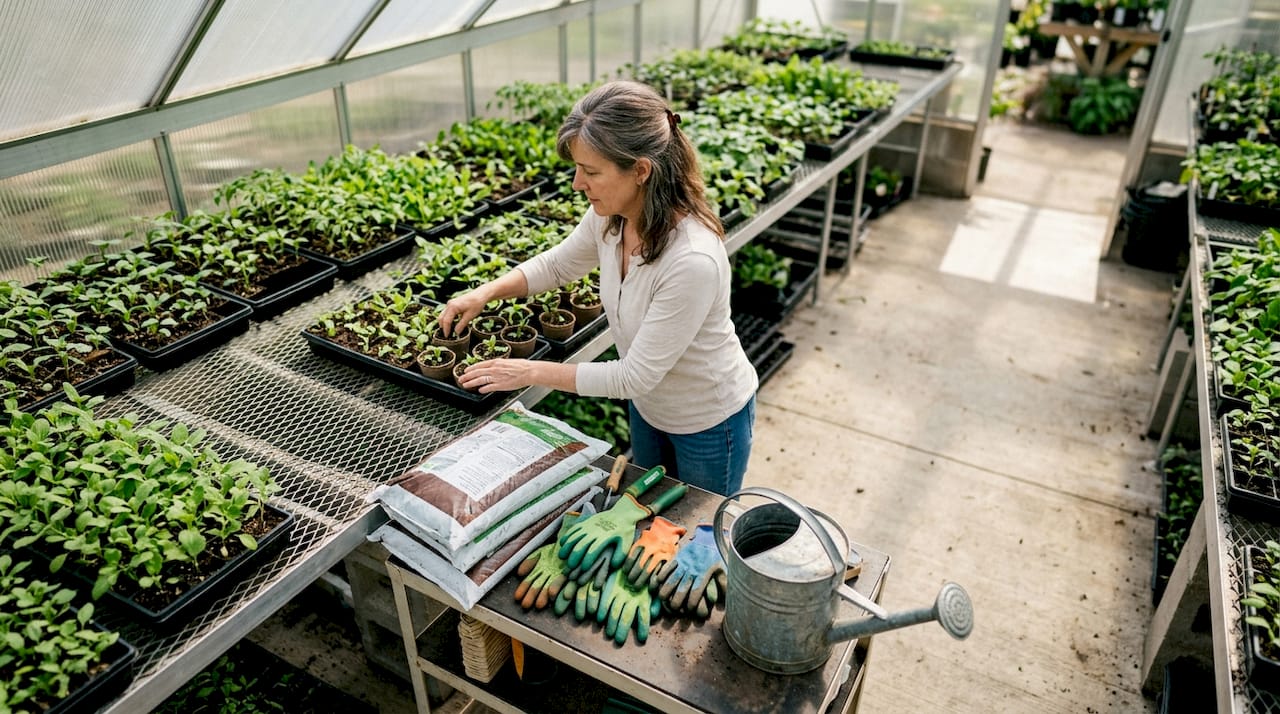
The best family greenhouses are designed for participation, not just production. Waist-height potting benches let adults work without bending. Lower shelves at child height give kids their own growing stations. A dedicated seed-starting area with a heat mat and grow light turns the greenhouse into a year-round classroom.
Involving children in hands-on tasks like seed starting builds confidence and genuine interest in food production. Starting with fast-growing, forgiving crops like radishes, lettuce, and herbs gives kids visible results within two weeks. That quick feedback loop keeps them engaged through the slower stages of growing tomatoes or peppers.
Pro Tip: Label each child’s growing tray with their name and the planting date. Ownership of a specific plant dramatically increases how often kids check on and care for it.
Key takeaways
The most effective family greenhouse combines the right size for your headcount, a structure suited to your climate, and ventilation systems that protect plants without constant manual attention.
| Point | Details |
|---|---|
| Size by headcount | Use 6x8 ft for 1–2 people, 8x10 ft for 3–4, and 10x12 ft or larger for families of 4+. |
| Match structure to climate | Polycarbonate panels insulate better in cold climates; hoop houses suit mild zones on a tight budget. |
| Ventilation is non-negotiable | Automatic vents or fans are mandatory in every greenhouse size to prevent pest and fungal loss. |
| Start with easy crops | Radishes, herbs, and lettuce give kids fast results and build lasting interest in the greenhouse. |
| Budget for extras | Cold frames start at $50; hobby kits start at $1,000 before adding heaters and climate controls. |
What I have learned from watching families set up greenhouses
The families who get the most from their greenhouses are rarely the ones who spent the most. They are the ones who started with a realistic size, learned the basics in one season, and expanded from there. The families who struggle almost always made the same two mistakes: they bought a structure too large to maintain with their current schedule, or they skipped ventilation and lost their first crop to heat or fungus.
My honest recommendation is to start at the 8x10 ft range if you have three or four people in your household. That size is large enough to grow meaningful quantities of food and small enough to manage on weekends without burning out. The Harmony 6 Ft. X 6 Ft. DIY Greenhouse Kit is a good entry point for smaller households who want to build confidence before committing to a larger footprint.
Site selection matters more than most families realize. A greenhouse placed in partial shade because it “looks better there” will underperform a less attractive placement that gets full sun from 9:00 AM to 3:00 PM. Prioritize sun hours over aesthetics every time.
The educational value of a family greenhouse is real, but it requires intentional design. A greenhouse that only adults use becomes a chore. One with dedicated kid stations, labeled trays, and easy crops becomes something children ask to visit. That difference comes from how you set it up, not from the structure itself.
— Gridwise
Gridwiseliving’s greenhouse options for every family size
Gridwiseliving carries a full range of greenhouse kits sized from compact starter units to large walk-in structures, all built with durable aluminum frames and polycarbonate panels that hold up through multiple seasons.
Every kit in the Gridwiseliving greenhouse collection includes built-in ventilation features, and several models come with roof vents already integrated into the frame. Families who need more growing room can step up to the 10x32 ft polycarbonate greenhouse, which offers swing doors, adjustable roof vents, and enough floor space for dedicated zones for vegetables, herbs, and seed starting. The full catalog covers every budget tier and yard size, with product pages that list dimensions, materials, and assembly details clearly.
FAQ
What is the best greenhouse size for a family of four?
A 10x12 ft greenhouse gives a family of four enough space for multiple growing zones and comfortable movement. Families who want year-round food production should target 100–170 sq ft of floor space.
How much does a family greenhouse cost?
Cold frames start at $50–$200, portable walk-in kits run $200–$400, and hobby greenhouse kits start at $1,000 before adding site prep, heating, or ventilation upgrades.
Do home greenhouses need ventilation systems?
Yes. Every greenhouse needs active ventilation through ridge vents, side vents, or circulation fans. Automatic vent openers are strongly recommended because temperatures inside a closed greenhouse can exceed 100°F on sunny days.
What crops should families grow first in a greenhouse?
Radishes, lettuce, and herbs are the best starting crops because they grow quickly and tolerate beginner mistakes. Fast results keep children engaged and build confidence before moving to slower crops like tomatoes.
Is a lean-to or freestanding greenhouse better for families?
Freestanding greenhouses give families more flexibility in siting and light orientation. Lean-to structures are more convenient for utility access but carry a higher moisture risk to the home’s exterior walls.