

What Is a Walk-In Greenhouse Size That Actually Works for You?
Most home gardeners land somewhere between 6×8 and 10×12 feet, with 8×8 hitting the sweet spot for a serious hobby without turning into a second job. That’s the short answer to what is a walk-in greenhouse size question you’re probably here to settle. But footprint alone doesn’t tell the whole story.
Whatever number you pick, the real rule of thumb is this: reserve 20% to 30% of that floor space for walkways and workspace before you count a single square foot as growing room. Common home walk-in dimensions break down like this:
- 6×6 or 6×8 — compact starter footprint
- 8×8 or 8×10 — the standard hobbyist range
- 10×12 and up — family-scale or serious production
The rest of this guide walks through considerations for usable planting area, layout, and timing for upsizing.
Key Takeaways
The right walk-in greenhouse size comes down to matching usable planting area, rather than raw footprint, to your actual growing goals and available maintenance time.
| Point | Details |
|---|---|
| Footprint isn’t usable space | Subtract 20% to 30% for paths and workbench area before counting square footage as growing room. |
| Most hobbyists land at 8×8 or 8×10 | This range balances plant capacity with manageable daily upkeep for a single grower. |
| Height matters as much as width | Aim for at least 6 feet of standing clearance and 7 to 8 feet at the ridge for tall crops. |
| Automation kicks in past 8×12 | Larger footprints usually need drip irrigation and zoned vents to stay manageable. |
| Gridwiseliving covers every tier | The greenhouse collection includes polycarbonate and aluminum-framed kits sized from compact starters to production-scale units. |
Table of Contents
- What Is a Walk-In Greenhouse Size in Practical Square Feet?
- How Do You Choose the Right Size for Your Goals?
- How Should You Lay Out the Interior Space?
- Why Does Ceiling Height Matter as Much as Footprint?
- What Can You Actually Grow at Each Size?
- How Much Upkeep Does a Bigger Greenhouse Really Take?
- Which Gridwiseliving Greenhouse Fits Your Size Tier?
- What Sizing Advice Gets Wrong Most Often
- Get the Right Size Greenhouse Without the Guesswork
- Sources
What Is a Walk-In Greenhouse Size in Practical Square Feet?
Nominal sizes get thrown around a lot in product listings, but they’re just shorthand for the footprint. A 6×8 unit is 48 square feet. An 8×8 is 64. An 8×10 is 80. Larger models with footprints similar to 10×12 and above tend to support more serious growing demands beyond casual hobbyist use.
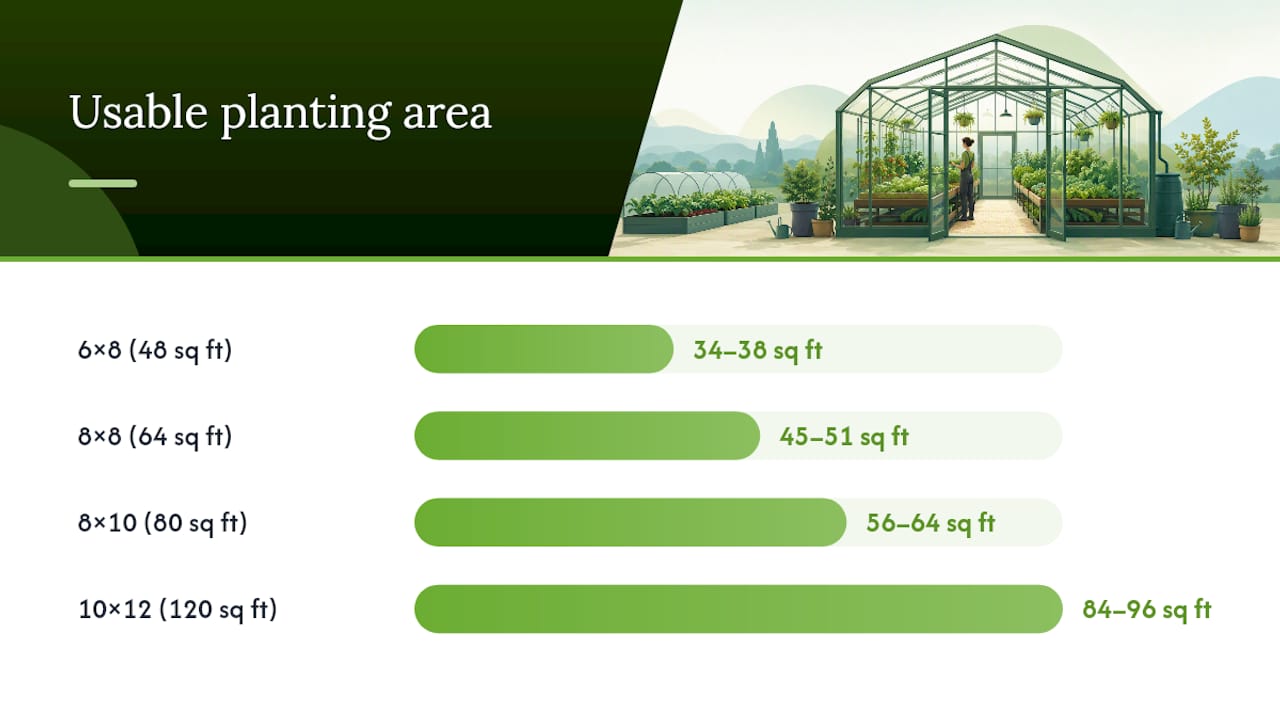
None of that is usable planting space, though. Once you subtract the 20% to 30% that sizing guides consistently recommend for a center path and a bit of elbow room at the workbench, the real growing footprint shrinks fast. A 64 square foot greenhouse might only give you 45 to 51 square feet of actual bench and bed space once you’ve carved out a path down the middle.
Here’s how the common sizes shake out once you factor that in:
Prices swing this widely because material and framing choices do most of the heavy lifting on cost. Polycarbonate panels over an aluminum frame tend to sit in the middle of these ranges, offering better insulation and impact resistance than glass without the fragility. Glass looks better and diffuses light more evenly, but it costs more up front and cracks if a branch or a hailstone gets ambitious. Britannica’s overview of greenhouse construction notes that glazing material has always been the biggest lever on both performance and price, and that hasn’t changed just because the frames are now aluminum instead of wood.
One thing worth flagging before you fall in love with a compact size: beginner hobby guides commonly suggest sizing up about 20% beyond what you think you need right now. Growers almost always expand their ambitions after one good season, and a greenhouse that’s already maxed out by July doesn’t leave room for that.
How Do You Choose the Right Size for Your Goals?
Start with what you’re actually trying to accomplish, not what looks good in a catalog photo. A greenhouse sized for starting tomato seedlings in March looks nothing like one sized for growing lettuce through January.
- Define your primary use. Seed-starting only needs a fraction of the space that year-round production demands. If you’re just getting transplants ahead of the outdoor season, a 6×6 or 6×8 will outperform your expectations. If you want fresh greens in December, you’re looking at 8×10 minimum, plus supplemental heat.
- Estimate your plant count. A mature tomato plant in a container needs several square feet of bench or floor space. Herbs and lettuce can pack in tighter, closer to 1 square foot per plant when grown on shelving. Multiply your wish list by its space requirement, then add the walkway allowance on top.
- Audit your site before you fall for a size. Measure the actual footprint available, note which direction gets the most sun, and check where your water spigot and any electrical outlets sit. Many municipalities also have setback rules or HOA restrictions on structures over a certain height or footprint, so it’s worth a quick call before you order anything.
- Match the size to your available time. A 6×8 greenhouse with hand watering is a 10 minute daily chore. An 8×12 or larger with a dozen plant varieties starts to demand drip irrigation and timed vents just to keep everyone alive while you’re at work.
Site prep matters more than people expect, especially once you’re past the smallest sizes; what a contractor should check before building or replacing a deck offers relevant insights on foundations and anchoring that apply to larger greenhouses as well. If you’re weighing orientation and utility access before committing to a footprint, that groundwork pays off the first time a heat wave hits and you’re grateful the vents actually face the prevailing breeze.
Pro Tip: If you’re on the fence between two sizes, go with the larger one only if you’re also willing to add irrigation. A bigger greenhouse with manual watering just means more plants wilting on the days you forget.
How Should You Lay Out the Interior Space?
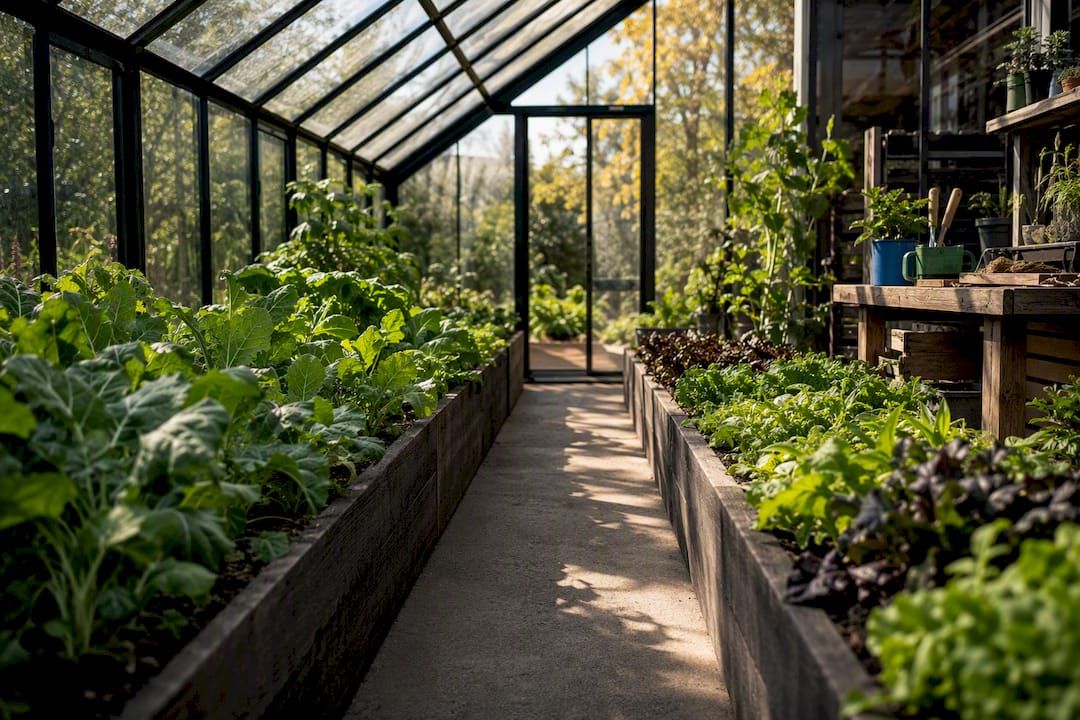
A greenhouse is only as good as the path you can actually walk down it. Cramming benches wall to wall might look efficient on paper, but if you can’t reach the back row without knocking over six seedling trays, that square footage is dead weight.
- Keep a central walkway wide enough to comfortably move trays or materials; go to 30 inches or more if you’ll be carrying trays, a wheelbarrow, or bags of soil regularly.
- Leave clearance for the door to swing fully open without hitting a bench or shelving unit.
- Single-sided benching along one wall works well in narrower units like a 6×8; double-sided benching with a center aisle suits 8×10 and larger footprints.
- Vertical tiering on shelves adds growing surface without adding footprint, particularly for herbs, lettuce, and started seedlings that don’t need much headroom.
- Set aside a dedicated potting and tool area, typically 10 to 20 square feet, even in a smaller unit. Skipping this just means you’ll be repotting on the walkway.
That potting bench eats into your growing space, which is exactly why the 20 to 30 percent walkway estimate from earlier already needs a little padding if you’re planning a real workbench setup rather than just a narrow shelf.
Why Does Ceiling Height Matter as Much as Footprint?
Footprint gets all the attention, but height decides whether your greenhouse actually works for what you want to grow. Standing clearance should be at least 6 feet everywhere you’ll be walking, and taller is better if you’re growing vining crops like tomatoes, cucumbers, or pole beans that will climb well past head height by midsummer.
- A ridge height of 7 to 8 feet gives you room for overhead shelving, hanging baskets, and better airflow near the peak.
- Higher roofs improve air circulation, but they also let heat stratify, meaning the top of the greenhouse can run noticeably hotter than the ground level, which matters if you’re running a heater in winter.
- Door height should match your tallest equipment or largest potted plant, not just your own height. A wheelbarrow or a mature citrus tree in a pot can get stuck in a doorway sized only for people.
- A steeper roof slope sheds snow better in cold climates but can limit how much shelving you can mount near the peak.
What Can You Actually Grow at Each Size?
Numbers on a spec sheet don’t mean much until you picture what fits inside them. Here’s what each tier realistically supports.
- Starter/compact (6×4 to 6×8): Room for a couple dozen seed trays, a shelf of herbs, and maybe six to eight tomato or pepper transplants waiting for the ground to warm up. This is the size most beginner guides point to for someone testing whether they’ll actually use a greenhouse before committing to something bigger.
- Hobbyist (8×8 to 8×12): Enough space for 10 to 15 mature container plants, a proper potting bench, and shelving for started seedlings alongside your producing plants. This is where most serious home growers settle in and stay for years.
- Family/serious hobbyist (10×12 and up): Multiple raised beds or long benches, dedicated potting and storage zones, and realistic capacity for 25 or more plants in production at once, depending on how aggressively you tier shelving.
Vertical shelving is the cheapest way to add capacity without adding footprint. A single tiered shelf unit can roughly double the growing surface in the same floor space, which matters most in the smaller tiers where every square foot counts.
How Much Upkeep Does a Bigger Greenhouse Really Take?
Size doesn’t just change what you can grow. It changes how much time and infrastructure you need to keep it all alive.
- Small hobby sizes (6×8 to 8×8) are manageable with hand watering and manually opened vents; you can realistically check on them once a day.
- Beyond roughly 8×10 or 8×12, drip irrigation and zoned or thermostat-controlled vents stop being a luxury and start being the thing that keeps your plants alive on the one day you can’t get outside.
- Seasonal maintenance scales up too: more glazing to clean, more shading material to install in summer, and more structural bracing to check before snow load season if you’re in a colder climate.
- Polycarbonate panels typically outlast basic plastic film glazing by years, while aluminum frames resist the rust and rot that can shorten the life of wood-framed units.
Pro Tip: If you’re already dreading the idea of manually adjusting vents twice a day, that’s a sign you’ve picked a size that needs automated ventilation, regardless of what the footprint suggests.
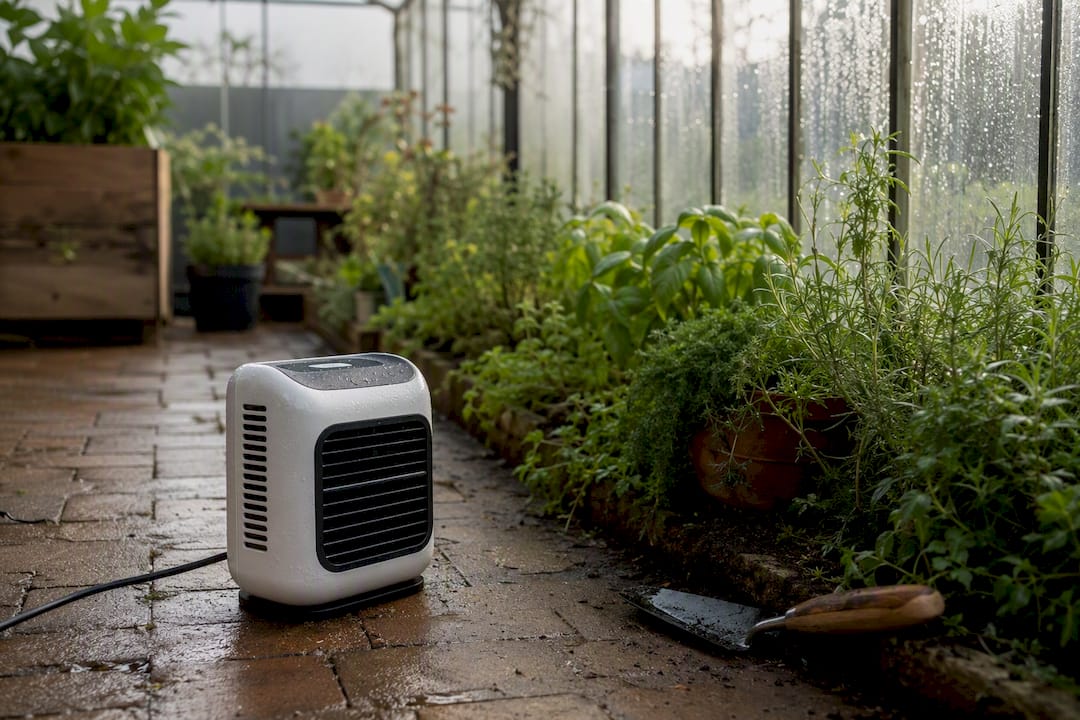
Heating, ventilation fans, and water usage are the ongoing costs nobody mentions on the price tag. A small unit might cost you next to nothing beyond the occasional watering can refill; a 10×12 running a space heater through a cold snap will show up on your utility bill.
Which Gridwiseliving Greenhouse Fits Your Size Tier?
Gridwiseliving’s greenhouse collection covers most of the tiers discussed above, built around the same durability priorities that matter once you’ve settled on a footprint: polycarbonate glazing, reinforced aluminum framing, and adjustable roof vents that let you manage the heat stratification issue that comes with taller ridge heights.
For the mid-range hobbyist tier, the Willow 9×6 cedar wood and polycarbonate model pairs a workable footprint with a built-in power port, useful once you’re running a heat mat or supplemental lighting.
When shopping any size, prioritize these features:
- Panel material (polycarbonate resists impact better than glass or film)
- Roof and side vent count for airflow management
- Door width for wheelbarrow or cart access
- Anchoring hardware rated for your local wind conditions
- Warranty coverage on the frame and glazing separately
| Size Tier | Gridwiseliving Fit | Key Feature to Check |
|---|---|---|
| Starter (6×6–6×8) | Compact kit models | Panel durability, anchor kit included |
| Hobbyist (8×8–9×10) | Willow 9×6 and similar mid-size kits | Power port, vent placement |
| Large/production (10×12+) | Heavy-duty aluminum polycarbonate models | Roof vent count, swing door width |
What Sizing Advice Gets Wrong Most Often
Most sizing guides treat square footage like it’s the whole answer, and that’s where they fail new growers. A 10×12 greenhouse with a poorly planned interior can grow less usable produce than a well-laid-out 8×8, because the difference between footprint and usable planting area is exactly where beginners lose track of their own math.
The conventional advice to “buy bigger than you think you need” isn’t wrong, but it skips the part that actually matters: bigger only helps if you’re also ready to add irrigation and ventilation systems to match. A 10×12 unit with hand watering is a bigger chore, not a bigger harvest.
If you’re prioritizing anything, prioritize the walkway and workbench allowance first, before you fall in love with a nominal size on a listing page. Get that right, and even a modest 6×8 or 8×8 footprint, built with durable polycarbonate paneling, will outperform a larger structure that nobody planned properly.
— Gridwise
Get the Right Size Greenhouse Without the Guesswork
Once you know your target square footage, the harder part is finding a kit that actually matches it in real materials, not just marketing photos. Gridwiseliving’s greenhouse collection is organized around the same size tiers covered in this guide, from compact starter kits up through the heavy-duty 10×32 aluminum polycarbonate model built for serious small-scale production.
Every model uses polycarbonate glazing and reinforced framing designed to hold up through wind, snow load, and years of daily use, so you’re not choosing between a size that fits your yard and a structure that’ll hold up past one season. If you’re still narrowing down the footprint, pair your greenhouse research with a look at site selection basics before you order, so the unit you choose actually fits where you plan to put it. Browse the current lineup by size and pick the model that matches the planting area you’ve mapped out.
Sources
- Greenhouse Sizing Calculator | Find the Perfect Size | Sierra Greenhouse
- How to Know If a Walk-In Greenhouse Is Big Enough for Your Goals - Gro Greenhouses
- Greenhouse buying guide for home gardeners | The Home Depot
- A Beginner’s Guide to Using a Hobby Greenhouse
- Greenhouse | Britannica
Recommended
- Types of Home Greenhouses Families Will Love in 2026 – Gridwise Living
- [10X36FT] Extra-Large Heavy-Duty Outdoor Walk-In Greenhouse With Adjus – Gridwise Living
- Grow Food Year Round in a Greenhouse: A Practical Plan – Gridwise Living
- Why Greenhouse Kits Save Money: A Homeowner’s Guide – Gridwise Living