

The Role of Solar in Tiny Homes: 2026 Guide
Solar power is the primary energy solution for tiny homes, delivering grid independence, lower utility costs, and a clean power supply that fits the minimalist demands of small-space living. The role of solar in tiny homes goes beyond simple electricity generation. It defines how you cook, heat water, charge devices, and run appliances without relying on a utility company. A typical tiny home uses just 300–600 kWh monthly, compared to 877 kWh for the average U.S. home. That reduced load is exactly why solar works so well here. Smaller systems cost less, pay back faster, and give you real control over your energy.
What is the role of solar in tiny homes?
Solar energy for tiny houses fills the gap between minimal living and full energy independence. A tiny home’s low power demand means a modest solar array can cover nearly all your electricity needs year-round. That is a fundamentally different situation from a conventional home, where solar offsets part of a much larger bill.
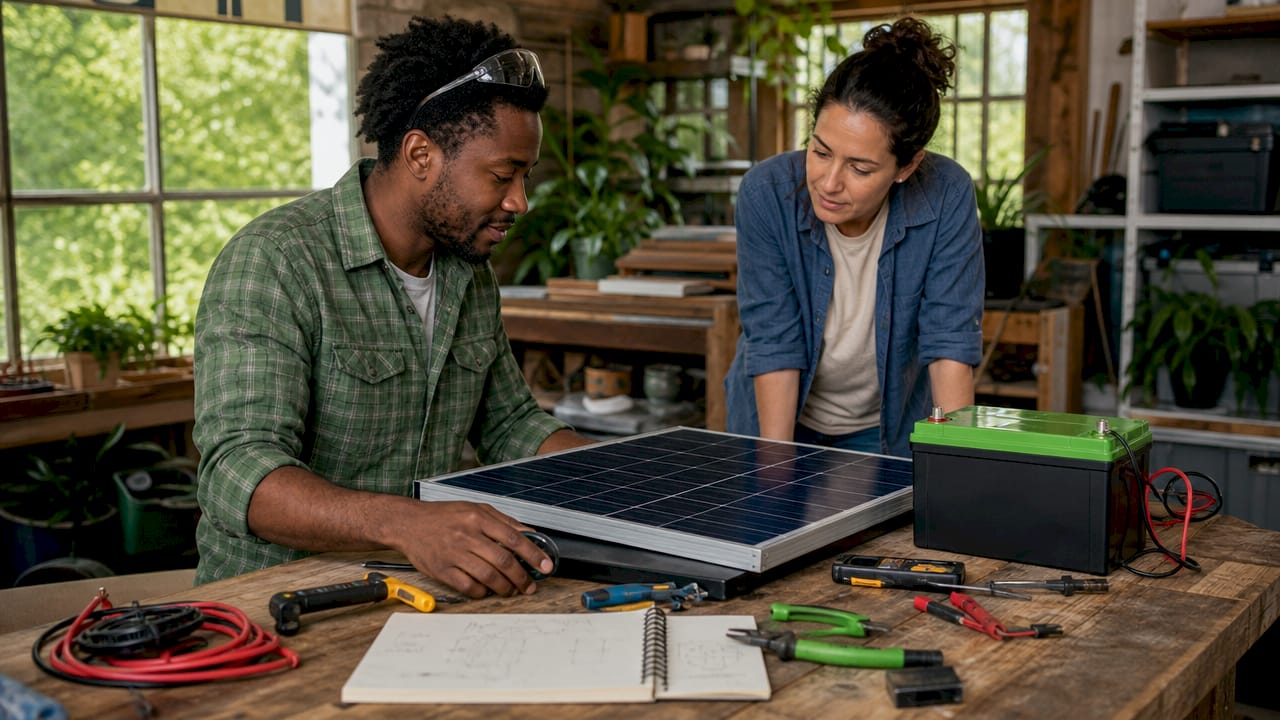
The industry term for what most tiny home owners pursue is a “standalone photovoltaic system,” which means solar panels, a battery bank, and an inverter working together without grid connection. Grid-tied systems are also possible where local codes allow, and hybrid setups combine both. Each configuration has trade-offs in cost, flexibility, and reliability.
35–40% of tiny home dwellers are fully off-grid using solar as their primary power source. That figure reflects a genuine lifestyle commitment, not just a cost-cutting move. For families and individuals who want to reduce dependence on traditional utility systems, solar is the most practical path to that goal.
How much solar power do tiny homes need?
System sizing is the first technical decision you face, and getting it right saves money and frustration. Most tiny homes run well on a 3–6 kW solar array, compared to the 10 kW typically needed for a standard home. That smaller array costs less to buy and install, and it fits on a compact roof without complex engineering.
Battery storage for a typical tiny home falls in the 5–10 kWh range. This gives you one to two days of autonomy during cloudy weather or overnight. Lithium iron phosphate batteries are the preferred chemistry because they handle frequent charge cycles better than lead-acid alternatives.
| Component | Tiny home | Standard home |
|---|---|---|
| Monthly energy use | 300–600 kWh | ~877 kWh |
| Solar array size | 3–6 kW | ~10 kW |
| Battery storage | 5–10 kWh | 10–20+ kWh |
| Typical payback period | 5–7 years | 8–10 years |
Inverter sizing is where many owners make a costly mistake. Your inverter must handle peak simultaneous loads, not just average consumption. Running a 1,200W microwave and a 1,500W hair dryer together draws 2,700W at once. An undersized inverter trips or fails under that load. Size for your worst-case scenario, not your typical afternoon.
Pro Tip: Add up the wattage of every appliance you might run at the same time, then choose an inverter rated at least 20% above that total. This buffer protects the inverter and prevents nuisance shutdowns.
What are the cost benefits and payback expectations?
Solar in tiny homes pays back faster than in conventional homes, and the numbers are clear. Payback typically lands at 5–7 years for tiny home systems, versus 8–10 years for standard homes. The reason is simple: a smaller load means a smaller system, which costs less upfront and reaches break-even sooner.
Entry-level DIY systems make the economics even more accessible. A 1.5 kW solar array with a 5 kWh lithium battery and hybrid inverter can be built for under $5,000. That setup covers typical daily usage of 3–5 kWh for a well-insulated tiny home. Professional installation adds cost but also adds warranty protection and code compliance.
The financial case strengthens further when you combine solar with energy efficiency upgrades:
- Seal air leaks first. Drafty walls and gaps around windows waste more energy than most appliances consume.
- Upgrade insulation. Better insulation directly reduces heating and cooling loads, which are the biggest energy draws in any home.
- Choose efficient appliances. An Energy Star mini-fridge uses a fraction of the power of a standard refrigerator.
- Use LED lighting throughout. Lighting accounts for a meaningful share of daily consumption in small spaces.
Each efficiency improvement shrinks the solar system you need to buy. A smaller system means lower upfront cost and a shorter payback period. The two strategies work together, and skipping efficiency work before sizing your solar array is the most expensive mistake you can make.
You can find more detail on keeping overall tiny home costs low at Gridwiseliving’s cost guide.
How does mobility affect solar system design?
Mobility changes everything about how you design a tiny home solar setup. 75% of tiny homes on wheels move at least once a year, which means your solar hardware must survive road vibration, wind loading at highway speeds, and repeated setup and teardown.
Standard residential solar mounts are not built for this. Vibration from road travel can loosen typical mounting hardware, leading to panel damage or roof leaks over time. Vibration-resistant brackets with locking fasteners are the correct solution for any tiny home that moves regularly.
Key considerations for mobile solar setups:
- Roof-mounted panels offer simplicity but require penetrations through the roof, which are a common source of leaks on mobile structures.
- Ground or pole-mounted arrays avoid roof penetrations entirely. Panels can be positioned for optimal sun exposure while the tiny home sits in a shaded spot.
- Foldable or portable panels work well for frequent movers who want flexibility without permanent installation.
- Wiring and connections must use marine-grade or RV-grade connectors rated for vibration and moisture.
Regulatory complexity adds another layer. Tiny homes occupy a gray zone between RV standards and NEC electrical codes, which affects component selection, insurance eligibility, and inspection requirements. Knowing which code applies to your specific home type before you buy hardware saves significant rework.
Pro Tip: If your tiny home moves more than twice a year, budget for a ground-mount or tilt-leg system rather than a permanent roof installation. The added flexibility pays for itself in avoided leak repairs and easier panel cleaning.
What practical tips ensure effective solar integration?
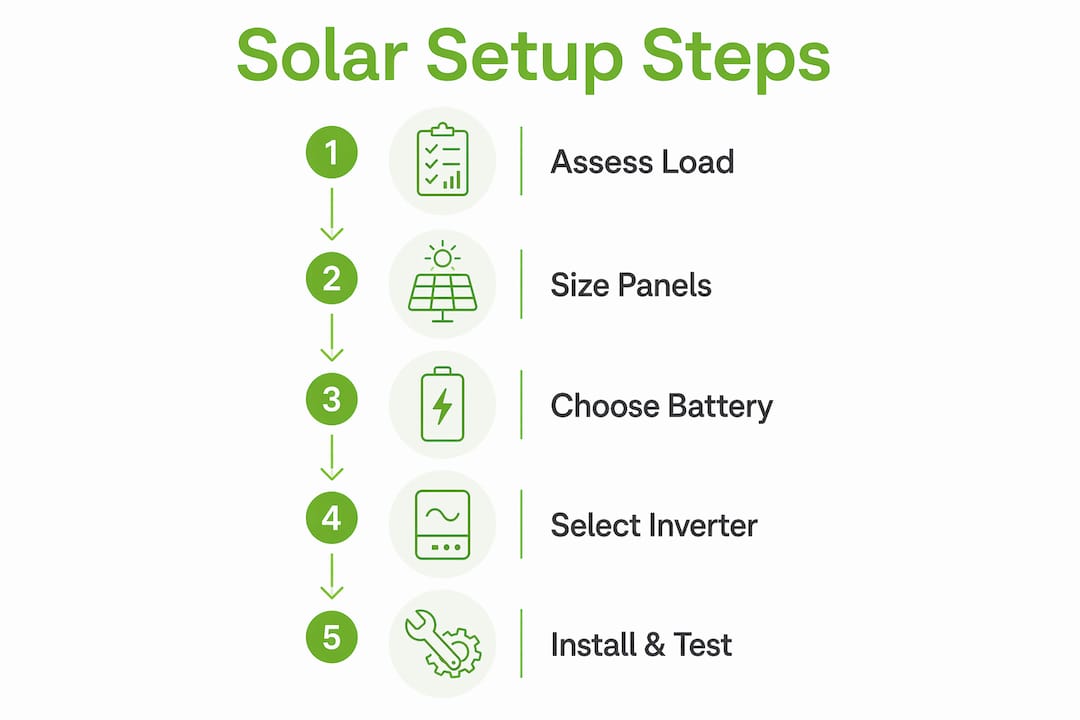
Effective solar integration follows a clear sequence. Skipping steps in this order costs money and creates problems that are hard to fix later.
- Fix the building envelope first. Seal air leaks and improve insulation before you size your solar system. Every kilowatt-hour you stop wasting is a kilowatt-hour you do not need to generate.
- Calculate your real daily load. List every appliance, its wattage, and the hours per day you use it. Multiply and total. This number drives every other sizing decision.
- Size your battery bank for depth of discharge. Lithium iron phosphate batteries last longest when daily discharge stays above 20% capacity. Size the bank so your typical daily draw uses no more than 80% of total capacity.
- Choose your grid connection strategy. Fully off-grid systems with propane backup work well in rural or remote locations. Hybrid grid-tied systems with battery backup suit locations where utility power is available but unreliable.
- Select your inverter for peak load, not average load. Add up the wattage of appliances that could run simultaneously and size accordingly.
- Decide on roof versus ground mounting before buying panels. Roof penetrations on mobile homes require careful flashing and sealant work. Ground mounts avoid the problem entirely but need a stable parking spot.
- Hire a licensed electrician for the final connection. DIY solar kits handle most of the physical installation, but the connection to your battery bank and load panel carries real safety risk. Professional sign-off also supports insurance claims.
For a broader look at off-grid power options, Gridwiseliving covers the full range of system configurations suited to small and mobile homes.
Key Takeaways
Solar power is the most cost-effective and practical energy source for tiny homes, with payback periods of 5–7 years, system sizes of 3–6 kW, and a clear installation sequence that starts with efficiency before hardware.
| Point | Details |
|---|---|
| System sizing | Most tiny homes need a 3–6 kW solar array and 5–10 kWh of battery storage. |
| Faster payback | Solar pays back in 5–7 years for tiny homes versus 8–10 years for standard homes. |
| Efficiency first | Fix insulation and air leaks before sizing your solar system to reduce costs. |
| Mobile design | Use vibration-resistant mounts and consider ground arrays to protect roof integrity. |
| Inverter sizing | Size your inverter for peak simultaneous loads, not average daily consumption. |
What I’ve learned after years of solar integration in tiny homes
The most common mistake I see is treating solar as a substitute for a well-built home. Owners buy panels to compensate for a leaky building envelope, then wonder why their battery runs out by midnight. The most costly error in tiny home solar is oversizing a system to cover inefficiency rather than fixing the inefficiency first. I have watched families spend $3,000 extra on panels they would never have needed with $500 worth of weatherstripping and spray foam.
The second pattern I see constantly is undersized inverters. People focus on panel wattage and battery capacity, then buy the cheapest inverter they can find. The inverter is the component that fails first and causes the most frustration. Spend the money on a quality unit rated for your real peak load.
DIY solar kits have genuinely improved. A motivated homeowner can handle panel mounting, wiring runs, and battery connections with the right kit and a solid instruction set. The one step I would never skip is hiring a licensed electrician for the final connection. The savings from DIY are real. The risk from an improperly wired DC system is also real, and it is not worth it.
Solar does something beyond cutting your power bill. It changes your relationship with energy. You start noticing how much power your kettle draws. You run the washing machine at noon instead of 8 PM. That awareness is the actual foundation of sustainable living, and solar makes it concrete and personal.
— Gridwise
Solar systems and tiny homes at Gridwiseliving
Gridwiseliving carries a full range of products built for exactly this kind of living. Whether you are outfitting a new build or upgrading an existing structure, the solar energy systems collection includes options sized for the 3–6 kW range that most tiny homes require.

If you want a home that is already designed for solar integration, the expandable fully equipped tiny homes at Gridwiseliving are built with energy independence in mind. For those who want a complete off-grid power solution, the MyGrid 10K solar and wind generator pairs solar with wind generation for year-round reliability. Browse the full tiny homes collection to find a model that fits your space, budget, and energy goals.
FAQ
How much solar does a tiny home need?
Most tiny homes run on a 3–6 kW solar array paired with 5–10 kWh of battery storage. The exact size depends on your daily energy use, local sun hours, and whether you plan to live fully off-grid.
What does a tiny home solar system cost?
A basic DIY system with a 1.5 kW array, 5 kWh lithium battery, and hybrid inverter costs under $5,000. Larger or professionally installed systems cost more, but payback typically occurs within 5–7 years.
Can a tiny home run fully off-grid on solar?
Yes. A properly sized solar system combined with propane or another fuel source for high-demand heating loads can power a tiny home year-round. Hybrid systems that add grid backup are also popular where utility access is available.
What type of battery works best for tiny home solar?
Lithium iron phosphate batteries are the best choice for tiny home solar systems. They handle frequent charge cycles well and last longest when daily discharge stays within 80% of total capacity.
Do mobile tiny homes need special solar mounts?
Yes. Standard residential mounts are not built for road vibration. Mobile tiny homes require vibration-resistant brackets with locking fasteners, and many owners prefer ground or pole mounts to avoid roof penetrations entirely.