

How Murphy Beds Maximize Tiny Spaces in 2026
A Murphy bed is a bed that folds up into a wall or cabinet, freeing up valuable floor space to transform a small home into a multifunctional living area. Also called a wall bed, this space-saving furniture solution is the most practical upgrade available for homes under 300 square feet. Understanding how Murphy beds maximize tiny spaces comes down to three factors: orientation, clearance, and integration with the rest of your room. Get those three right, and a single room can serve as a bedroom, home office, and living area without feeling cramped.
How do Murphy beds maximize space compared to other furniture options?
Murphy beds reclaim 30–40 square feet of floor space during the day. That is roughly the size of a small bathroom, returned to you every morning. No other single piece of furniture delivers that kind of spatial return.

Sofa beds and daybeds are the most common alternatives, but both fall short in two key ways. First, they occupy floor space permanently, even when not in use. Second, they use thin, folded mattresses that most people find uncomfortable for nightly sleep. Murphy beds, by contrast, use standard mattresses, which means you sleep on the same quality surface you would find in any bedroom. Comfort is not a trade-off.
The real advantage is multifunctionality. When the bed folds up, the room becomes something else entirely:
- A home office with a full desk setup
- A yoga or workout space with open floor area
- A living room with a sofa, coffee table, and rug
- A guest room that disappears when company leaves
- A play area for children during the day
Advanced Murphy bed designs can reclaim over 43 square feet of usable living area in compact studios. That figure covers work, living, and guest functionality in a single footprint.
“Murphy beds transform rooms psychologically, changing how people perceive and use their small spaces by enabling multifunctionality. A fixed-use room feels limiting. A flexible room feels larger than its measurements suggest.”
The psychological benefit of flexible space is real and measurable in daily quality of life. When your bedroom does not look like a bedroom at 10 AM, your home feels less like a compromise and more like a deliberate choice.
What are the key design options for Murphy beds in tiny spaces?
Vertical vs. horizontal orientation
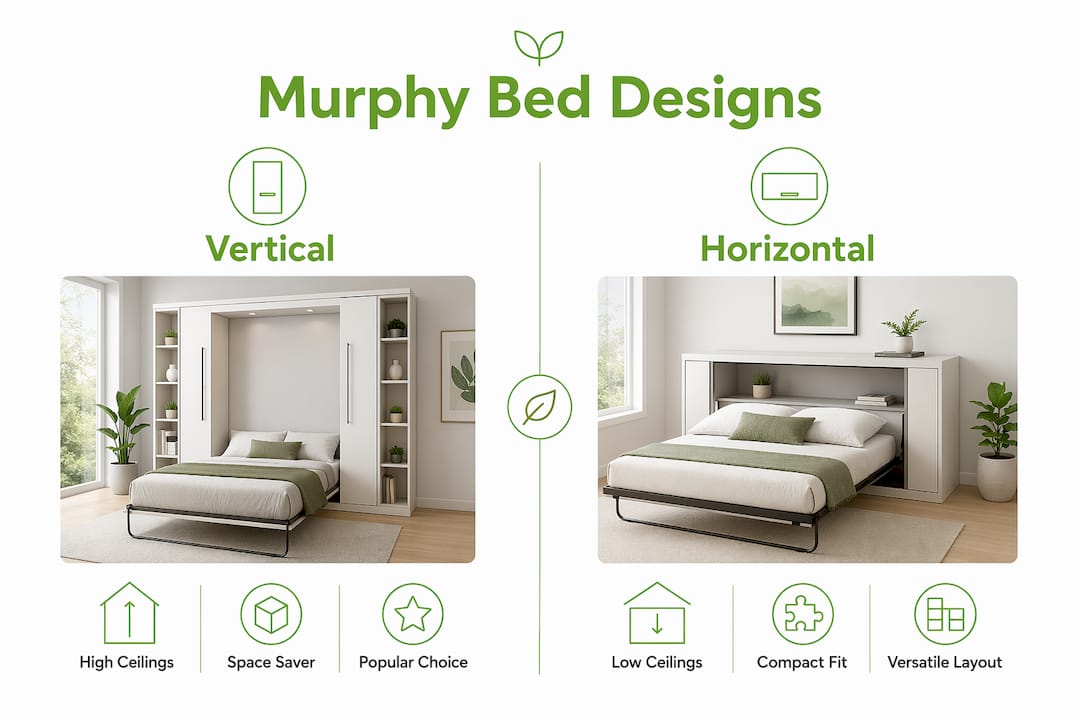
The first design decision is orientation. Vertical Murphy beds suit rooms with high ceilings, while horizontal beds fit better in spaces with low or sloped ceilings. This distinction matters more than most buyers realize. A vertical queen bed requires roughly 8 feet of ceiling clearance. A horizontal queen bed needs more wall width but only about 5 feet of height. Matching orientation to your ceiling height is the single most important design decision you will make.
| Feature | Vertical Murphy bed | Horizontal Murphy bed |
|---|---|---|
| Best ceiling height | 8 feet or higher | Under 8 feet or sloped |
| Wall width needed | Narrower footprint | Wider wall section |
| Common bed sizes | Queen, full | Twin, full |
| Ideal room type | Studio, bedroom | Loft, attic, RV |
| Visual impact when closed | Tall cabinet unit | Wide, low cabinet unit |
Clearance and deployment space
A standard queen-size Murphy bed needs a clear floor space of 54" x 80" when fully open. Beyond the bed footprint itself, you need at least 36 inches of clearance on the sides for comfortable movement. Skipping this calculation is the most common mistake in small-space installations. Measure your room with tape on the floor before you order anything.
Structural anchoring and installation
Murphy beds must be anchored into wall studs for safety. Mounting only into drywall is insufficient and creates a serious structural risk. Stud spacing in most American homes runs 16 inches on center, so your installer needs to locate and hit at least two studs per mounting point. Uneven floors and baseboards can also prevent the unit from sitting flush. Professional installation addresses these challenges and ensures the mechanism operates correctly for years.
Built-in storage and desk integration
The best Murphy bed designs include built-in cabinetry, shelving, or a fold-down desk on either side of the bed unit. This integration turns the wall into a full room system rather than just a sleeping surface. You gain storage, a work surface, and a bed from one wall section. For anyone building a tiny home on a budget, this kind of wall system replaces multiple separate furniture purchases.
Pro Tip: When planning built-in cabinetry alongside your Murphy bed, keep the cabinet depth consistent with the bed cabinet depth. Mismatched depths create awkward gaps and make the wall look unfinished.
How to select the right Murphy bed for your small space
Selecting the right Murphy bed starts with four measurements: room length, room width, ceiling height, and the distance from your intended wall to the nearest obstruction. Write these down before you look at any product.
- Measure your deployment zone. Mark out the full open footprint (54" x 80" for a queen) on your floor with painter’s tape. Walk around it. If you cannot move comfortably, you need a smaller bed size or a different wall.
- Match bed size to room constraints. A full-size Murphy bed (54" x 75") works well in rooms under 200 square feet. A queen (60" x 80") suits rooms in the 250–300 square foot range where the extra length does not crowd the space.
- Check weight capacity. Murphy bed mechanisms are rated for 500–800 lbs of static load. That rating covers the mattress and the sleepers combined. A heavy memory foam mattress can weigh 80–100 lbs on its own, which reduces the remaining capacity for users. Weight ratings are for static load, not the repeated stress of daily opening and closing. Selecting a mattress that is too heavy stresses the mechanism over time, so match mattress weight to the manufacturer’s specification.
- Factor in ceiling height. Tiny homes often have high ceilings by design, which makes vertical Murphy beds a natural fit. Lofts, converted garages, and older homes with lower ceilings call for horizontal configurations.
- Prioritize multifunctional features. A Murphy bed with a fold-down desk costs more upfront but eliminates the need for a separate desk, chair, and storage unit. The net cost per square foot of function is lower, not higher.
The role of multi-use furniture in small spaces goes beyond saving floor area. Every piece that serves two functions is one less piece you need to store, move, or replace.
What are practical ways to maximize daily living with a Murphy bed?
A Murphy bed creates floor space. What you do with that space determines whether your tiny home feels genuinely livable or just cleverly arranged.
The most effective approach is to furnish the freed space with lightweight, movable pieces. Folding chairs, nesting tables, and ottomans with storage can be repositioned in under a minute. When the bed comes down at night, these pieces stack or slide out of the way. When the bed goes up in the morning, the room reconfigures itself for the day.
Placement near natural light amplifies the effect of open floor space. A Murphy bed installed on an interior wall leaves the window wall free for seating or a work area. Natural light makes any room feel larger, and positioning your daytime living zone near windows reinforces that sense of openness.
Practical tips for daily use:
- Keep the floor under the bed’s deployment zone permanently clear. Clutter in that zone makes the bed harder to open and signals disorder to your brain.
- Use vertical wall space above and beside the Murphy bed unit for shelving. Floor space is scarce; wall space above eye level is almost always underused.
- Choose a sofa or seating that sits lower than the bottom of the closed bed cabinet. This keeps sightlines open and avoids a cluttered visual field.
- Install good overhead lighting directly above the deployment zone. A well-lit space reads as larger than a dim one of identical dimensions.
Pro Tip: Place a thin, low-profile rug in the deployment zone. It defines the space visually when the bed is up and stays flat under the mattress when the bed is down, with no need to roll it out of the way.
Multifunctional room layouts work best when every piece of furniture has a clear purpose in both the day and night configurations. If a piece only serves one mode, reconsider whether it belongs in the room.
Key Takeaways
Murphy beds are the most space-efficient sleeping solution for tiny homes, reclaiming 30–40 square feet of floor area daily while supporting full-size mattress comfort and multifunctional room layouts.
| Point | Details |
|---|---|
| Floor space reclaimed | Murphy beds free 30–40 sq ft daily, critical for homes under 300 sq ft. |
| Orientation matters | Match vertical or horizontal configuration to ceiling height before purchasing. |
| Clearance is non-negotiable | Plan for a 54" x 80" open footprint plus 36" side clearance for safe daily use. |
| Stud mounting is required | Anchor into wall studs only; drywall-only installation creates a structural hazard. |
| Multifunctional integration wins | Built-in desks and cabinetry replace multiple furniture pieces and maximize wall utility. |
The clearance mistake that costs people the most
Most people who regret their Murphy bed installation made the same error: they measured the wall and forgot to measure the room. A bed that fits the wall perfectly can still leave you with a layout that is impossible to use comfortably once it is open.
I have seen this play out repeatedly. Someone installs a queen Murphy bed in a 10-foot-wide room, hits the 54-inch deployment width, and then realizes the remaining space on each side is under 30 inches. That is not enough room to walk around the bed, let alone sit on the edge and get dressed. The 36-inch side clearance rule exists for exactly this reason, and skipping it turns a good investment into a daily frustration.
The second mistake is underestimating the value of professional installation. Uneven floors, off-center studs, and baseboards that prevent flush mounting are all common in older homes and tiny home builds. A professional installer resolves these issues before they become permanent problems. The cost of installation is small compared to the cost of reinstalling a unit that was done wrong the first time.
Orientation choice also shapes how you live with the bed every day. A vertical bed in a low-ceiling room forces you to duck or tilt the mattress awkwardly. A horizontal bed in a tall-ceiling room wastes the vertical space that could hold shelving or cabinetry. Getting orientation right is not an aesthetic decision. It is a functional one.
The deeper benefit of a Murphy bed is not the square footage. It is the mental shift that comes from living in a space that does not look like a bedroom all day. That shift changes how you work, how you host guests, and how you feel about your home. For anyone serious about tiny living, that is worth more than any single piece of furniture.
— Gridwise
Gridwiseliving’s tiny homes are built for this
Tiny home living works best when every design decision compounds. A Murphy bed gains more value inside a home built with the right ceiling height, wall structure, and floor plan from the start.

Gridwiseliving designs expandable tiny homes with exactly these considerations built in. The homes come fully equipped and professionally installed, so the structural requirements for wall bed mounting are already met. You are not retrofitting a Murphy bed into a space that was not designed for it. You are placing it into a home that was built to support it. Browse the full tiny homes collection at Gridwiseliving to find a floor plan that works with your space goals and budget.
FAQ
How much floor space does a Murphy bed free up?
A Murphy bed reclaims 30–40 square feet of floor space during the day. That is enough room for a desk, a sofa, or a workout area in a small home.
What size Murphy bed works best for a tiny home?
A full-size Murphy bed suits rooms under 200 square feet, while a queen works well in spaces up to 300 square feet. Always verify you have a 54" x 80" open footprint plus 36 inches of side clearance before choosing a queen.
Do Murphy beds need professional installation?
Professional installation is strongly recommended. Murphy beds must be anchored into wall studs, and uneven floors or baseboards often require adjustments that a DIY install cannot address safely.
Are Murphy beds comfortable for nightly use?
Yes. Murphy beds use standard mattresses, unlike sofa beds that use thin folded pads. Daily use is fully practical, and comfort is comparable to a conventional bed frame.
What is the weight limit for a Murphy bed?
Most Murphy bed mechanisms support 500–800 lbs of static load, which covers the mattress and sleepers combined. Factor in mattress weight when calculating remaining user capacity.