

Tiny Home Community: What It Is and How It Works
What is a tiny home community?
A tiny home community is a planned residential neighborhood made up of small, purpose-built houses, typically under 400 square feet, that share infrastructure, outdoor spaces, and a set of community guidelines. It is not simply a cluster of small dwellings dropped on a piece of land. The design is intentional: shared utilities, paved roads, common areas like gardens and clubhouses, and agreed-upon rules that govern daily life.
The distinction from an RV park matters more than most people realize. RV parks are built for temporary stays, with hookups designed for vehicles and no expectation of permanence. Tiny home communities, by contrast, are built for residents. Homes sit on permanent or semi-permanent foundations with full utility connections, and the shared spaces are landscaped and designed for everyday living, not weekend camping.
Key features you will find across most established communities:
- Homes of small size, either on fixed foundations or semi-permanent pads
- Shared infrastructure including water, sewer, and electrical hookups
- Common spaces such as gardens, dog parks, fire pits, and clubhouses
- Community bylaws or governance agreements covering noise, guests, and shared facility use
- Long-term or semi-permanent residency options, not short-term rentals in most cases
- A mix of ownership and leasehold arrangements, where some residents own their home but lease the land
A tiny home on wheels (often called a THOW) can also be part of these communities, provided the site accommodates trailer-based homes. THOWs typically are small homes built on trailer chassis, giving residents the option to relocate if needed. A studio tiny house, by comparison, uses an open floor plan that blends kitchen, living, and sleeping into one continuous space, skipping separate rooms entirely. Both formats appear in community settings across the US.
Table of Contents
- Why tiny home communities are growing across the US
- Key benefits of living in a tiny home community
- Common challenges you should know before joining
- Notable tiny home communities in the US worth knowing
- What actually determines whether a tiny home community succeeds
- Gridwiseliving supports the self-reliant lifestyle tiny home living demands
- Key Takeaways
Why tiny home communities are growing across the US
The appeal is not hard to trace. Housing costs have pushed homeownership out of reach for a growing share of Americans, and tiny home communities offer a path to ownership that does not require a traditional mortgage or a six-figure down payment. Costs for a move-in-ready tiny home range from tens of thousands to over one hundred thousand dollars, a fraction of median home prices in most US metros.
Beyond affordability, a specific kind of person is drawn to this lifestyle. Residents tend to prioritize:
- Simplified living with fewer possessions and lower monthly expenses
- Environmental values, including a smaller carbon footprint and reduced resource consumption
- Social connection in a neighborhood designed around shared spaces rather than privacy fences
- Flexibility, particularly for remote workers, retirees, and people who want the option to move without selling a house
- Intentional community, where neighbors share values around sustainability and mutual support
States such as California, Oregon, Texas, North Carolina, and Florida have seen significant community development (https://simplespaces.net/what-is-a-tiny-house-on-wheels/), though new communities are appearing across the country. The demographic is broader than the stereotype: retirees downsizing, young professionals priced out of urban markets, and families seeking a lower-cost lifestyle all appear in resident profiles.
Key benefits of living in a tiny home community
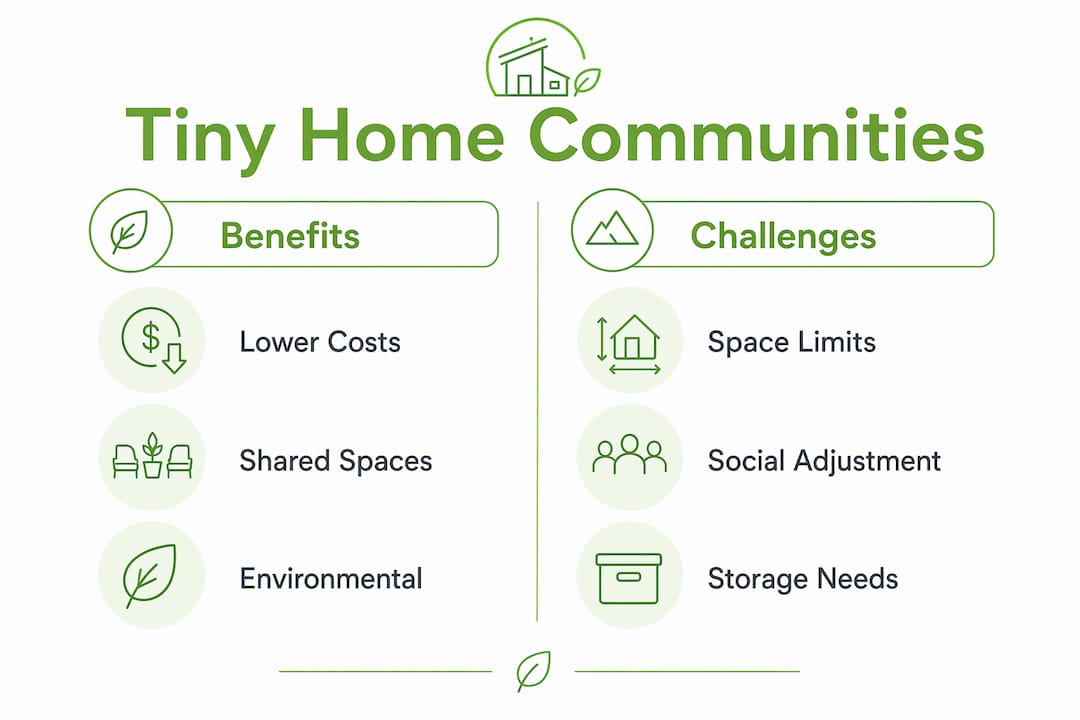
Lower costs are the most obvious draw, but the financial picture goes deeper than the purchase price. Utility bills, property taxes, and maintenance costs all shrink with a smaller footprint. Residents who lease land rather than buy it avoid property tax entirely on the land itself, which cuts ongoing costs further.

The community structure adds something harder to quantify. Shared spaces like gardens, workshops, and gathering halls give residents access to amenities they could not afford individually. A community garden, for example, provides fresh produce without each household needing a large yard. Shared laundry facilities and tool libraries reduce individual spending on appliances and equipment.
Pro Tip: Before committing to a community, ask for a copy of the bylaws and attend at least one community meeting. How residents handle disagreements tells you more about daily life than any amenity list.
Environmental benefits are real and measurable in aggregate. Smaller homes use less energy to heat and cool, and many communities incorporate solar panels, rainwater collection, and composting programs. Residents who want to take their sustainability further can add solar energy systems to their home setup, reducing grid dependence even within a connected community.
The lifestyle flexibility is underrated. Residents in communities that accommodate THOWs can, in principle, relocate their home if circumstances change, without the months-long process of selling a traditional house. For people whose work or family situation might shift, that optionality has real value.
Additional benefits residents consistently cite:
- Strong sense of belonging and reduced social isolation
- Access to shared green spaces and outdoor amenities
- Lower environmental impact through resource sharing
- Reduced time spent on home maintenance
- Built-in network of neighbors with similar values
Common challenges you should know before joining
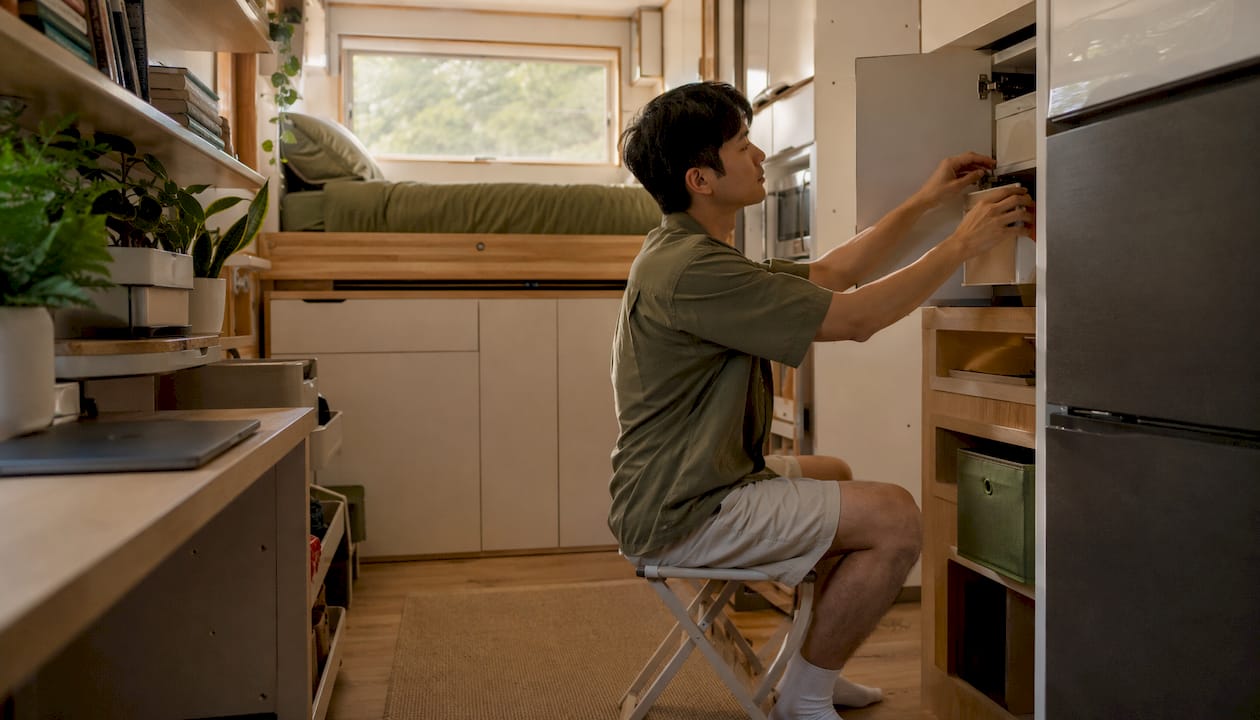
Space constraints are the most immediate adjustment. At small home sizes, storage becomes a constant negotiation. Families with children or people who work from home often find the transition harder than they expected. A studio tiny house layout, which merges all living functions into one open space, can feel freeing or claustrophobic depending on the person.
Zoning restrictions are the most persistent structural problem. Many jurisdictions still classify tiny homes as RVs or accessory dwelling units rather than primary residences, which limits where communities can legally operate. Some communities navigate this by incorporating as RV parks, which affects resident rights and the permanence of their living situation.
Other challenges worth weighing:
- Privacy tradeoffs: Shared spaces and close proximity mean less personal space than a traditional neighborhood
- Community governance friction: Consensus-based decision-making can slow down maintenance decisions and rule changes
- Infrastructure costs: Developers and residents share the burden of road maintenance, utility upkeep, and common area repairs
- Customization limits: Community guidelines often restrict exterior modifications, paint colors, and additions
- Legal permanence issues: In many jurisdictions, tiny homes on wheels cannot legally serve as a primary dwelling, which creates uncertainty for full-time residents
The social adjustment is real for people accustomed to suburban privacy. Shared decision-making requires patience and a genuine willingness to compromise. Communities that lack clear bylaws from the start tend to fracture over small disputes that escalate without a resolution process.
Notable tiny home communities in the US worth knowing
The US now has a range of established communities, each with a distinct character, location, and price point. Here is how seven of the most recognized compare:
| Community | Location | Key Amenities | Living Experience | Typical Costs |
|---|---|---|---|---|
| Cedar Springs Tiny Village | North Carolina | Gardens, community center, wooded lots | Quiet, nature-focused, permanent residents | Lot lease; home purchase separate |
| Acony Bell Tiny Home Community | Mills River, NC | Pool, dog park, event lawn, full hookups | Social, resort-style feel with long-term options | Nightly to monthly rates available |
| ESCAPE Tampa Bay | Wimauma, FL | Clubhouse, pool, fitness center, paved roads | Upscale amenity-rich community near Tampa | Monthly lot fees; homes available for purchase |
| LuxTiny | Texas | Luxury finishes, modern design, shared green space | Upscale tiny living with high-end aesthetics | Premium pricing; not publicly listed |
| Tiny House Block | Oregon | Urban infill lots, walkable neighborhood access | City-adjacent living with tiny home density | Lot purchase or lease depending on parcel |
| Bluegrass Tiny Ridge | Kentucky | Rural setting, mountain views, community fire pit | Off-grid-adjacent, peaceful, tight-knit | Lot lease model; pricing not publicly listed |
| Simple Life Tiny Home Communities | Multiple NC locations | Pools, clubhouses, walking trails, dog parks | Polished, amenity-forward, active lifestyle focus | Monthly lot fees starting at published rates |
Cedar Springs Tiny Village sits in the mountains of western North Carolina near Hendersonville, drawing residents who want a permanent, nature-centered lifestyle. The community emphasizes long-term residency and a quieter pace.
Acony Bell in Mills River, NC, takes a more social approach, with resort-style amenities and a mix of short-term and long-term residents. It works well for people testing tiny living before committing fully.
ESCAPE Tampa Bay targets residents who want upscale amenities without sacrificing the tiny home philosophy. The community near Tampa includes a clubhouse, pool, and fitness center, and sits close enough to the city for commuters.
LuxTiny leans into high-end design, appealing to residents who want modern aesthetics in a compact footprint. It sits in Texas, where land costs and regulatory flexibility make community development more viable than in many coastal states.
Tiny House Block takes an urban approach, placing tiny homes on infill lots in walkable Oregon neighborhoods rather than rural land. Residents get city access without city-sized housing costs.
Bluegrass Tiny Ridge in Kentucky offers a rural, off-grid-adjacent experience with mountain views and a tight-knit resident base. It suits people who want distance from urban density.
Simple Life Tiny Home Communities operates multiple locations across North Carolina, with a consistent amenity package that includes pools, clubhouses, and walking trails. The polished infrastructure makes it one of the more accessible entry points for people new to tiny house neighborhood living.
What actually determines whether a tiny home community succeeds
Architecture is the easy part. The communities that last are the ones that get the legal and social groundwork right before the first home goes in. Poor zoning strategy and unclear bylaws are the two most common reasons communities fail, not design flaws or location choices.
Zoning is the primary obstacle for most developers and resident groups. Many jurisdictions set minimum square footage requirements for permanent dwellings that tiny homes cannot meet. The workaround used by many communities is to incorporate as an RV park or campground, which sidesteps minimum size codes but comes with its own limitations. Residents in RV-classified communities may have more limited legal protections than traditional homeowners, and the classification can affect financing options and resale value.
The governance model shapes daily life as much as the physical layout. Community governance ranges from developer-managed commercial parks, where a company sets and enforces all rules, to intentional cohousing models where residents govern by consensus. The cohousing approach gives residents more control but requires ongoing participation. A community where half the residents disengage from governance meetings tends to drift toward conflict.
Key factors that distinguish sustainable communities from those that dissolve within a few years:
- Clear, written bylaws covering noise, guests, pets, parking, and shared facility use, established before residents move in
- A defined dispute resolution process so conflicts have a path to resolution without escalating
- Transparent cost-sharing agreements for infrastructure maintenance and common area upkeep
- Alignment with local planning authorities rather than adversarial relationships with zoning boards
- Resident engagement structures like regular meetings, committees, and shared work days that keep people invested
The distinction between commercial parks and intentional cohousing models matters for prospective residents. In a commercial park, you are a tenant with limited say over community rules. In a cohousing model, you are a co-governor with responsibilities as well as rights. Neither is inherently better, but the fit depends entirely on how much involvement you want.
Understanding zoning and building regulations before committing to a site or community is one of the most practical steps any developer or prospective resident can take. Many communities have stalled or dissolved because the legal structure was treated as an afterthought. Checking your state’s tiny home zoning laws before signing anything is not optional.
Gridwiseliving supports the self-reliant lifestyle tiny home living demands
Living in a tiny home community means taking your footprint seriously, and that extends beyond square footage. Gridwiseliving offers products built for exactly this kind of intentional living: tiny homes, solar energy systems, and greenhouses that help residents grow food, cut energy costs, and reduce dependence on external systems.
For community residents who want to go further, a compact greenhouse like the Bella 8 Ft. x 12 Ft. DIY Greenhouse Kit fits neatly on a small lot and extends the growing season well beyond what an outdoor garden can manage. Pair it with a solar setup and you have a home that produces both food and energy on a fraction of the land a traditional property requires. Browse Gridwiseliving’s full selection of tiny homes and sustainability products to find what fits your community setup.
Key Takeaways
A tiny home community is a planned residential neighborhood where small homes, shared infrastructure, and community governance combine to create an intentional lifestyle that traditional housing cannot replicate.
| Point | Details |
|---|---|
| Core definition | A tiny home community is a planned development of small homes, typically under 400 sq ft, sharing utilities, common spaces, and bylaws. |
| Legal reality | Zoning restrictions often force communities to incorporate as RV parks, which affects resident rights and permanence. |
| Success factors | Clear bylaws and resident engagement matter more than design; communities without them tend to fail within a few years. |
| Notable examples | Cedar Springs, Acony Bell, ESCAPE Tampa Bay, LuxTiny, Tiny House Block, Bluegrass Tiny Ridge, and Simple Life each offer a distinct lifestyle and price model. |
| Gridwiseliving | Gridwiseliving offers tiny homes, solar systems, and greenhouses suited to the self-reliant lifestyle that tiny home community living demands. |