

Homeowners: 5 Sampling Steps for Water Testing Before a Lab
Use inexpensive strips or a meter for routine screening, but send a sample to a state-certified laboratory whenever the answer will affect your family’s health or a treatment purchase. Screening tools catch pH swings, hardness, and chlorine trends. Only accredited lab analysis can confirm lead, bacteria, PFAS, or nitrates with any authority.
TL;DR:
- Routine testing with strips or meters can track pH, chlorine, and TDS trends but cannot definitively confirm dangerous contaminants like lead or bacteria.
- Annual testing for nitrates, bacteria, and pH is recommended for well owners, with additional testing needed near pollution sources or after flooding or repairs.
- Collecting separate first-draw and flushed samples accurately is vital for identifying plumbing versus source water contamination, following strict lab instructions.
- Lab results require comparison to EPA thresholds; a single borderline reading may warrant retesting, but confirmed exceedances demand immediate action and treatment.
- Use inexpensive screening tools for ongoing monitoring and reserve certified lab analysis for critical health-related contaminants such as lead, bacteria, or PFAS.
Table of Contents
- Home Water Testing Methods: Strips, Meters, Mail-In Kits, and Labs
- When Should You Test Your Home Water?
- How Do You Collect a Water Sample Correctly?
- What Do Your Water Test Results Actually Mean?
- Practical Screening Tools Before You Call a Lab
- Gridwise Perspective: Balancing Cost and Safety
- Screening Tools and Filtration for What Comes Next
- Where to Find Certified Labs and Testing Programs
- Sources
- FAQ
Home Water Testing Methods: Strips, Meters, Mail-In Kits, and Labs
Four options cover almost every situation a homeowner runs into, and each answers a different kind of question.
- DIY strips and color kits. These dip strips typically read pH, chlorine, and hardness, and some cover nitrate. They cost a few dollars and give a result in seconds, but the color chart method is rough. It’s fine for tracking trends, not for ruling out a health risk.
- Handheld TDS or EC meters. A total dissolved solids meter measures how much dissolved material is in the water through electrical conductivity, but it can’t tell you what that material actually is. Rising TDS after a well repair is worth investigating, but the meter itself won’t name the contaminant.
- Mail-in lab kits. You collect a sample at home and ship it to a lab for analysis. The kit itself is just packaging and a collection protocol. What matters is whether an accredited lab does the testing, and Consumer Reports recommends checking the exact analyte list and detection limits before you pay for one.
- State-certified or commercial labs. For lead, PFAS, bacteria confirmation, real estate transactions, or choosing a treatment system, this is the tier that counts. Certified labs supply their own sampling bottles, preservatives, and instructions, and their results carry legal and practical weight that a drugstore strip never will.
The EPA’s guidance for private well owners makes a similar point: there’s no single best method for every situation. Screen when you’re curious about routine changes. Test through a certified lab when the result will decide whether your water is safe or what filtration you need to buy.
When Should You Test Your Home Water?
Private well owners should test at least once a year for total coliform bacteria, nitrates, total dissolved solids, and pH, according to the CDC. That annual check is a baseline, not a ceiling. Homes near agricultural land, old mining sites, or industrial activity often need broader panels more often, based on local geology and known hazards in the area.
Certain analytes deserve priority regardless of schedule. Lead needs a first-draw sample because it usually comes from household plumbing, not the source water. Bacteria testing (coliform and E. coli) matters most after flooding, well repairs, or any gastrointestinal illness in the household. Nitrates are a particular concern for infants and pregnant residents, since high levels interfere with oxygen transport in blood. PFAS and volatile organic compounds warrant testing when there’s a known nearby source, like a firefighting training site or industrial discharge.
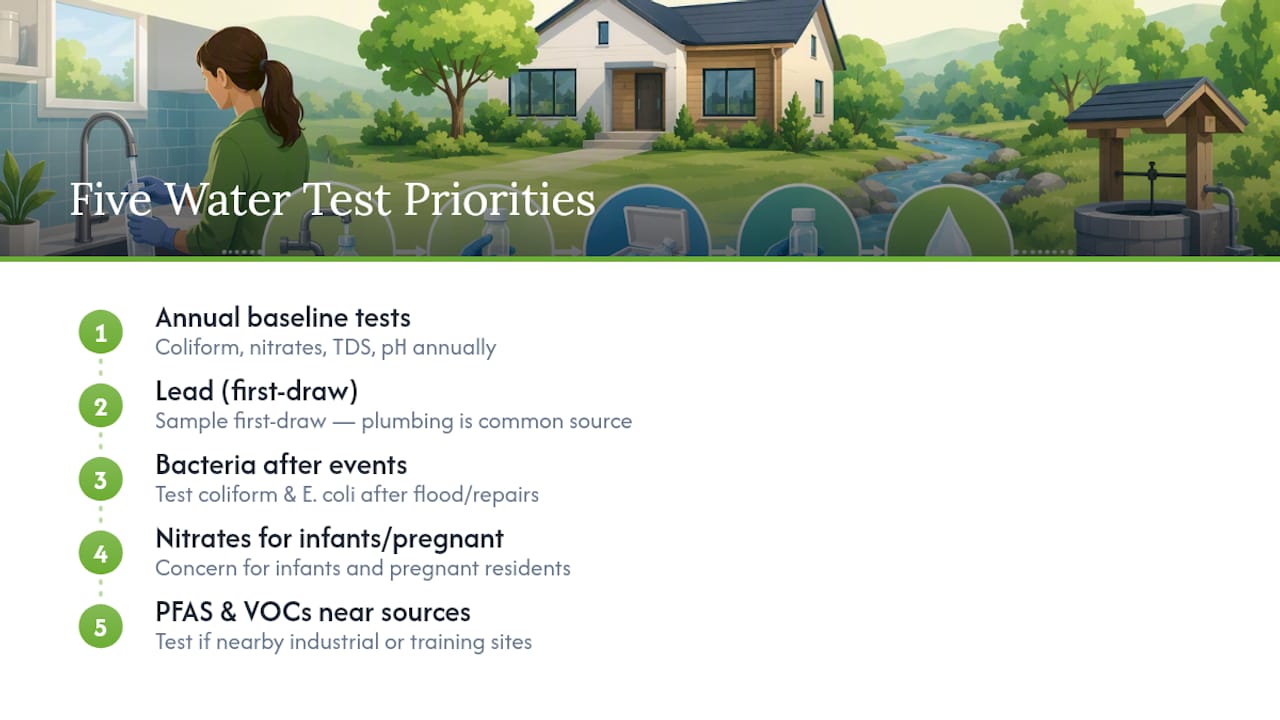
Watch for triggers, too: a sudden taste, odor, or color change, nearby construction, or a new health vulnerability in the household. The CDC notes that cloudiness, staining, or recurring stomach illness are legitimate reasons to test, but many serious contaminants have no sensory warning at all. Don’t confuse a clean-tasting glass of water with a clean bill of health. Separately, hardness and iron are nuisance issues that stain fixtures and clog appliances. They rarely threaten health, so they belong in a different testing conversation than lead or bacteria.
How Do You Collect a Water Sample Correctly?
A lab can only be as accurate as the sample you hand it. Two sample types answer different questions, and mixing them up wastes your money.
A first-draw sample is collected after water has sat in the pipes for at least six hours, usually overnight, and it shows what’s leaching from household plumbing. A flushed sample, taken after running the tap for around 30 seconds, reflects the water coming from the main line or well itself. The EPA’s lead sampling guidance uses exactly this comparison to separate a plumbing problem from a source-water problem.
Getting the collection right comes down to five steps:
- Prepare by confirming which analytes you need and requesting the lab’s own sampling kit rather than using a container from home.
- Collect the sample using the lab-supplied bottle, following its first-draw or flush instructions exactly.
- Label each bottle with the tap location and sample type, since a kitchen sample and a well spigot sample are not interchangeable.
- Pack the sample according to the holding-time window the lab specifies. Some analytes degrade within hours.
- Ship promptly using the method the lab requires, and call your state lab or local health department first if any step is unclear.
Never improvise containers or preservatives. Certified labs require specific bottles, acid preservation, or sterile containers for regulated analyses, and using the wrong one can invalidate the whole test.
What Do Your Water Test Results Actually Mean?
Lab reports list a numeric value for each analyte alongside its detection limit and the EPA’s maximum contaminant level or health advisory number. Reading it correctly means comparing your number to that regulatory threshold, not just skimming for a checkmark.
A single elevated reading doesn’t always mean panic. Some analytes fluctuate with weather or seasonal runoff, so a borderline nitrate result after heavy rain might justify a retest before you assume a chronic problem. A confirmed lead, bacteria, or PFAS result above the health advisory level is different. That calls for action, not a second opinion just to be sure.
Treatment should match the specific contaminant. Point-of-use filters handle lead and some PFAS compounds at the tap. Reverse osmosis systems tackle a broader range of dissolved contaminants. UV treatment addresses bacteria without adding chemicals. Whole-house systems protect every tap but cost more than a single point-of-use unit, so the choice depends on what’s actually in your water. A guide to matching filtration systems to lab results walks through that decision in more detail.
Pro Tip: If you’re under a boil-water or do-not-use advisory, follow the official instructions immediately. Testing won’t substitute for those emergency measures, and it can wait until the advisory lifts.
Contact your local health department for any bacteria or nitrate confirmation, and consider a certified water treatment professional before installing a whole-house system based on a single sample.
Practical Screening Tools Before You Call a Lab
A basic TDS meter and a pH indicator kit won’t diagnose lead or bacteria, but they’re the right first move for routine monitoring. Run them monthly or after any noticeable change in taste or clarity, and use a sharp jump in TDS as your cue to send a real sample to a lab, rather than guess.
- A PPM/EC meter reads total dissolved solids and conductivity in seconds, useful for tracking whether your well or filter is behaving normally over time.
- A pH test indicator flags acidity swings that corrode pipes or affect appliance life, though it says nothing about pathogens or heavy metals.
- If you’re filtering rainwater for household use, treatment steps like first flush and UV disinfection matter as much as testing does.
Treat these as your monitoring layer, not your safety net. When a screening reading looks off, that’s the signal to send a sample to a certified lab, not to stop there.
Gridwise Perspective: Balancing Cost and Safety
Most guides tell you to “test your water” without admitting that a full analyte panel gets expensive fast. The smarter approach is triage: screen cheaply and often, then spend on a certified lab only for the analytes tied to real risk in your household, like lead in a home with young kids or nitrates near farmland. Check the Gridwiseliving product pages for screening tools and filtration options once you know what you’re dealing with.
— Gridwise
Screening Tools and Filtration for What Comes Next
Once you’ve screened your water and know whether a lab test is warranted, the next question is what to do with the results. This company offers solutions for the gap between “something looks off” and “now what do I install.”
The PPM/EC meter and pH test indicator give you a fast, repeatable read on your water between lab visits, without the cost or wait time of sending a sample every month. They won’t replace a certified lab for lead or bacteria, but they’ll tell you when something’s drifted enough to justify one. Once a lab confirms what’s actually in your water, Gridwiseliving’s water filtration collection covers point-of-use and whole-house options selected for durability and straightforward installation, so you’re not stuck comparing dozens of unfamiliar brands after already dealing with a stressful result. Browse the filtration options now and match a system to whatever your test turns up.
Where to Find Certified Labs and Testing Programs
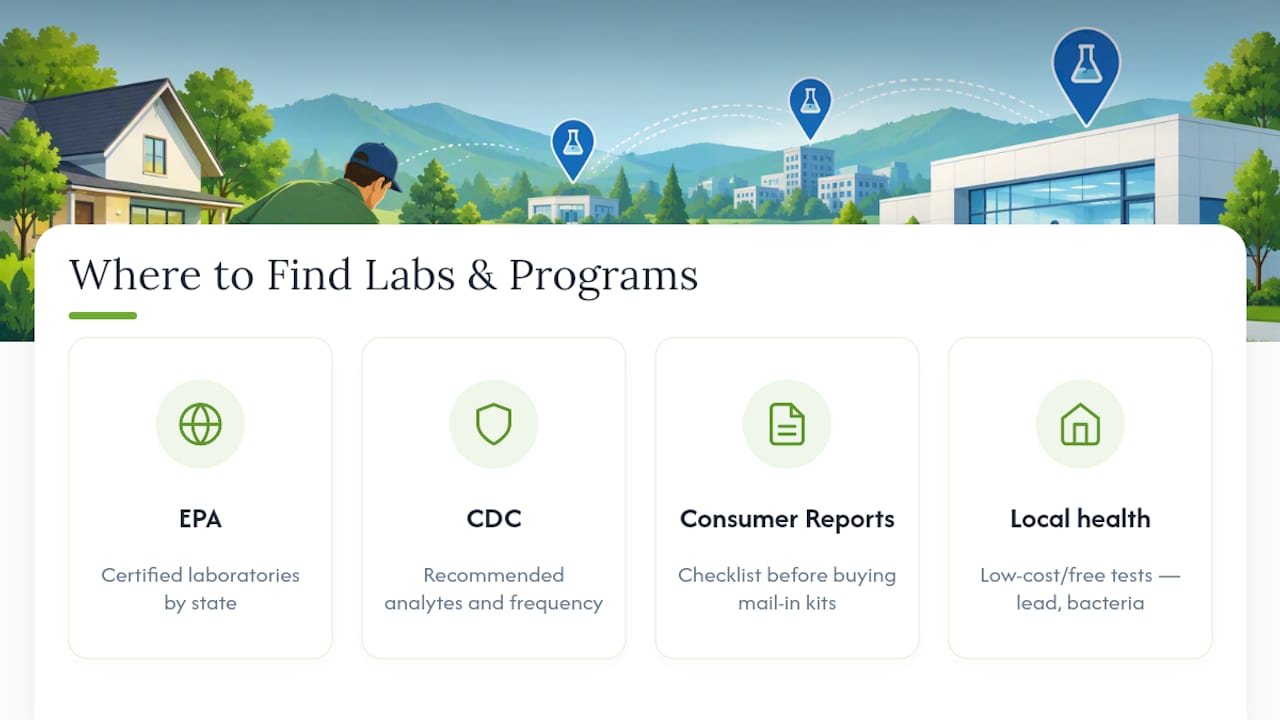
The EPA’s private well page lists certified laboratories by state, and the CDC’s well testing guidelines cover recommended analytes and frequency. Consumer Reports breaks down what to check before buying a mail-in kit. Many local health departments also run low-cost or free testing programs, particularly for lead and bacteria, so call yours before assuming you need a commercial lab.
Sources
- Guidelines for Testing Well Water | Drinking Water | CDC
- EPA guidance for private wells
- How to Test Your Tap Water - Consumer Reports
- EPA sampling protocols and laboratory methods (archival reference)
FAQ
What Is the Best Way to Test Your Water at Home?
Use a screening tool like a TDS meter or pH strip for routine monitoring, and reserve mail-in kits or state-certified lab testing for anything tied to a health decision, such as lead, bacteria, or PFAS. The right method depends on the question you’re trying to answer, not on which kit is cheapest.
Does Home Depot Still Do Free Water Tests?
Some Home Depot locations offer basic in-store water testing or refer customers to third-party partners, but availability varies by store and isn’t guaranteed. For a result you can actually act on, an accredited lab or your local health department is more reliable than an in-store screening.
What Are Signs of Poor Water Quality?
Cloudiness, unusual color, sediment, staining, unpleasant taste or odor, and recurring stomach illness are all reasons to investigate further, according to the CDC. Many serious contaminants, including lead and nitrates, produce no taste or smell at all, so a clean-looking glass doesn’t rule out a problem.
Does Lowe’s Offer a Free Water Test?
Lowe’s stores may offer water testing kiosks or refer shoppers to filtration partners for a basic screening, though this varies by location and isn’t a certified lab analysis. Treat any in-store test as a starting point, not a substitute for a lab-confirmed result if the reading looks concerning.
How Much Does a Certified Lab Water Test Cost?
Costs vary widely depending on the lab and the number of analytes requested, ranging from a basic bacteria panel to a full suite covering metals, PFAS, and VOCs. Contact your state-certified lab directly or ask your local health department about low-cost testing programs before assuming a full panel is your only option.