

Off Grid: Make Rainwater Drinkable With First Flush and Class A UV
Yes, you can filter rainwater for drinking, but only with a real multi-stage system and follow-up testing, not a single filter jug. The proven path is clean collection, a first-flush diverter, sediment pre-filtration stepping from 20 to 5 microns, activated carbon, and terminal disinfection with Class A UV or a certified pathogen-rated filter. Add reverse osmosis only if lab testing finds dissolved contaminants like nitrates or heavy metals. Skip the maintenance and annual testing, and none of the hardware matters.
TL;DR:
- A multi-stage rainwater filtration system must include gutter screens, a properly sized first-flush diverter, sediment pre-filters, activated carbon, and certified UV or pathogen-rated filters for safety.
- Reverse osmosis should only be added if laboratory tests reveal dissolved contaminants like nitrates or heavy metals that other filters cannot remove.
- Regular maintenance, including weekly gutter checks, monthly filter inspections, and annual lab testing, is vital to ensure water safety and system reliability.
- Proper system sequencing—such as floating pickups, calm inlets, and correct filtration order—is essential to prevent contaminants and extend filter lifespan.
- Legal compliance requires local permits, backflow prevention, and documentation, with testing and maintenance being more critical than advanced hardware specifications.
Table of Contents
- What does a full rainwater filtration system actually look like?
- How Do You Build a Potable Rainwater System From Tank to Tap?
- How Often Should You Maintain and Test a Rainwater System?
- What Legal and Safety Checks Come Before You Drink It?
- Matching System Complexity to Your Actual Risk
- Can You Test Rainwater Quality Yourself Between Lab Visits?
- How Do You Keep Filtered Rainwater Safe in Storage?
- The Gap Between What Most Guides Promise and What Actually Works
- Start Building Your Potable Rainwater System With Gridwise
- Sources
What does a full rainwater filtration system actually look like?
A rainwater filtration system is built in layers, and each layer has one job. Skip a layer and you’re not simplifying the system, you’re leaving a gap the next stage can’t fix.
It starts before the water ever reaches your tank. Gutter screens and clean roof catchment keep leaves, bird droppings, and shingle grit from ever entering the collection path, which reduces the load every downstream filter has to handle. A dirty roof means a dirty first-flush tank, a clogged sediment cartridge, and a shortened filter life across the board.
The first-flush diverter comes next, and it’s arguably the most underrated part of the entire treatment train. It captures and discards the initial surge of runoff, which carries the highest concentration of dust, pollen, and droppings washed off the roof. Research on staged filtration systems has found that a properly sized first-flush stage can significantly reduce initial contaminant loads, and that single step does more for water quality than almost anything downstream. Size it to your roof area and local pollution risk: 1 to 2 gallons per 100 square feet of roof works for lower-risk areas, while roofs near industrial fallout, wildfire ash, or heavy tree cover may need 10 to 50 gallons per 1,000 square feet.
From there, water moves through mechanical filtration:
- Spindown or mesh pre-filters at the tank inlet catch large sediment before it ever reaches your cartridges.
- 20 micron sediment cartridges strip out coarse particles and protect finer filters downstream.
- 5 micron cartridges catch the smaller silt and cloudiness that would otherwise choke a carbon block or blind a UV lamp.
- Activated carbon blocks pull out volatile organic compounds, taste, and odor, and shield membranes further down the line. Carbon does not disinfect. That’s a separate job entirely.
That separation matters more than most guides admit. Carbon makes water taste clean; it does nothing to the pathogens that make water dangerous.
Terminal disinfection is where potability actually happens. Your two realistic options are a Class A ultraviolet system with a built-in alarm, or a certified ceramic or pathogen-rated filter. TAMU’s rainwater harvesting program treats this combination, cartridge filtration paired with UV, as the standard approach for potable rainwater, and for good reason: UV light needs clear water to work. Cloudy or turbid water lets pathogens hide in the shadow of suspended particles, which is exactly why the sediment and carbon stages have to happen first.
Reverse osmosis is the one stage that isn’t automatic. Add it only when a lab report shows dissolved contaminants like nitrates, arsenic, or heavy metals that filtration and UV can’t touch. Installing RO without a testing reason just wastes water and money.
How Do You Build a Potable Rainwater System From Tank to Tap?
Building the system correctly is mostly about sequencing and sizing, not exotic parts. Get the order right and most of the hard work is already done.
- Choose your cistern material and size. Opaque tanks (polyethylene, fiberglass, or coated steel) block sunlight and limit algae growth inside the tank, which matters more than most buyers expect. Size the tank against your household’s dry-season demand and roof catchment area, not just a round number that sounds big enough.
- Install a calming inlet. Water entering a tank at speed stirs up settled sediment on the bottom. A calming inlet slows the incoming flow so particles stay put instead of getting resuspended right before your intake pulls from the tank.
- Mount a floating pickup at mid-depth. Drawing from the middle third of the tank with a weighted, screened floating hose avoids both the sediment layer at the bottom and the surface scum on top. This single choice extends cartridge life more than most homeowners realize.
- Size your pump for pressure and downstream demand. UV units and RO systems both need consistent flow and pressure to work as designed; check your pump’s output against the manufacturer specs for each stage, not just your household fixture count.
- Plan power for off-grid operation. A modest solar and battery setup can keep a low-power UV lamp and pump running without grid dependence, which matters if your property is fully off-grid or subject to outages.
- Select cartridges by micron rating and expected service life. Run a spindown pre-filter ahead of your 20 micron cartridge to catch coarse debris mechanically, which meaningfully cuts how often you replace the finer cartridges.
- Isolate the plumbing completely. If your property has any municipal or well connection, install backflow preventers and check valves, and keep rainwater plumbing physically separate from potable lines. Cross-connection is one of the few mistakes in this entire system that can contaminate a supply you thought was safe.
Pro Tip: Buy your UV lamp and your sediment cartridges from the same supplier cycle. Lamps lose disinfection output well before they visibly fail, so tying a lamp swap to your regular cartridge change keeps you from running unprotected water without noticing.
Electrical sizing deserves its own attention. A typical residential Class A UV unit draws modest wattage, but if you’re running it off an inverter rather than direct grid power, size that inverter with headroom for your pump’s startup draw, too, not just its running load.
How Often Should You Maintain and Test a Rainwater System?
Maintenance failure is the number one reason potable rainwater systems make people sick, not equipment failure. A clogged first-flush diverter or neglected filter lets contaminated water bypass the very stages designed to stop it, and no amount of downstream UV or carbon can fully compensate.
Build your maintenance around a simple rhythm:
- Daily or weekly: Glance at the first-flush diverter’s drain, clear visible gutter debris, and confirm tank vent screens are intact and unobstructed.
- Monthly: Check filter flow rate for signs of clogging, confirm the UV indicator light is active, and flush the spindown pre-filter.
- Every 2 to 3 months: Inspect and clean intake screens and filter housings more thoroughly than the monthly glance allows.
- Every 6 months: Clean gutters and downspouts, service the first-flush diverter mechanism, and inspect tank seals and fittings for wear.
- Annually: Send a sample to a certified lab for total coliform, E. coli, nitrates, lead, and pH. Increase that frequency if you’re in a higher-risk area, near agriculture, industry, or a roof material you’re unsure about.
A TDS meter is a useful quick check between lab visits, but it only measures dissolved solids. It tells you nothing about bacteria or pathogens, so treat it as a convenience tool, never a substitute for biological testing.
Most system failures trace back to three culprits: a stuck or blocked diverter drain, a UV lamp past its replacement date but still glowing, or a fouled cartridge nobody checked because “the water still looks clear.”
What Legal and Safety Checks Come Before You Drink It?
There’s no federal law banning rainwater collection in the United States, but state and local rules on potable use vary widely, and some jurisdictions require permits, specific system certifications, or documented testing before you can call harvested rainwater a household drinking supply.
Before you drink a drop, work through this checklist:
- Call your local health department first. Rules differ by county and even by water district; don’t assume your neighbor’s setup is legal in your jurisdiction just because it works.
- Skip potable use on high-risk roofs. Heavy industrial fallout, nearby agricultural spray drift, or older roofing materials can introduce contaminants that testing needs to clear before the water goes anywhere near a glass.
- Confirm backflow prevention is in place if your property has any connection to a municipal or well supply, protecting that separate system from contamination is as important as protecting your own health.
- Keep documentation, lab results, a system schematic, and a maintenance log, ready for inspectors, insurers, or future permit renewals.
If your property sits near retaining walls or graded landscaping, drainage design also affects where runoff and cistern overflow end up; guidance on retaining wall drainage systems is worth reviewing before you finalize tank placement.
Matching System Complexity to Your Actual Risk
Some companies build toward one principle: durable, user-friendly systems beat clever ones. A potable rainwater setup doesn’t need to be complicated to be safe. It needs the right stages in the right order, sized honestly for your household and your roof.
For off-grid readers specifically, lean toward low-maintenance mechanical pre-filters over anything with delicate moving parts, and pair your UV and pump with a solar-ready power package from the start rather than retrofitting it later. The households that succeed with this long-term are the ones who treat maintenance as part of the system, not an afterthought bolted on after installation.
Can You Test Rainwater Quality Yourself Between Lab Visits?
DIY test kits fill the gap between annual lab reports, and they’re worth keeping on hand, but they don’t replace certified testing. A basic strip kit can flag pH swings, chlorine (relevant if you’re comparing to municipal water), and rough hardness levels within minutes.
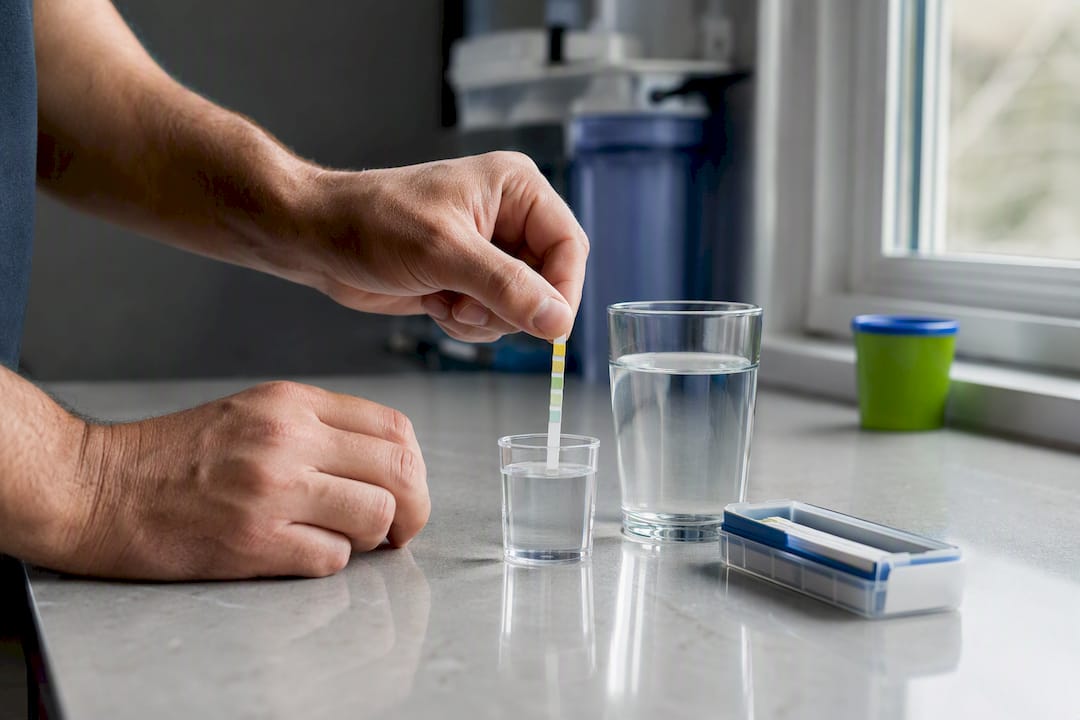
TDS meters measure total dissolved solids and give you a fast read on whether something upstream has changed, a spike after heavy rain, for instance, might signal a diverter that’s not doing its job. But TDS is blind to bacteria entirely. Clear, low-TDS water can still carry E. coli or coliform bacteria that only a lab culture test will catch.
Bacterial test kits sold for well water work reasonably well for a home screen: they typically use a color-change reaction after a short incubation period to flag the presence of coliform bacteria. Treat a positive result as a real warning, not something to double-check with a second home kit. Route it straight to a certified lab for confirmation and species identification, since coliform presence alone doesn’t tell you which pathogen you’re dealing with or how serious the risk is.
The honest use case for home kits is monitoring between annual professional tests, catching a problem early, and giving you enough information to decide whether an off-cycle lab test is worth the cost. They’re a smoke detector, not a fire inspection.
How Do You Keep Filtered Rainwater Safe in Storage?
Filtration solves contamination at the point of treatment. Storage determines whether that water stays safe until someone actually drinks it.
Store treated water in food-grade, opaque containers, sunlight breeds algae and biofilm even in water that tested clean the day it was filtered. Keep storage vessels sealed with a vented cap or screened opening, since an open container invites dust, insects, and airborne contaminants right back into water you already paid to clean.
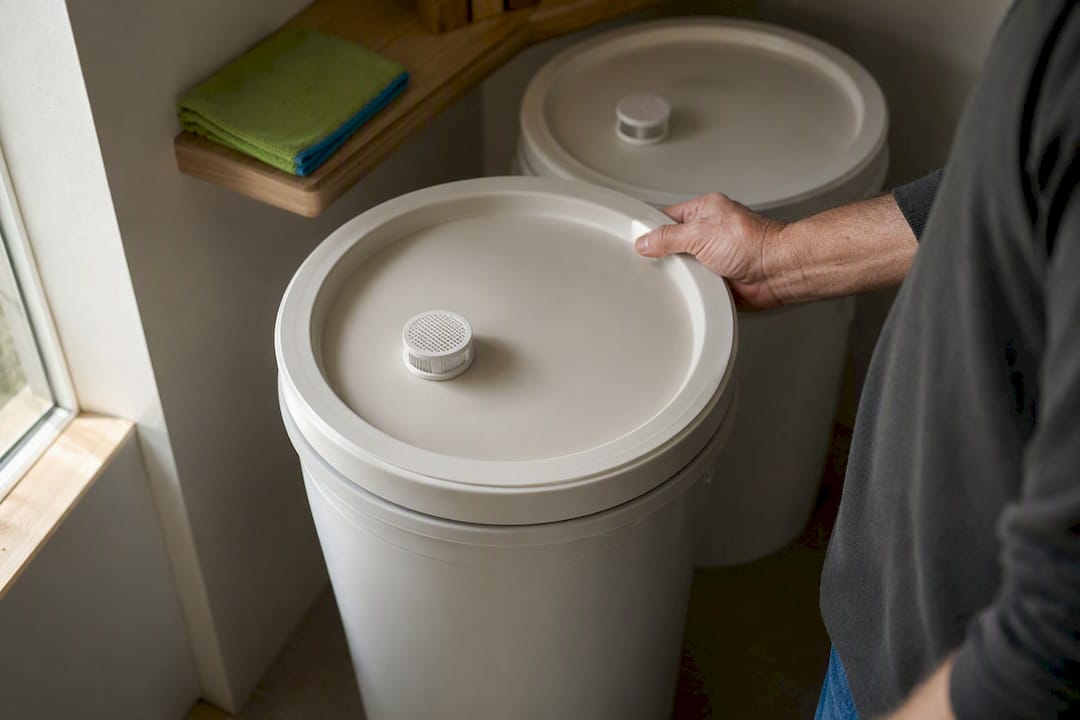
Rotate stored water rather than letting it sit indefinitely. Water that’s been sitting for months, even filtered water, can develop biofilm on container walls, particularly in warm conditions. A rough guideline for treated water in sealed, food-grade containers is six months before rotation, sooner in warm climates or containers exposed to light.
Keep storage tanks and containers separate from any chemical storage area, and never reuse containers that previously held anything other than food or water. Label storage containers with the date filtered, so nobody in the household is guessing how long water has been sitting.
If your system includes a secondary storage tank downstream of your treatment train, apply the same opaque tank guidance you used for your primary cistern. The treatment train’s work doesn’t matter if the water sits contaminated in a clear plastic jug for three months afterward.
The Gap Between What Most Guides Promise and What Actually Works
Most rainwater guides oversell the gear and undersell the routine. A Class A UV unit and a five-stage cartridge setup mean nothing if the first-flush diverter is clogged and nobody noticed for two months, that single lapse can undo every dollar spent on the equipment behind it.
The conventional advice leans hard on hardware specs, micron ratings, lamp wattage, membrane types, and treats maintenance and testing as an afterthought. That ordering is backward. The research on staged filtration systems consistently shows that simple, well-maintained systems outperform complex, neglected ones. A first-flush diverter and a clean sediment progression, checked on schedule, will protect a household better than a top-shelf UV unit bolted onto a system nobody inspects.
If there’s one thing to prioritize first, it’s this: build your maintenance calendar before you build your treatment train. Buy the mechanical reliability, floating pickups, calming inlets, first-flush sizing, that keeps the load light on your terminal disinfection stage. The fanciest filter in the world can’t save water that never should have reached it clean.
— Gridwise
Start Building Your Potable Rainwater System With Gridwise
Every stage in this treatment train has a matching product category, and you don’t have to source it piecemeal from five different suppliers. Gridwiseliving’s water filtration collection covers the sediment, carbon, and UV components that make up your treatment train, while the water storage line has the opaque tank options this whole system depends on for keeping algae and light out of your cistern.
If you’re building off-grid, pair your UV and pump load with a solar energy system sized for continuous disinfection, not just occasional backup power. That’s the piece most DIY setups get wrong: they treat solar as an afterthought instead of designing pump and UV wattage around what the panels can actually deliver. Start by browsing the filtration collection, match your stages to your roof and household size, and build the system in the order that actually keeps water safe.
Sources
For deeper detail, see the CDC’s rainwater overview, TAMU’s after-storage treatment guidance, and the DOE’s technology review. Always confirm rules with your local health department.
This article is general information, not a substitute for advice from a qualified doctor. Consult a qualified healthcare professional about your own circumstances before acting on anything here.
- Collecting rainwater and your health: an overview | CDC
- After-Storage Treatment - Rainwater Harvesting | TAMU
- Simple and effective filtration system for drinking water production from harvested rainwater in rural areas | Journal of Environmental Management
- How to build a high-volume residential rainwater harvesting system | Texas Water Newsroom