

Best Odylhouse.com Alternatives for Off-Grid Timber Homes
What are the best alternatives to odylhouse.com for sustainable prefab timber homes?
If you’re researching odylhouse.com alternatives, the short answer is this: several US-accessible prefab timber home builders offer comparable or superior options for off-grid, eco-friendly living, often with more customization and clearer domestic support. Odyl House itself, founded in 2021 in Tartu, Estonia, builds high-end prefabricated glulam and CLT timber homes designed around sustainability principles, with an optional module for full energy and water independence. The standard model starts at approximately €124,600, excluding foundation, logistics, and add-ons. Here are the main categories worth considering:
- Mass timber prefab builders using FSC-certified or PEFC-certified glulam and CLT, offering structural integrity with a low carbon footprint
- Modular off-grid cabin manufacturers that bundle solar, battery storage, and water filtration as standard rather than optional add-ons
- Expandable tiny home systems designed for full off-grid capability, with scalable floor plans and factory-built quality control
- Hybrid timber-frame kit homes where buyers source land and foundation separately, keeping upfront costs lower while retaining sustainable material choices
- Eco-community prefab suppliers that pair the home with land access and shared infrastructure, reducing individual system costs
The right fit depends on your land situation, climate zone, and how much off-grid independence you actually need from day one.
Which prefab sustainable timber home options are worth considering in the US?
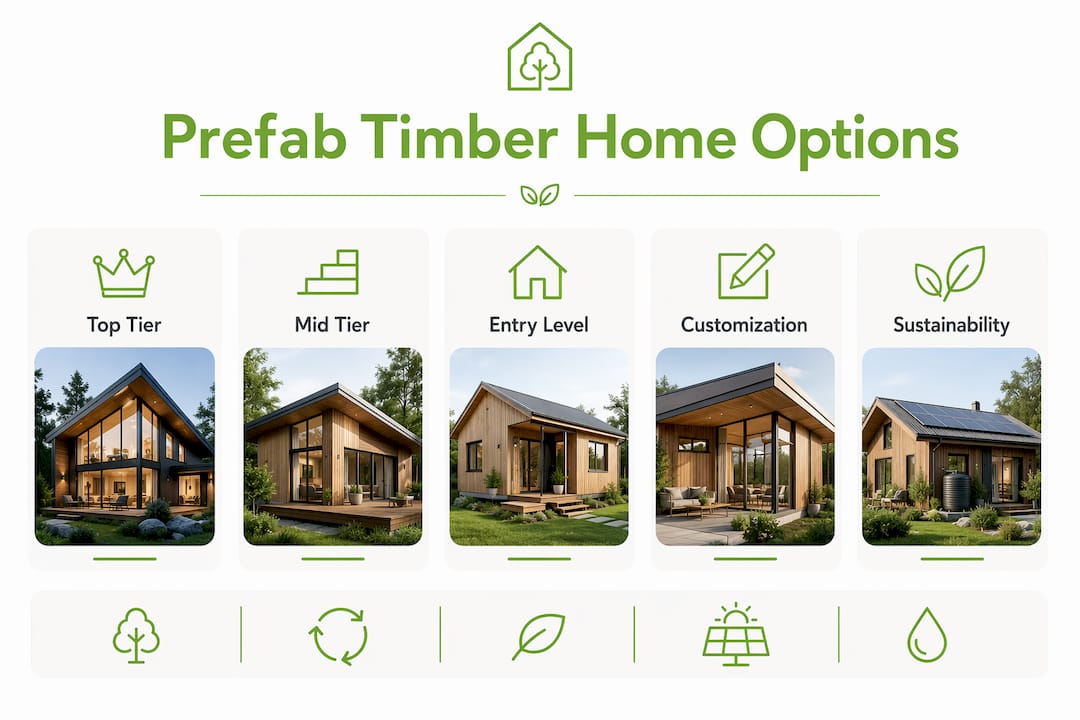
The US market for sustainable prefab timber homes has grown considerably, and buyers now have real choices across price tiers and design philosophies. What separates the best options from the rest comes down to materials certification, off-grid readiness, and how honestly the builder communicates what’s included versus what costs extra.
Sustainability certifications to look for
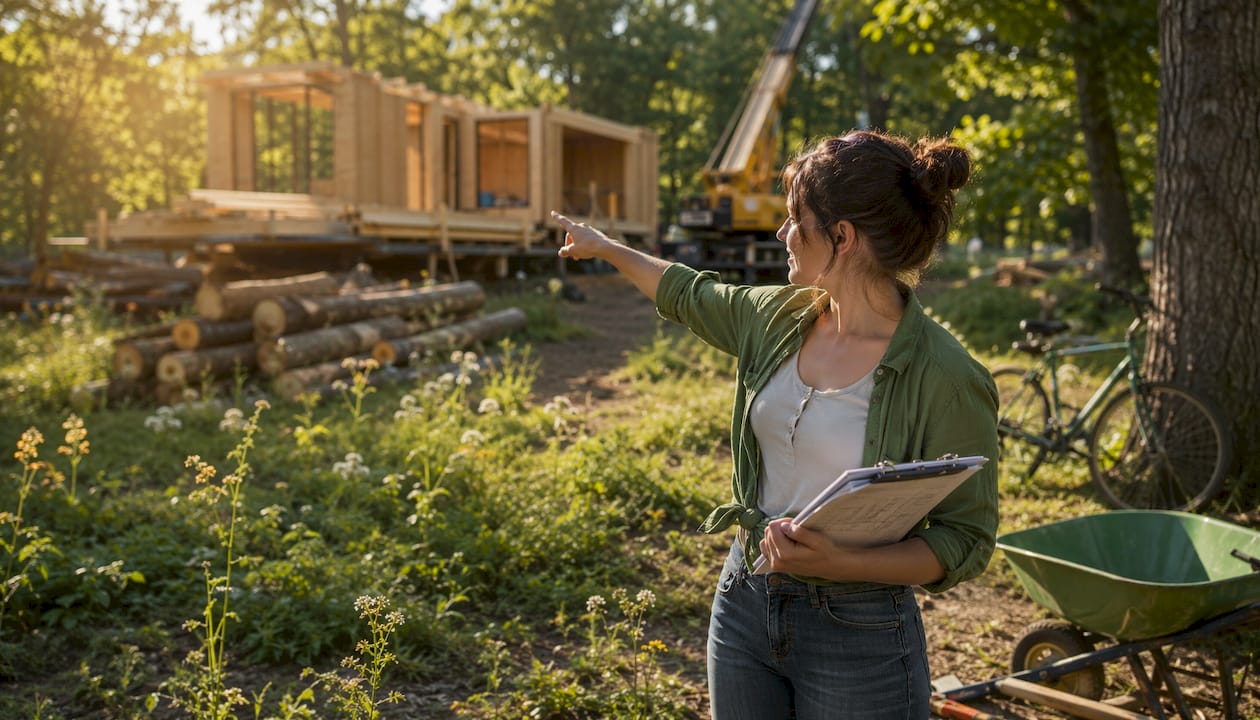
FSC and PEFC certification are the two benchmarks that confirm timber was responsibly sourced with minimal ecological impact. Glulam (glued laminated timber) and CLT (cross-laminated timber) made from certified wood offer high structural strength, natural insulation properties, and a dramatically lower embodied carbon compared to concrete or steel framing. Any builder worth considering should be able to produce documentation for the wood they use.
Key features that define strong alternatives
- Integrated solar and battery systems: the best off-grid prefab homes treat solar as a core system, not an aftermarket add-on. Look for builders who size the array to your actual load and climate, not a generic spec.
- Water self-sufficiency: rainwater harvesting, greywater recycling, and UV or reverse-osmosis filtration built into the design from the start, rather than retrofitted after delivery.
- Biophilic design: large glazed surfaces, natural wood interiors, and layouts that maximize daylight. Biophilic principles in prefab timber homes measurably improve occupant wellbeing and reduce artificial lighting loads.
- Scalability: modular or expandable floor plans let you start small and add square footage as your budget or family grows, without rebuilding from scratch.
- Factory quality control: prefab construction means joints, insulation, and weatherproofing are assembled in controlled conditions, reducing on-site errors that plague stick-built homes.
On pricing and timelines
Off-grid prefab timber homes typically fall within a broad cost range depending on size, customization level, and which off-grid systems are included. That range excludes land and foundation, which can add significant cost depending on site conditions… Lead times from order to delivery generally run six to twelve months for custom builds. Buyers who want faster occupancy often choose stock-plan models with fewer modifications.
Pro Tip: Ask any builder for a completed project reference in a climate similar to yours. A home that performs well in coastal Maine will need different insulation and moisture management than one built for the high desert of New Mexico.
How do you choose the right prefab sustainable timber home for off-grid living?
Choosing well starts with being honest about what “off-grid” means for your situation. Full independence from municipal water and power is a very different engineering problem than simply reducing your utility bills. Proper planning and system sizing are the factors professionals consistently identify as the difference between a successful off-grid home and an expensive frustration.
Criteria that matter most
- Land suitability: zoning laws, soil bearing capacity, slope, and sun exposure all affect what you can build and how well off-grid systems will perform. Verify these before you commit to any floor plan.
- Climate compatibility: a home designed for mild Pacific Northwest winters will underperform in Minnesota without significant insulation upgrades. Confirm the builder’s thermal envelope specs match your heating degree days.
- Off-grid system compatibility: some prefab homes are “off-grid ready” in name only, meaning they have conduit runs but no actual systems. Others arrive with a fully commissioned solar array and tested water filtration. Know which you’re buying.
- Warranty and after-sales support: a five-year structural warranty is a reasonable baseline. Ask specifically who handles warranty claims if the manufacturer is overseas or goes out of business.
- Certification and compliance: confirm the home meets IRC (International Residential Code) standards or your state’s equivalent, and that the manufacturer can provide documentation for building permit applications.
Budget realism
The purchase price is rarely the final number. Foundation work, site prep, septic or composting toilet systems, driveway access, and permit fees routinely increase the overall project cost noticeably beyond the base price. Build that buffer into your planning from the start.
Pro Tip: Before signing any contract, visit a completed installation of the model you’re considering. Photos and renderings rarely show how a home handles weather, how the mechanical systems sound, or whether the interior finishes hold up after a year of real use.
What does sustainable off-grid living with a prefab timber home actually require?
Off-grid living is less about escaping the grid and more about replacing it with systems you own and maintain. Prefab timber homes are well-suited to this because their factory-built precision reduces air leakage, and natural wood provides thermal mass that moderates interior temperature swings.
The core systems every off-grid home needs:
- Renewable energy: solar photovoltaic arrays paired with lithium battery storage cover most residential loads. Wind is viable in exposed sites. System size depends on your latitude, average cloud cover, and actual consumption habits.
- Water independence: land and utility vetting before purchase is the step most buyers skip, and it’s the one that causes the most problems. Know your water source, flow rate, and seasonal variation before you design your filtration system.
- Waste management: composting toilets, constructed wetlands, or engineered septic systems each have different land area and maintenance requirements. Local health department rules vary significantly by county.
- Food production: a greenhouse extends your growing season and reduces grocery dependence, particularly in northern climates where the frost-free window is short.
Biophilic design in timber homes, with exposed wood grain, natural light, and views of the surrounding landscape, isn’t just aesthetic. It reduces the psychological friction of living in a smaller, more self-contained space, which matters when you’re spending more time at home than the average suburban household.
Gridwiseliving has what you need to build out your off-grid life
If you’ve been comparing prefab timber home builders and realize the home itself is only part of the equation, Ready for All Lifestyle Services fills the gap most builders leave open. The brand focuses specifically on the systems and structures that make off-grid living practical: solar energy systems, expandable tiny homes, and food-producing greenhouses built for durability in real outdoor conditions.
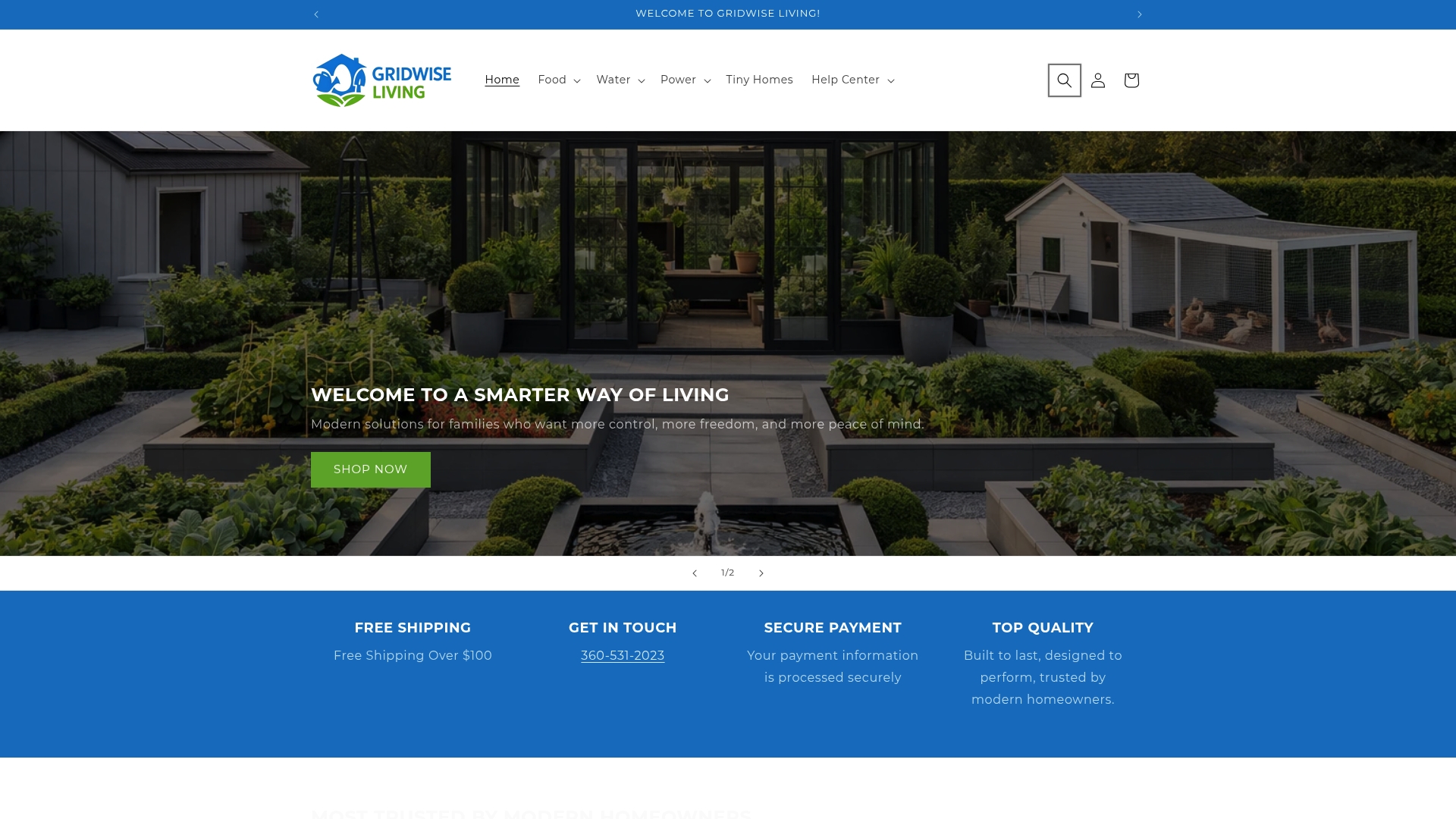
Where many prefab home manufacturers treat solar and water systems as expensive add-ons, Gridwiseliving treats energy independence as the starting point. The product line is built around families who want to reduce reliance on traditional utility systems without sacrificing comfort or reliability. Whether you’re outfitting a new prefab build or adding capability to an existing property, the greenhouse collection and solar lineup give you concrete tools for food security and power independence that no timber frame alone can provide.
Key Takeaways
The strongest odylhouse.com alternatives combine certified sustainable timber, genuine off-grid system integration, and US-based support, making site-specific evaluation the single most important step before purchase.
| Point | Details |
|---|---|
| Odyl House baseline cost | The standard model starts at approximately €124,600, excluding foundation, logistics, and add-ons. |
| Prefab timber pricing range | US-accessible off-grid prefab timber homes typically cost $120,000–$180,000 before land and foundation. |
| Certification standard | FSC and PEFC certification confirm responsibly sourced timber with minimal ecological impact. |
| Off-grid system planning | Proper system sizing for solar, water, and waste is the factor professionals most consistently identify as critical to success. |
| Gridwiseliving’s role | Gridwiseliving offers solar systems, tiny homes, and greenhouses that complement or substitute prefab timber home initiatives for off-grid living. |